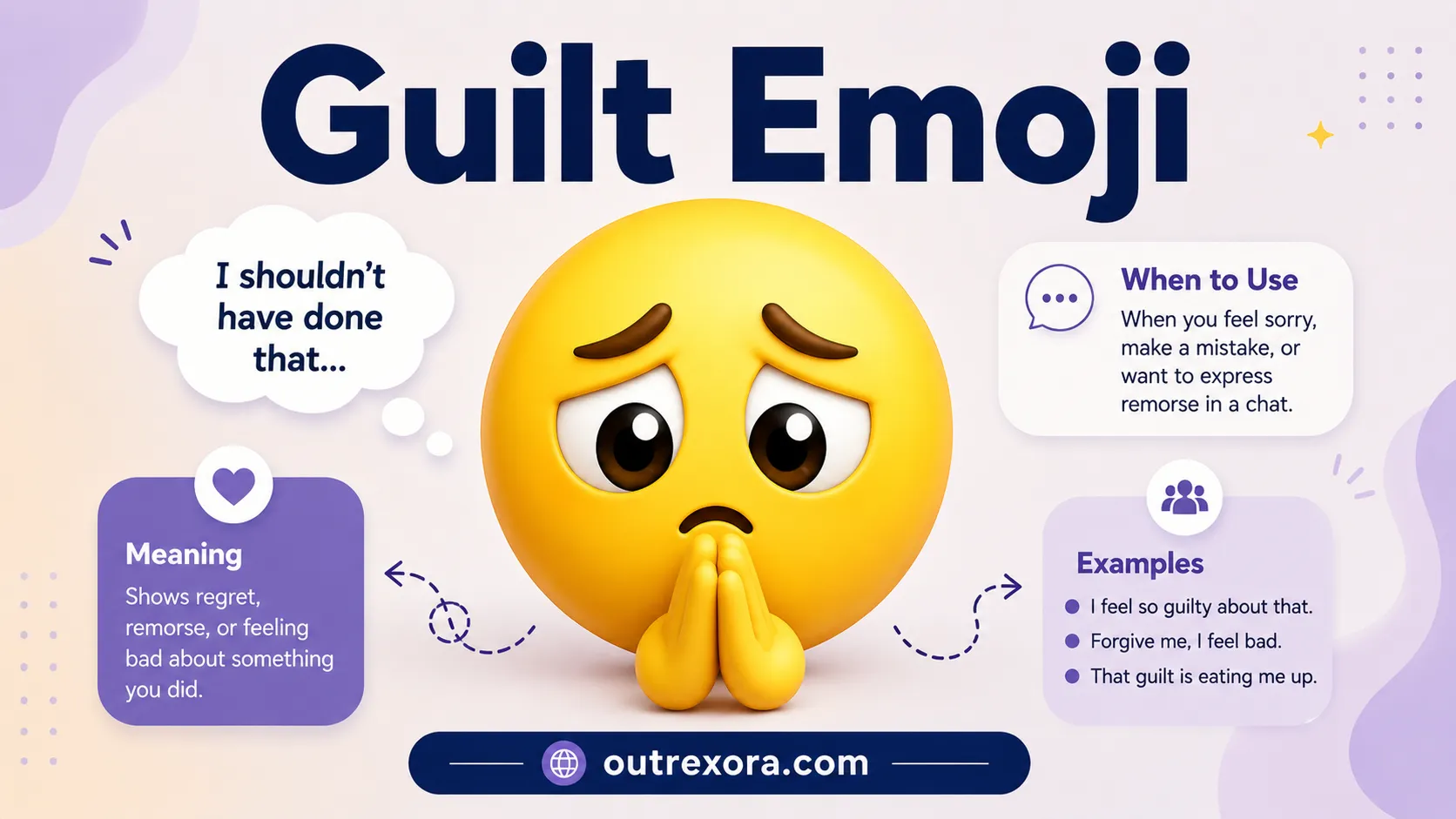
Sometimes, a simple message like I’m sorry does not fully show how you feel. That is when a guilt emoji can add the missing emotion.
If you forgot to reply, made a small mistake, or want to show playful regret, the right emoji makes your message feel more human.
In this guide, you’ll discover common guilt related emoji meanings and practical ways to use them in everyday conversations.
Sometimes one small emoji says, “I know I messed up,” without needing a long explanation.
What do guilt emoji mean?
There is no single official guilt emoji, so people usually choose facial expressions that communicate regret, embarrassment, apology, or emotional discomfort. The meaning often changes depending on the message and relationship.
😔 is commonly used when someone feels genuinely sorry or disappointed about something. 😞 can show regret after realizing a mistake, while 😟 often adds worry about a situation.
🥺 is frequently used for a softer, more emotional apology. 🥹 can make regret feel heartfelt, especially when someone is trying to sound sincere but gentle.
😳 usually adds embarrassment or an “oops, you caught me” feeling. The same emojis can feel serious, cute, funny, or even romantic depending on the surrounding words.
| Emoji | Core meaning | Misread as | Best used when |
| 😔 | Regret or sadness | Being tired | You feel genuinely sorry |
| 😞 | Disappointment | General sadness | You regret an action |
| 😟 | Worry | Confusion | You feel concerned |
| 🥺 | Gentle pleading | Manipulation | You want a soft apology |
| 🥹 | Emotional sincerity | Happiness | You feel touched or remorseful |
| 😳 | Embarrassment | Surprise | You made an awkward mistake |
Meaning & Example
😔 Pensive Face
Meaning: A quiet feeling of regret, sadness, or disappointment.
Example 1: I should have replied earlier 😔
Example 2: I feel bad about what happened 😔
😞 Disappointed Face
Meaning: Regret or disappointment after something goes wrong.
Example 1: I really messed that up 😞
Example 2: Sorry, I forgot our plan 😞
😟 Worried Face
Meaning: Concern and nervousness about a situation.
Example 1: I hope you’re not upset 😟
Example 2: I’m worried I made things worse 😟
🥺 Pleading Face
Meaning: A soft, emotional, and apologetic expression.
Example 1: Please don’t be mad at me 🥺
Example 2: I’m really sorry about that 🥺
🥹 Face Holding Back Tears
Meaning: A heartfelt expression of emotional sincerity.
Example 1: Thank you for forgiving me 🥹
Example 2: I appreciate your kindness so much 🥹
😳 Flushed Face
Meaning: Embarrassment or awkward surprise after a mistake.
Example 1: Okay, that was my fault 😳
Example 2: I totally forgot about it 😳
😬 Grimacing Face
Meaning: An awkward reaction to an uncomfortable mistake.
Example 1: I probably shouldn’t have said that 😬
Example 2: Oops, I made it awkward 😬
🙈 See No Evil Monkey
Meaning: Playful embarrassment and wishing to hide from a mistake.
Example 1: I sent it to the wrong person 🙈
Example 2: Why did I do that? 🙈
🙏 Folded Hands
Meaning: A respectful request, apology, or plea for understanding.
Example 1: I’m sorry, please forgive me 🙏
Example 2: Thanks for understanding 🙏
🤦 Face Palm
Meaning: Frustration with yourself after doing something foolish.
Example 1: I forgot again 🤦
Example 2: I can’t believe I did that 🤦
How to use guilt emoji the right way
On WhatsApp, guilt emojis usually feel personal and emotional. A message like “I’m sorry 😔” can sound warmer than plain text, especially when talking with close friends or family.
On Instagram, people often use these expressions in captions, stories, and comments. The style can be more aesthetic or playful, particularly when sharing a funny mistake or relatable moment.
TikTok usage is often more humorous and ironic. Creators may use 😳, 😬, 🙈, or 🤦 when reacting to embarrassing situations or joking about bad decisions.
Dos: Match the emoji to your actual tone, keep apologies sincere, and consider the relationship before sending playful expressions.
Don’ts: Do not use emojis to replace a serious apology completely, overuse several faces in one sentence, or assume every person interprets them the same way.
Best guilt emoji combos copy & paste
Romantic
👉 😔🥺 A soft message when you feel sorry after upsetting someone special.
👉 🥹🙏 Useful for showing heartfelt appreciation after being forgiven.
👉 😞🥺 A gentle combination for expressing regret in a personal conversation.
Cute
👉 🥺🙈 Perfect for a small, playful mistake.
👉 😳🥺 Useful when you feel embarrassed but want to sound sweet.
👉 🙈😬 A funny way to react to an awkward moment.
Flirty
👉 😳🙈 A playful reaction after saying something bold.
👉 🥺😳 Adds a shy and slightly apologetic tone.
👉 😬🙈 Works well when joking about an awkward message.
Missing someone
👉 😔🥺 A gentle way to show emotional regret and longing.
👉 😞🥹 Useful for a sincere, emotional message.
👉 😟🙏 Fits when you want to reconnect after a misunderstanding.
Good night
👉 😔🙏 A calm apology before ending the conversation.
👉 🥺🥹 A sweet option for an emotional good night message.
👉 😬🤦 A humorous choice after admitting a silly mistake.
These copy paste emojis work best when paired with clear words. The emoji should support your message rather than force the other person to guess what happened.
Trending guilt emoji in 2026
Among trending emojis 2026 conversations, guilt related expressions are often used because online communication mixes sincerity with humor. People frequently choose emojis that can make a serious feeling sound softer or turn an embarrassing moment into a relatable joke.
🥺 is popular with younger users and content creators because it easily fits emotional captions, comments, and playful apologies. It appears naturally in WhatsApp chats and Instagram interactions.
😳 and 😬 are often used for awkward reactions and humorous self awareness. They fit short videos and reaction style content where the context is already visible.
🙈 continues to appear in casual posts because it gives people a lighthearted way to react when they feel embarrassed. It works particularly well when someone wants to laugh at their own mistake.
| Emoji | Why trending | Who uses it | Platform |
| 🥺 | Soft emotional expression | Younger users, creators | WhatsApp, Instagram |
| 😳 | Awkward reaction moments | Casual users, creators | TikTok, Instagram |
| 😬 | Relatable uncomfortable humor | Younger users, meme fans | TikTok, WhatsApp |
| 🙈 | Playful embarrassment | Broad social media users | Instagram, TikTok |
As digital conversations evolve, emoji usage may continue shifting as people create new tones and meanings through context.
FAQs:
What is the most popular guilt emoji?
😔 is one of the clearest choices for expressing regret or feeling bad. 🥺 is also widely used when someone wants an apology to feel softer and more emotional.
What does 🥺 mean from a girl or boy?
🥺 does not have one fixed meaning based on gender. It can show apology, pleading, affection, or emotional vulnerability depending on the message and relationship.
Why do emojis look different on iPhone vs Android?
Different companies design their own emoji artwork while following the same basic Unicode character. That means the appearance can change even though the intended idea remains similar.
Are guilt emoji used differently in other countries?
Yes, cultural habits and online trends can affect interpretation. Context, language, age, and local communication styles can all influence how WhatsApp emojis and Instagram emojis are understood.
Conclusion
A guilt emoji can make an apology, awkward moment, or small mistake feel more expressive and natural. The best choice depends on your words, relationship, and situation.
If you want to sound sincere, cute, or humorous, using the right emoji can help your message communicate the feeling behind it.

I’m Olivia Bennett, a writer at Outrexora.com, where I share clear, engaging, and informative stories about the latest news, insights, and trends.