Fear Emoji 😨 Meaning: What the Fearful Face Really Means in Texts
You are chatting with a friend when they suddenly send you the fear emoji 😨. Maybe they have an exam tomorrow, watched a scary movie, or received some unexpected news. You might wonder, “Are they scared, shocked, or just joking?”
The fear emoji is a popular way to express fear, worry, nervousness, and sudden surprise in digital conversations. Its wide eyes, raised eyebrows, and worried expression make it easy to understand, even without words.
People use this emoji in text messages, social media comments, and everyday online conversations. However, its meaning can change depending on the situation, the person sending it, and the other emojis around it.
For example, 😨 after “I forgot my homework” shows worry, while 😨 after “Did you see that movie?” might express fear or excitement about something scary.
In this guide, you will learn the fear emoji meaning, its different uses, what it means from a girl or boy, and how it appears on popular platforms. You will also discover useful emoji combinations, similar emojis, and copy-and-paste options for your messages.
What Does the Fear Emoji 😨 Mean?
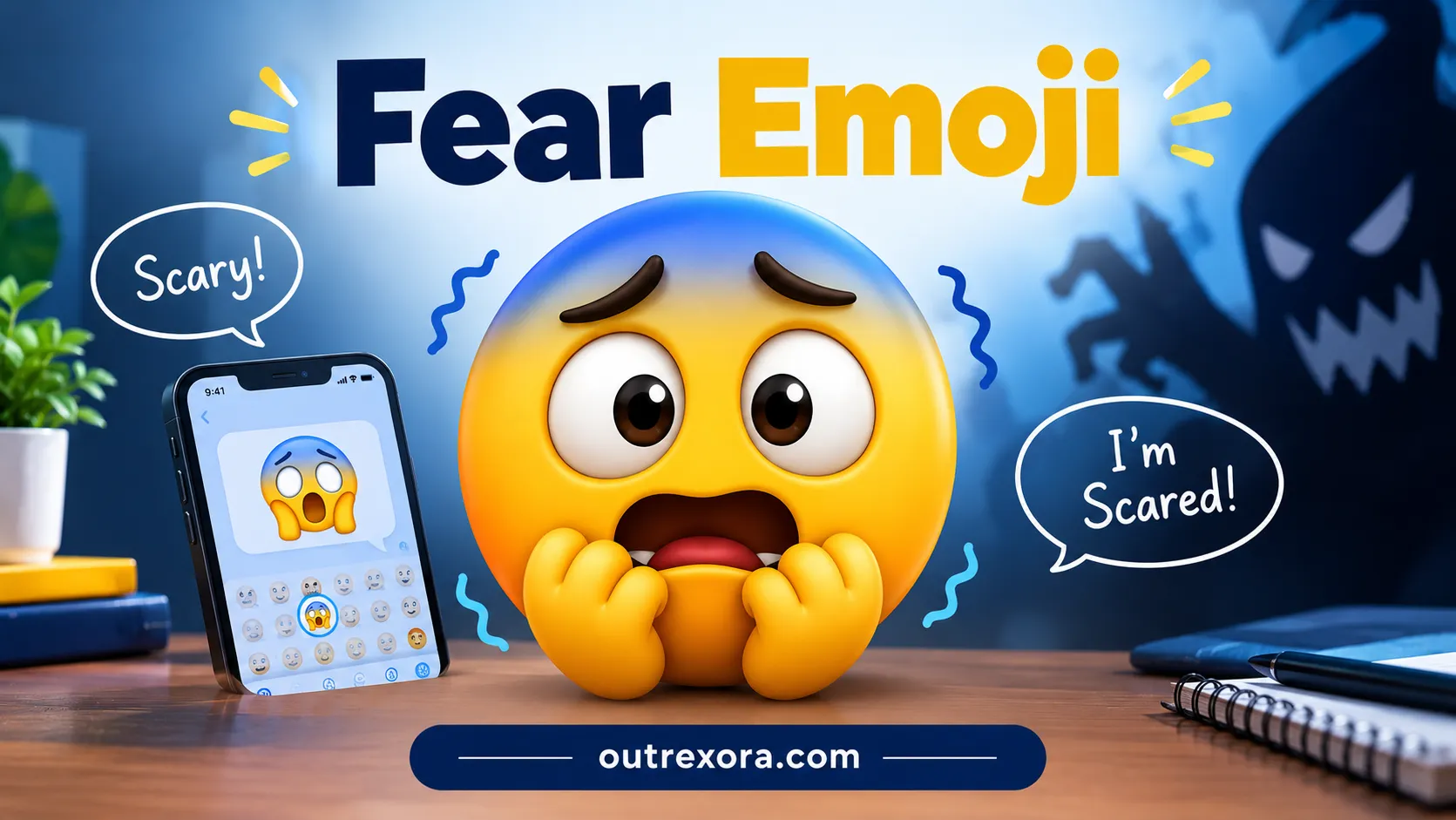
The fear emoji 😨, officially known as the Fearful Face, represents fear, anxiety, worry, nervousness, and shock. It shows a face with raised eyebrows, wide eyes, and a tense, worried expression.
People use it when something frightens them, makes them nervous, or catches them completely off guard.
The emoji can express several emotions:
- Fear: Something looks frightening or dangerous.
- Worry: You are concerned about what might happen.
- Nervousness: You feel anxious before an important event.
- Shock: Something unexpected has happened.
- Dread: You are worried about an unpleasant situation.
For example, someone might send 😨 before a difficult exam or after hearing a strange noise at night.
Examples in texting:
- “I have my final exam tomorrow 😨”
- “I heard something outside my window 😨”
- “The teacher said we have a surprise test 😨”
In each example, the emoji adds an emotional reaction that words alone might not fully express.
The fear emoji does not always mean someone is genuinely terrified. Friends often use it playfully to exaggerate small problems or react dramatically to surprising news.
Different Meanings of the Fear Emoji 😨
The fear emoji can communicate different feelings depending on the conversation. Here are its most common meanings.
1. General Meaning: Fear and Worry
The most common meaning is feeling frightened, worried, or uncomfortable about something.
Example: “I think I heard footsteps downstairs 😨”
Here, the emoji suggests that the person feels scared or uneasy.
2. Romantic Meaning: Nervousness Around a Crush
In romantic conversations, 😨 can show nervousness about expressing feelings or meeting someone special.
Example: “She said she wants to meet me today 😨❤️”
This could mean the person feels excited but nervous about the meeting. The heart adds affection, but the message alone does not prove romantic interest.
3. Friendly Meaning: Concern for a Friend
Friends may use the emoji when they hear worrying news or want to show concern.
Example: “You lost your phone on the bus? 😨”
It communicates surprise and concern without requiring a long response.
4. Funny Meaning: Dramatic Reactions
People often use 😨 to make ordinary situations seem much scarier than they really are.
Example: “My mom saw my report card 😨😂”
The laughing emoji makes the message feel humorous rather than seriously frightening.
5. Sarcastic Meaning: Pretending to Be Scared
Sometimes, people use the fear emoji sarcastically when they are not actually afraid.
Example: “Oh no, another Monday 😨”
The sender is exaggerating their dislike of Mondays for comic effect.
6. Social Media Meaning: Shock or Disbelief
On social media, 😨 can react to surprising news, unexpected reveals, or unbelievable stories.
Example: “The ending of that series 😨”
It tells other people that the ending was shocking or difficult to believe.
7. Text Message Meaning: Anxiety
In private messages, the emoji often expresses stress about something that is about to happen.
Example: “I need to talk to my boss 😨”
It can suggest nervousness, uncertainty, or fear of a difficult conversation.
8. Workplace Meaning: Stress About Work
At work, the fear emoji may be used informally to react to deadlines, unexpected meetings, or difficult assignments.
Example: “Three reports due by tomorrow 😨”
Use it carefully in professional settings. It may be suitable for a friendly team chat but feel too casual in a formal email.
When Should You Use the Fear Emoji 😨?
The fear emoji is useful whenever you want to show that something makes you feel scared, worried, nervous, or shocked.
Here are some practical situations where it fits naturally:
- Before an exam: “My math exam starts in ten minutes 😨”
- During a scary movie: “Why is the music getting louder? 😨”
- After surprising news: “You are moving to another country? 😨”
- When facing a deadline: “I still have five pages to write 😨”
- When hearing strange sounds: “What was that noise? 😨”
- Before meeting someone: “My first date is tonight 😨❤️”
- When seeing a huge bill: “That restaurant bill is $200 😨”
- When reacting to a plot twist: “I did not expect that ending 😨”
Fear Emoji Texting Examples
Here are a few natural messages you can copy or adapt: Example 1: Exam stress
Friend: “Are you ready for tomorrow’s test?”
You: “Not even close 😨”
Example 2: Scary experience
Friend: “I watched that horror movie last night.”
You: “Was it really that scary? 😨”
Example 3: Unexpected news
Friend: “Our teacher assigned another project.”
You: “Another one? 😨😭”
The key is to use the emoji when its emotional meaning matches your message.
What Does the Fear Emoji 😨 Mean from a Girl?
When a girl sends 😨, it can express fear, nervousness, surprise, worry, or playful drama. The exact meaning depends on what she is talking about and how you normally communicate.
Here are some common interpretations.
She is genuinely worried.
If she sends “I have to drive in this weather 😨,” she may feel nervous about the conditions.
She is surprised by something you said.
If you tell her unexpected news and she responds with 😨, she might be shocked or trying to understand what happened.
She feels nervous around you.
If the conversation is romantic, she might use 😨 to show nervousness about a date or an emotional conversation.
For example:
You: “Would you like to go out with me?”
Her: “Wait, seriously? 😨❤️”
This could suggest surprise and nervous excitement. However, the emoji alone cannot tell you whether she likes you romantically.
She is joking.
A message such as “I have to wake up at 6 AM 😨” may simply be a funny way to complain about an early morning.
Always consider the full message instead of assuming the emoji has a hidden romantic meaning.
What Does the Fear Emoji 😨 Mean from a Boy?
When a boy sends the fear emoji, he may be expressing worry, fear, shock, or nervousness. Like anyone else, he might also use it to make a situation sound more dramatic or funny.
Here are some possible meanings.
- He is nervous: “I have my driving test today 😨”
- He is surprised: “You finished the whole game already? 😨”
- He is worried: “I think I left my wallet at home 😨”
- He is joking: “My phone battery is at 1% 😨”
- He feels awkward: “I accidentally waved at the wrong person 😨”
In a romantic conversation, a boy might use 😨 when he feels shy or uncertain about what to say.
For example:
You: “I think you’re cute.”
Him: “Wait, what? 😨❤️”
This could express surprise, nervousness, or playful embarrassment. It is not enough on its own to establish his feelings.
Remember: The fear emoji has no fixed gender-specific meaning. The context of the conversation matters more than whether the sender is a girl or a boy.
Fear Emoji 😨 on Snapchat
On Snapchat, the fear emoji can appear in Snaps, chats, captions, and reactions. It is often used to show an immediate emotional response to something happening.
Common examples include:
- Sending 😨 after seeing a scary video.
- Adding 😨 to a Snap about an unexpected event.
- Reacting to a friend’s surprising story.
- Showing nervousness before an exam or an important meeting.
For example, someone might post a picture of a dark street with the caption “Walking home alone 😨.”
The emoji adds a feeling of fear or uneasiness to the Snap.
Keep in mind that 😨 is different from Snapchat’s friend-status emojis. It is a regular expressive emoji, not a special indicator of your friendship status.
Fear Emoji 😨 on WhatsApp
On WhatsApp, 😨 is commonly used in private chats, family groups, and friend conversations.
It can communicate fear, worry, shock, or nervousness without needing a full sentence.
Examples:
- “The electricity just went out 😨”
- “Dad is asking about my grades 😨”
- “I have an interview in one hour 😨”
- “Did you hear that sound? 😨”
People also combine it with other WhatsApp emojis to add meaning.
For example, 😨😂 suggests a funny or exaggerated reaction, while 😨❤️ can communicate nervous affection.
Because WhatsApp conversations are often personal, the surrounding messages can help you understand whether the sender is genuinely worried or simply joking.
Fear Emoji 😨 on Instagram
On Instagram, the fear emoji is useful for reacting to Reels, Stories, posts, and comments.
People often use it when they see something frightening, surprising, or difficult to believe.
Common uses include:
- Reacting to a scary Reel.
- Commenting on an unexpected plot twist.
- Responding to shocking celebrity news.
- Describing a stressful personal experience.
- Adding emotion to a dramatic Story caption.
For example, a comment such as “That jump scare 😨” tells other viewers that the video contains a frightening moment.
The emoji can also be used humorously. Someone might post a picture of a large pile of homework with the caption “My weekend plans 😨.”
Its meaning depends on the post and the tone of the conversation.
Fear Emoji 😨 on TikTok
On TikTok, 😨 often appears in video captions, comments, and text overlays.
It is especially useful for expressing reactions to scary stories, suspenseful clips, unexpected reveals, and relatable stressful situations.
For example:
- “POV: Your teacher says the test is today 😨”
- “The last five seconds 😨”
- “When you hear your name in the principal’s office 😨”
- “That ending was NOT what I expected 😨”
TikTok creators may also use the emoji to make a funny situation seem dramatic.
In scary-story videos, it can signal suspense or fear. In comedy videos, it may represent exaggerated panic.
The emoji itself does not have a special TikTok-only definition. Its meaning comes from the video, caption, and comments around it.
Fear Emoji Combinations
Combining 😨 with other emojis can make your message more specific. The following table explains 20 common combinations and their possible meanings.
| Emoji combination | Meaning |
|---|---|
| 😨😱 | Extreme fear or panic |
| 😨😂 | Being scared in a funny way |
| 😨😭 | Fear mixed with distress |
| 😨❤️ | Nervousness mixed with affection |
| 😨😳 | Fear and embarrassment |
| 😨😰 | Strong worry or anxiety |
| 😨🙏 | Hoping everything will be okay |
| 😨💀 | Shock, horror, or dramatic disbelief |
| 😨😬 | Nervousness or discomfort |
| 😨😴 | Dreading something tiring |
| 😨🔥 | Shock at something intense |
| 😨👀 | Fear or suspicion about what you saw |
| 😨🤯 | Shock that feels overwhelming |
| 😨🙈 | Fear or embarrassment about seeing something |
| 😨⚠️ | Warning about a possible danger |
| 😨🌑 | Fear of darkness or something mysterious |
| 😨👻 | Fear of ghosts or spooky things |
| 😨🐍 | Fear of snakes |
| 😨📉 | Worry about falling numbers or results |
| 😨💸 | Stress about money or expenses |
These combinations are informal interpretations, not fixed definitions. The same combination can mean something different in another conversation.
Copy and Paste Fear Emoji 😨
Want to use the fear emoji in your messages, captions, or comments? Copy any of the options below.
😨 Copy, 😨😨 Copy, 😨❤️ Copy, 😨😂 Copy, 😨😭 Copy, 😨😱 Copy, 😨😰 Copy, 😨😳 Copy, 😨🙏 Copy, 😨💀 Copy, 😨👀 Copy, 😨🤯 Copy
You can paste these emojis into WhatsApp, Instagram, Snapchat, TikTok, Facebook, or almost any app that supports emoji characters.
Similar Emojis to 😨
Several emojis express fear, shock, or nervousness. However, each one has a slightly different emotional tone.
| Emoji | Name | Meaning | Difference |
|---|---|---|---|
| 😱 | Face Screaming in Fear | Extreme fear or shock | More dramatic |
| 😰 | Anxious Face with Sweat | Anxiety and worry | Shows sweating |
| 😧 | Anguished Face | Distress or concern | More troubled |
| 😦 | Frowning Face with Open Mouth | Surprise or worry | Less intense |
| 😟 | Worried Face | Concern or unease | More focused on worry |
| 😳 | Flushed Face | Shock or embarrassment | Often shows awkwardness |
| 😬 | Grimacing Face | Nervousness or discomfort | Shows a tense grimace |
| 😮 | Face with Open Mouth | Surprise or amazement | Not necessarily afraid |
| 😵 | Face with Crossed-Out Eyes | Overwhelm or dizziness | Suggests being stunned |
| 🥶 | Cold Face | Feeling extremely cold | Sometimes used for fear |
| 👻 | Ghost | Spooky or playful fear | Represents a ghost |
| 🙀 | Weary Cat | Shock or fright | Expresses fear through a cat |
The most important difference is intensity. 😨 usually communicates fear or worry, while 😱 suggests a more dramatic reaction.
Fear Emoji Appearance Across Platforms
The fear emoji is part of the Unicode emoji standard, but its visual design can vary slightly between platforms.
Apple
On Apple devices, the fearful face generally features wide eyes, raised eyebrows, and a tense mouth. The detailed expression helps communicate fear or anxiety.
Android
Android emoji designs can vary depending on the device, operating system, and font version. The overall fearful expression remains recognizable.
Samsung
Samsung devices may display a slightly different facial shape, eye design, or mouth expression. These visual details can change how intense the emoji appears.
Windows
On Windows, the emoji’s appearance depends on the emoji font and the version of the operating system. It still represents a fearful or worried face.
Facebook’s emoji artwork may differ from Apple’s or Google’s designs. The basic expression remains the same, although colors and facial details can vary.
WhatsApp has its own emoji artwork on supported versions. A message recipient may see a different design if their device or app uses another emoji set.
Important: These are general platform differences. Exact artwork can change with software updates, and not every device displays emojis in the same way.
Fun Facts About the Fear Emoji 😨
Here are eight interesting facts about this expressive little face.
- Its official name is Fearful Face. The name describes the worried, frightened expression.
- It belongs to Unicode. Unicode provides a standard way for supported devices to represent emoji characters.
- It can express more than fear. People also use it for anxiety, nervousness, shock, and dread.
- It works without words. A single 😨 can communicate an emotional reaction in a short message.
- It is different from 😱. The fearful face usually looks worried, while the screaming face expresses a more dramatic reaction.
- It can be humorous. People often use it to exaggerate everyday problems, such as waking up early.
- Its design can vary. Apple, Google, Samsung, and other platforms may display different artwork.
- Context changes its meaning. A fearful face after a horror story means something different from one after a surprising compliment.
Common Mistakes When Using the Fear Emoji
Although 😨 is easy to recognize, people can misunderstand it when they ignore the context.
1. Confusing Fear with Surprise
The emoji can express both emotions, but they are not identical. Fear usually involves feeling threatened or worried, while surprise is a reaction to something unexpected.
2. Assuming Someone Is Seriously Scared
A friend might use 😨 as a joke. Check the message and the conversation before assuming they are genuinely frightened.
3. Mixing It Up with 😱
Both emojis can express fear, but 😱 usually looks more intense. Use 😨 for worry or nervousness and 😱 for a dramatic scream-like reaction.
4. Assuming It Always Means Romantic Nervousness
When someone sends 😨 during a romantic conversation, they might feel shy or surprised. However, the emoji alone does not confirm attraction.
5. Using It in Every Serious Situation
The fear emoji can feel too casual when someone shares genuinely upsetting news. A caring message may be more appropriate.
6. Ignoring the Other Emojis
Combinations can change the tone. For example, 😨😂 often suggests playful fear, while 😨🙏 may express genuine worry and hope.
7. Using It in Formal Work Messages
The emoji may suit a casual team chat, but it can look unprofessional in a formal report or business email.
Fear Emoji Combos to Copy and Paste
One fear face says scared, but a combo tells the whole story. Tap and hold any combo below to copy it, then paste it into your chat, caption, or story. Each pairing keeps a fear emoji at the center and adds the cause of the fear beside it.
😨🌩️ Storm fear: for thunder, lightning, and nights when the weather turns wild.
😱🎢 Thrill fear: for roller coasters, haunted houses, and rides you regret joining.
😰📚 Exam nerves: for tests, results day, and revision that started far too late.
🫣🎬 Horror movie fear: for watching scary scenes through your fingers.
🥶😨 Cold and scared: for freezing nights, dark streets, and anything that sends a shiver through you.
Keep fear combos for playful, everyday scares. If someone is describing a real emergency or a genuinely frightening event, answer with words and support instead of a combo.
Frequently Asked Questions
1. What does the fear emoji 😨 mean?
The fear emoji 😨 represents fear, worry, nervousness, anxiety, or shock. People use it when something frightens them or makes them feel uneasy. It can also be used humorously to exaggerate everyday problems. The exact meaning depends on the message, the situation, and the relationship between the people communicating.
2. What is the difference between 😨 and 😱?
The 😨 emoji is called Fearful Face and usually expresses worry, nervousness, or fear. The 😱 emoji, called Face Screaming in Fear, represents a more dramatic reaction, such as extreme fright or shock. Both can express fear, but 😱 often suggests a stronger emotional response.
3. What does 😨 mean from a girl?
When a girl sends 😨, she may feel scared, worried, surprised, or nervous. In a romantic conversation, it could express nervous excitement or surprise. In a funny conversation, it might simply be playful drama. The emoji alone cannot confirm romantic feelings, so consider the full message and context.
4. What does 😨 mean from a boy?
A boy may use 😨 to express fear, anxiety, shock, or nervousness. He might send it before an exam, after hearing unexpected news, or when joking about a stressful situation. In a romantic conversation, it could suggest surprise or shyness, but it does not automatically mean he has romantic feelings.
5. What does 😨 mean on WhatsApp?
On WhatsApp, 😨 usually communicates fear, worry, nervousness, or surprise in chats and group messages. Someone might use it after receiving unexpected news or before an important event. It can also be combined with laughing, crying, or heart emojis to express humor, distress, or nervous affection.
6. Is 😨 a fear emoji or a shock emoji?
It can represent both fear and shock. The official name is Fearful Face, but people also use it when something unexpected surprises them. If the situation involves danger or anxiety, it usually expresses fear. If something unbelievable happens, it may communicate shock or disbelief instead.
7. What does 😨😂 mean in texting?
The combination 😨😂 usually expresses funny fear, nervous laughter, or an exaggerated reaction to something surprising. For example, someone might send it after hearing that their friend accidentally texted the wrong person. The laughing emoji suggests that the situation is humorous rather than completely frightening.
8. How do I copy and paste the fear emoji?
You can copy the fear emoji directly from this article: 😨. Select the emoji and copy it, then paste it into WhatsApp, Instagram, Snapchat, TikTok, or another supported app. You can also use the copy buttons in the section above to copy individual emoji combinations.
What the Fear Emoji Looks Like and Where It Came From
The fearful face emoji features a round yellow face with eyes wide open in alarm, raised eyebrows, and a small oval mouth that suggests a gasp. It sits in the family of anxious face emojis alongside the anxious face with sweat, the flushed face, and the screaming in fear emoji, but it is calmer and more worried than outright terrified.
The emoji was approved in Unicode 6.0 in 2010 and added to the emoji keyboard in 2015, making it one of the earlier emotion emojis. Its original Unicode name was Face with Open Mouth and Cold Sweat, which reveals how it started: not pure terror, but that clammy, nervous shock when something startles you. Over time it became known as the fearful face, and the meaning widened with it.
Its design is intentionally ambiguous: the expression can read as fear, shock, nervousness, or even embarrassed surprise, which is exactly why people use it in so many different situations. It was once ranked among the most used emojis on Twitter, proof that the little gasp resonates with millions of texters.
The 7 Real Meanings of the Fear Emoji
The core meaning is anxiety and alarm, but texters stretch it across a wide emotional range. Here are the seven most common readings.
3. Nervous Anticipation
Before an exam, a job interview, a first date, or any high pressure moment, the fear emoji says “I am freaking out a little” in the most relatable way.
5. Playful Exaggeration
Joking about mild scares, like a spider in the bathroom or a horror movie scene, where nobody is truly in danger. The fear is dialed up for comedy.
6. Guilt or Being Caught
When someone gets caught doing something silly, the fear emoji acts like a cartoonish “uh oh” face. It admits the mistake before anyone scolds.
7. Sarcastic Dread
People drop it for tiny inconveniences, like “they were out of oat milk 😨,” to make a melodramatic point. The gap between the small problem and the big reaction is the joke.
How to Reply When Someone Sends 😨 Scared
Getting the reply right matters more than getting the meaning right. Follow this simple guide:
If they seem truly scared: lead with comfort, not comedy. “That sounds scary, are you okay?” beats any joke. Offer something concrete: “Want me to stay on the phone with you?” or “I can come over if you need.” Take it seriously until they signal otherwise.
If they are telling a funny story: match the drama. “NO WAY 😨” or “I would have moved houses immediately” keeps the comedy rolling. Exaggerated reactions are the whole point.
If they are nervous before an event: encourage first, joke second. “You have prepared for this, you are going to do great” calms the nerves. Save the teasing for after the event goes well.
If it is flirty banter: play along lightly. “Trouble? Me? Never 😇” keeps the spark without pushing too hard. Let them set the pace.
The golden rule: never reply to genuine fear with only a laughing emoji. It reads as dismissive, and it can genuinely hurt someone who reached out for comfort.
Related Emojis and Combinations
| Combination | Meaning |
|---|---|
| 😨👻 | Spooky season energy, haunted houses, horror movie nights |
| 😨🕷️ | The classic bug scare reaction |
| 😨👀 | “Something is watching” vibes for creepy stories |
| 😨💦 | Extra nervousness before a big moment |
| 😨😂 | “That was scary but funny,” perfect for jump scare stories |
| 😨🏥 | Nervousness about an injury or a medical appointment |
| 😨💳 | Bill shock, rent is due, bank balance dread |
| 😨📅 | Deadline approaching panic |
| 😨❤️ | Flirty nervousness, crush replied energy |
| 😨🎃 | Halloween fun and spooky posts |
How the Fear Emoji Looks on Different Platforms
Apple gives the fearful face its most distinctive look: a cool blue to teal gradient washes over the yellow forehead, like cold sweat made visible, with wide circular eyes and high arched brows. It is instantly recognizable and slightly cinematic.
Google and Android render it with a paler yellow and a simpler worried expression. Samsung adds its own shading and proportions, while Microsoft uses the flat Fluent style on Windows. WhatsApp, Facebook, and Twitter each apply their own house designs. The wide eyes and small open mouth stay consistent everywhere, so the gasp always reads clearly.
Fear Emoji in Late Night Walks Home and Safety Check Ins
A late night walk home is one of the most honest uses of the fear emoji, because it mixes real caution with a request for company. A message like walking home now, street is quiet tonight 😨 tells a friend exactly where you are emotionally, and it often earns a reply like stay on the phone with me until you are inside. That reply is the real value of the emoji in this moment, since it turns a feeling into a safety plan.
Safety check ins work best when the fear emoji is paired with facts. A line like just left the station, ten minutes from home 😨 gives friends a time and a place, so they know when to check again. Avoid vague fear messages with no details, since friends cannot help if they do not know where you are or what you need.
When a friend sends this kind of message, answer with calm and concrete help. A reply like I am here, keep texting until you are home, doors locked behind you is far better than a joke, and it keeps the walker focused on the walk. Save humor for after they are safe inside, when the fear has passed and relief can take its place.
Fear Emoji for Exam Season Pep Talks
Exam season fills chats with fear emojis, and a good pep talk answers the fear without dismissing it. A message like I know it feels huge, but you have revised the hard parts already 😨💪 names the worry first, then adds encouragement, so the student feels seen rather than scolded. Keep the pep talk short, since a long lecture adds pressure to an already anxious day.
A useful pep talk also gives one small next step. A line like one chapter, one break, then we check in again turns a mountain of revision into a walkable path, and the fear emoji in reply becomes relief rather than panic. Celebrate small wins along the way, like a finished past paper or a remembered formula, so confidence grows step by step.
After the exam, the fear emoji changes meaning again. A message like exam done, that last question was brutal 😨😂 lets friends laugh together about shared stress, and it closes the anxious chapter with humor. A kind reply like you got through it, proud of you, rest now seals the pep talk, and reminds the student that effort mattered more than perfection.
Fear Emoji for Honest Conversations About Anxiety
The fear face can open an honest conversation about anxiety when words feel heavy. A message such as feeling nervous about tomorrow with this symbol tells a friend that support would help, without demanding a long explanation. Friends often respond with more care when they can see the feeling clearly, and the symbol gives them permission to ask how they can help. It turns a vague bad day into a specific moment that others can understand and respond to kindly.
Honesty works best when the symbol is paired with one concrete detail. A line such as worried about the presentation at ten names the source of the fear, so friends can offer practical help such as a practice run or a calming message. Vague fear messages can leave friends unsure what to do, while a clear detail invites a clear response. Used this way, the fear emoji becomes a bridge to support rather than just a dramatic reaction.
Fear Emoji in Horror Fans and Thriller Communities
Horror fans use the fear face as a badge of enjoyment, not as a sign of real distress. A comment such as that jump scare got me with this symbol tells other fans that the scare worked, and it invites shared excitement about the film or series. Thriller communities use it in a similar way for plot twists, cliffhangers, and shocking reveals. The symbol signals that the story delivered a strong emotional punch, which is exactly what fans hope for.
The community context is what makes this use safe and fun. Everyone in the thread knows the fear is fictional, so the symbol reads as praise for good storytelling. Outside that community, the same symbol might be read as genuine worry, so creators should keep the horror context clear. A title, a film name, or a spoiler warning beside the symbol prevents confusion and keeps the excitement in the right place.
Frequently Asked Questions About the Fear Emoji
Is the fear emoji the same as the screaming face? No. The fear face shows worry, nervousness, or shock, while the screaming face shows a far more dramatic reaction. Use the fear face for worry and the screaming face for extreme shock.
Can it show excitement as well as fear? Yes. Before a big event, a first date, or a thrilling film, it can show nervous excitement. The surrounding words decide whether the feeling is happy, worried, or a mix of both.
Should I use it for serious bad news? Avoid it when someone shares genuinely upsetting news. A caring sentence offers more comfort than any emoji, and a fear face can feel too casual in a serious moment.
Fear Emoji in Sports Fans and Live Match Reactions
Live sport is full of fear emoji moments, because a single missed chance can turn a whole stadium silent. Fans send the fearful face when their team concedes late, when a penalty is awarded against them, or when a star player goes down injured. The emoji captures that shared gasp in one character, and it spreads through a fan chat faster than any sentence. A message such as last minute penalty, I cannot watch adds drama without needing a long explanation,
Match reactions also use the fearful face for suspense rather than real danger. A tense final over, a tie break, or a last lap overtake all carry the same flutter, and the emoji says my heart cannot take this in the most relatable way. After the match, the same face can turn into relief, with a line such as we survived that, never again telling the whole story of the game. Keep it playful in fan chats, avoid aiming fear at rival fans as an insult, and let the shared nerves bring supporters together instead of starting a fight.
Fear Emoji for Weather Alerts and Travel Nerves
Weather alerts are a practical place for the fearful face, because a storm warning or a sudden downpour genuinely worries people. A message such as thunder right over our street tonight, paired with the fearful face, tells family that you are safe but alert, and it invites a caring reply rather than a joke. Travellers use it the same way before a flight in rough weather, a long drive in fog, or a hike when clouds gather. The emoji names the worry quickly, so friends can offer help, such as checking the forecast or suggesting a safer time to travel.
Travel nerves also cover smaller worries that still feel real in the moment. A fearful face beside a line such as my flight leaves in two hours and my bag is still unpacked turns packing panic into a shared laugh, while a line about a bumpy landing does the same for nervous flyers. The trick is to pair the emoji with one clear fact, such as a time, a place, or a flight number, so friends know what you need. Vague fear without details leaves people unsure how to help, while a clear message turns worry into a plan and a calmer journey.
More Questions About the Fear Emoji
Can I use the fear emoji for a sports match? Yes, it fits live sport very well. Fans use it for tense moments, late goals, and close finishes, where the fear is really suspense and excitement. Keep it friendly and avoid using it to mock rival fans.
Does it work for weather worries? Yes, it works for storms, heavy rain, and travel in bad weather. Pair it with a clear detail, such as your location or your travel time, so friends can reply with useful help rather than guesswork.
Should I use it when I am nervous about flying? Yes, it is a common and honest use. A fearful face with a short line about your flight tells friends you would welcome encouragement, and a kind reply can calm the nerves before takeoff.
Conclusion:
The fear emoji 😨 is a simple but expressive way to communicate fear, worry, nervousness, and surprise. Its wide eyes and tense expression help people share their feelings without writing a long message.
If you use it in a WhatsApp conversation, an Instagram comment, a Snapchat caption, or a TikTok reaction, the emoji can make your message feel more natural and expressive.
Its meaning can change with the situation. It might show genuine fear before an exam, nervous excitement before a date, or playful panic when someone receives an unexpected bill.
The fear emoji can also work well with other emojis. For example, 😨😂 adds humor, 😨❤️ can express nervous affection, and 😨😱 creates a more dramatic feeling.
Remember that the emoji does not have a special meaning based only on who sends it. A girl, a boy, or a friend can use it in many different ways. Always consider the surrounding words and the tone of the conversation.
Now that you understand the fear emoji meaning, you can use it more confidently. Choose the right combination, consider your audience, and let your emoji express exactly what you want to say.
I’m Noah Mitchell, an author at Outrexora.com, where I share clear, engaging, and informative content covering the latest news, insights, trends, and topics that matter to readers.

I’m Noah Mitchell, an author at Outrexora.com, where I share clear, engaging, and informative content covering the latest news, insights, trends, and topics that matter to readers.