Your friend sends a photo of their kitchen after a week of skipped dishes, captioned “Dinner at mine? ☣️.” Are they warning you about a real health hazard, joking that the mess is out of control, or calling the whole situation toxic?
The biohazard emoji can do all three. It looks serious, but most people use it for drama, jokes, and playful warnings.
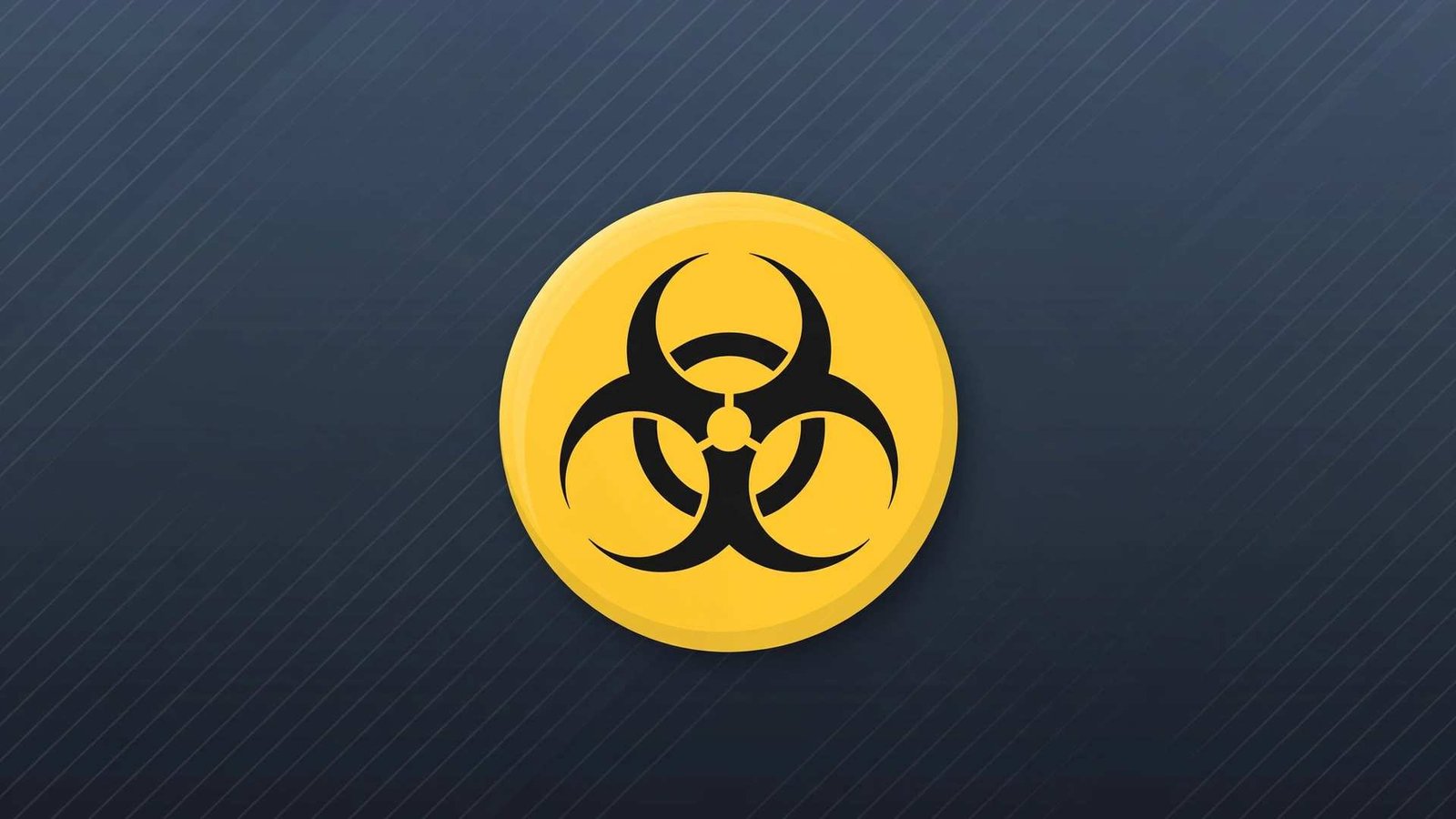
The symbol shows the classic biohazard sign: three curved blades around a center, usually black on orange or yellow.
In real life, it marks germs, viruses, and dangerous lab materials. Online, its emoji meaning is much wider. It can flag a messy room, a toxic group chat, a spicy opinion, or a horror-game reference.
This guide explains the main biohazard emoji meanings in texts and on social apps. You will also find emoji combinations, copy-and-paste options, similar symbols, platform differences, common mistakes, and simple examples. The key idea is easy: read the words around ☣️ before deciding what it means.
What does the biohazard emoji mean?
The biohazard emoji ☣️ mainly means danger, contamination, or something toxic. It can refer to germs, a sick day, a messy space, a risky situation, or a person or habit that feels harmful.
It is rarely literal. Most people use it as a label or a joke. For example, “My inbox this morning ☣️” means the inbox feels overwhelming, not that it is truly dangerous.
Common examples include:
- “Stay away, I have the flu ☣️” — a playful warning.
- “This comment section ☣️” — calling a discussion toxic.
- “My fridge right now ☣️😂” — joking about old food.
- “Enter at your own risk ☣️” — dramatic humor.
Different meanings of the biohazard emoji
General meaning
☣️ stands for danger, germs, contamination, or toxicity. It fits warnings, jokes about messes, and comments about unhealthy situations.
Romantic meaning
In romance, ☣️ usually means a toxic relationship or a dramatic warning. “He is cute but ☣️” suggests the person is trouble, so check the tone.
Friendly meaning
Friends use ☣️ to joke about messes or warn each other. “My room is a ☣️ zone today” is a funny way to admit you need to clean.
Funny meaning
It is a favorite for gross-out humor: “Found leftovers from last month ☣️🤢.” Drama makes the joke funnier.
Sarcastic meaning
☣️ can label something as “toxic” with a wink. “Love the positivity in this chat ☣️” really means the chat is anything but positive.
Social media meaning
On social media, ☣️ tags horror content, zombie games, messy-room posts, or hot takes. It can also mark posts about germs or flu season.
Text message meaning
In texts, it usually means stay away, gross, or toxic. “Do not drink that ☣️” is a joke; “Feeling sick ☣️” asks for sympathy.
Workplace meaning
At work, ☣️ fits jokes about a messy break room or a chaotic project. “The shared drive is ☣️” means it is a mess. Avoid it in serious health or safety messages.
When should you use the biohazard emoji?
Use ☣️ when you want to flag something as gross, risky, or toxic — usually as a joke. Good situations include:
- Joking about a mess: “My car looks like a ☣️ zone”
- Warning friends playfully: “Do not touch my leftovers ☣️”
- Calling out drama: “That group chat is ☣️”
- Posting horror content: “Zombie night stream ☣️🎮”
- Talking about being sick: “Flu season got me ☣️🤒”
- Labeling a hot take: “Unpopular opinion incoming ☣️”
- Reacting to gross food: “What even is this ☣️🤢”
- Marking a toxic habit: “Quitting energy drinks, they are ☣️”
Skip it for real medical emergencies or serious safety warnings. A real hazard needs clear words, not a joking symbol.
What does the biohazard emoji mean from a girl?
From a girl, ☣️ may mean a joke, a warning, or a comment about toxicity. “My room is ☣️, do not come over” is playful honesty.
In a dating chat, “He seems nice but gives ☣️ vibes” means she senses red flags. Look at her words and your relationship rather than gender alone.
What does the biohazard emoji mean from a boy?
From a boy, ☣️ can mean a messy joke, a gaming reference, or a warning. “My setup is ☣️ right now” is about clutter, while “This lobby is ☣️🎮” is about tough opponents.
Beside horror or zombie talk, it probably nods to games like Resident Evil. Context matters more than gender.
Biohazard emoji on Snapchat
On Snapchat, ☣️ fits snaps about messy rooms, gross food, sick days, or spooky filters. It adds drama to a disaster-zone bedroom.
It is not a standard Snapchat friendship-status symbol. Read a private use from the snap, caption, and your usual tone.
Biohazard emoji on WhatsApp
Among WhatsApp emojis, ☣️ works for jokes, warnings, and dramatic reactions. “Do not eat the office cake ☣️” is a joke; “Feeling ill today ☣️” asks for care.
The design may differ from other apps, but its basic meaning stays the same.
Biohazard emoji on Instagram
Instagram emojis create a visual mood. ☣️ fits horror edits, Halloween posts, zombie-game clips, messy-room reels, and bold hot takes: “Toxic positivity ☣️✨.”
In comments, it can mean “this is a mess” or “stay away.” One symbol is usually a joke, not a real warning.
Biohazard emoji on TikTok
TikTok emojis change with trends, but ☣️ often marks horror edits, apocalypse memes, “POV your room” jokes, and storytimes about toxic exes.
A trend can add an inside meaning. Check the audio, caption, hashtags, and comments before assuming a fixed message.
Emoji combinations
Emoji combinations make the biohazard emoji more specific. Here are easy ways to use it:
| Emoji combination | Meaning |
|---|---|
| ☣️🦠 | Germ warning |
| ☣️⚠️ | Serious danger |
| ☣️☢️ | Toxic disaster |
| ☣️💀 | Deadly situation |
| ☣️🤢 | Gross and disgusting |
| ☣️😷 | Sick, keep your distance |
| ☣️🤒 | Flu or illness joke |
| ☣️🧪 | Lab hazard |
| ☣️🧫 | Contaminated sample |
| ☣️💉 | Risky shot joke |
| ☣️🚫 | Keep out |
| ☣️🧹 | Cleanup needed |
| ☣️🔥 | Total disaster |
| ☣️😂 | Messy-room joke |
| ☣️👾 | Zombie apocalypse |
| ☣️🎮 | Horror game night |
| ☣️💔 | Toxic relationship |
| ☣️🗑️ | Toxic trash take |
Copy and paste biohazard emoji
Tap or select a symbol, then copy it into a text, caption, bio, or comment.
- `☣️` Copy
- `☣` Copy
- `☣️☣️` Copy
- `☣️⚠️` Copy
- `☣️🦠🧪` Copy
- `🚫☣️🚫` Copy
- `Do not enter ☣️` Copy
- `Toxic ☣️💔` Copy
This copy and paste emoji is the Unicode character U+2623, usually shown with the emoji variation selector as U+2623 U+FE0F. The receiving device draws its own version of the same character.
Similar emojis
| Emoji | Name | Meaning | Difference |
|---|---|---|---|
| ☢️ | Radioactive | Radiation danger | Nuclear, not biological |
| ⚠️ | Warning | General caution | Broader, less specific |
| ☠️ | Skull and crossbones | Death, poison | Deadly, not germs |
| 💀 | Skull | Death, danger | Spooky, not scientific |
| 🦠 | Microbe | Germs, viruses | The germ itself |
| 🧪 | Test tube | Science, experiments | Lab tool, not a hazard |
| 🧫 | Petri dish | Lab samples | Container, not a warning |
| 💉 | Syringe | Shots, medicine | Medical tool |
| 🚫 | Prohibited | Not allowed | A ban, not danger |
| ⛔ | No entry | Keep out | Blocks entry |
| 🧹 | Broom | Cleaning | Fixes messes |
| 🤢 | Nauseated face | Feeling sick | Shows a reaction |
Emoji appearance across platforms
Unicode defines the character, but each company draws its own artwork. Color, background shape, and detail can change.
- Apple: A black trefoil on an orange rounded square, like a lab warning sticker.
- Android/Google: A black biohazard sign on a bright yellow or orange background.
- Samsung: The same warning idea in Samsung’s illustration style; updates may alter details.
- Windows/Microsoft: Often uses stronger outlines and flatter shapes than mobile designs.
- Facebook: Uses custom artwork that has changed across versions.
- WhatsApp: Uses its own hazard-sign artwork, with small color and background differences.
The code remains U+2623 on every platform. If design details matter, compare the current versions on the actual devices.
Fun facts
- Its official Unicode name is Biohazard Sign. The symbol’s code point is U+2623.
- It was approved in Unicode 1.1 in 1993. That makes it older than most emojis.
- It joined Emoji 1.0 in 2015. This helped standardize its use as an emoji character.
- The real-world symbol was designed in 1966. Charles L. Baldwin of Dow Chemical and Robert S. Runkle of the NIH created it as a universal lab warning.
- It was made to be memorable but meaningless: a striking shape with no prior associations.
- It usually sits on orange or yellow. High-contrast backgrounds help the warning stand out.
- Its emoji code is U+2623 U+FE0F. The extra code tells devices to show the colorful emoji style.
- Its use spiked during the COVID-19 pandemic. People used it for virus jokes, warnings, and public-health posts.
Common mistakes
Treating it as a real safety warning: ☣️ in a chat is usually a joke or a label. For a genuine hazard, use clear words and official channels.
Using it about someone’s real illness: Joking “you are ☣️” at a sick person can feel cruel. Save the humor for messes and memes.
Confusing it with ☢️: ☣️ warns of biological hazards like germs, while ☢️ warns of radiation. They look similar but mean different dangers.
Assuming it always means toxic: It can be a gaming or horror reference. Check the conversation first.
Expecting the same design everywhere: Apple, Android, Samsung, Windows, Facebook, and WhatsApp can draw the symbol differently. A color change does not create a new emoji meaning.
Using it in serious messages: A dramatic hazard symbol may feel wrong in formal or sensitive conversations. Use clear language when the stakes are high.
How to Reply When Someone Sends You the Biohazard Emoji
Replies to the biohazard emoji go wrong when people answer the picture instead of the person. The sender chose it for a reason, and that reason is almost always sitting in the conversation around it, so use those clues first and keep your first reply short.
For a friend: a relaxed, good humored answer is usually right. Friends send this emoji casually, and a casual reply keeps the exchange easy.
For someone you like: a warmer reply is safe when the chat is already warm. Keep it kind and simple, and let their next message set the pace.
For a serious moment: slow down and answer with care. If the emoji is carrying real frustration, sadness, or stress, a supportive sentence matters far more than a clever one.
When you cannot tell: say so lightly and ask what they mean. An honest question is never the wrong reply, and it often gets a better conversation started.
FAQs:
What does the biohazard emoji mean in texting?
In texting, ☣️ most often means gross, dangerous, or toxic. It can joke about a messy room, warn friends to stay away when sick, or label a chat as dramatic. Read the nearby words first. A flu message is likely playful, while a comment about an ex may call the relationship toxic.
Is the biohazard emoji flirty?
The biohazard emoji is rarely flirty on its own. It can appear in dating chats as a joke about “toxic” behavior or red flags, like “he is cute but ☣️.” Even beside hearts it reads as a warning, not romance. Treat it as playful caution rather than affection.
What does ☣️ mean on social media?
On social media, ☣️ often marks horror content, zombie games, messy-room posts, Halloween edits, or bold hot takes. It can also appear in posts about germs or flu season. Instagram emojis and TikTok emojis gain meaning from the photo, video, audio, hashtags, and comments around them.
What is the difference between ☣️ and ☢️?
The ☣️ emoji shows the biohazard sign and warns of biological dangers like germs, viruses, and contamination. The ☢️ emoji shows the radiation trefoil and warns of nuclear or radioactive danger. They look similar at a glance, so check the shape: ☣️ has curved blades, while ☢️ has wedge sections.
Can I use the biohazard emoji at work?
Yes, in casual workplace chats. It works for jokes about a messy break room or a chaotic shared drive, like “the fridge is ☣️ today.” Never use it for real health, safety, or medical messages, where a joking symbol could confuse people or delay action. Keep it light and informal.
Why does the biohazard emoji look different on my phone?
Your phone or app draws the Unicode character using its own emoji artwork. Apple, Google, Samsung, Microsoft, Facebook, and WhatsApp can choose different background shapes, colors, and shading. You are still sending the same U+2623 character, so its basic identity remains the biohazard sign.
How do I copy and paste the biohazard emoji?
Select this symbol: ☣️. Choose Copy, tap where you want it, and choose Paste. You can use it in texts, captions, comments, profiles, and documents that support emoji. If it appears as an empty box, the device or font may lack proper support.
Is the biohazard emoji rude or offensive?
The biohazard emoji is not rude by itself. It becomes hurtful when aimed at a person, such as calling someone ☣️ to label them toxic or diseased. Used for jokes about messes, memes, or games, it is harmless fun. Aim it at situations, not people, to stay kind.
Biohazard Emoji in Horror, Gaming, and Pop Culture
In horror and gaming culture, the biohazard symbol carries instant atmosphere. It appears in zombie games, apocalypse films, survival stories, and Halloween content, where it signals danger, infection, and a world gone wrong. Fans use it to tag streams, edits, and fan art, and readers instantly know the mood before they read a single word. The symbol works so well in this space because it is already a warning sign in real life, so borrowing it for fiction feels both thrilling and familiar.
Creators should still keep the line between fiction and real fear clear. A horror post that pairs the biohazard symbol with a game title, a film reference, or a Halloween hashtag reads as entertainment, while the same symbol beside a vague health claim can cause confusion. Adding a clear label, such as a game night, a movie review, or a costume post, helps readers enjoy the drama without mistaking it for a real warning. Used with that clarity, the biohazard emoji becomes a powerful mood setter for spooky content.
- Use it for zombie games, horror streams, Halloween posts, and apocalypse themed edits.
- Add a clear fiction label, such as a game or film name, so readers know it is entertainment.
- Avoid pairing it with vague health claims, where a joke warning could be misread as real.
- Pair it with other spooky symbols sparingly, so the post feels stylish rather than cluttered.
Biohazard Emoji for Mess, Chaos, and Overwhelm Jokes
Outside horror, the most common use of the biohazard emoji is the mess joke. A messy bedroom, a chaotic inbox, a cluttered car, a fridge full of forgotten food, and a shared drive with no organisation all get labelled as biohazard zones, and the exaggeration is the joke. Nobody believes the room is truly dangerous. The humour comes from calling a normal mess a disaster, and friends usually respond with laughter, sympathy, or their own mess stories.
The joke works best when aimed at a situation, not a person. Calling your own room a biohazard zone is self humour. Calling a sick colleague or a struggling friend a biohazard can feel cruel, even when meant as a joke. The same care applies to work chats. A shared break room joke is usually safe, while a joke about a real illness or a real safety issue is not. Keep the target as clutter, chaos, or workload, and the biohazard emoji stays funny, relatable, and kind.
- Aim the joke at messes, clutter, and chaos, never at a sick or struggling person.
- Use it for your own room, inbox, fridge, or workload for the safest self humour.
- Keep it out of real health, safety, and medical messages, where clear words are essential.
- Follow a mess joke with a cleanup plan when possible, so humour turns into action.
Frequently Asked Questions About the Biohazard Emoji
Is the biohazard emoji a real warning? No, in chats it is almost always a joke, a label, or a horror reference. For a real hazard, use clear words, official channels, and proper safety guidance, never an emoji alone.
Can it mean a toxic person? It can label a toxic situation, chat, or habit, but aiming it at a person can feel hurtful. Use it for situations and behaviour patterns, not as a label for someone you know.
What is the difference from the radioactive emoji? The biohazard symbol warns of biological dangers such as germs and contamination, while the radioactive symbol warns of nuclear danger. They look similar at a glance, so check the shape before reading the message.
Is it rude to send? Not by itself. It becomes rude when aimed at a person, a real illness, or a serious situation. Used for mess jokes, memes, and horror content, it is harmless fun.
The Real Biohazard Symbol Behind the Emoji
The biohazard symbol did not start as an emoji. It was designed in 1966 by Charles Baldwin, an engineer working at Dow Chemical, who wanted a warning sign that was striking, easy to remember, and unlike any other symbol already in use.
The design was tested on ordinary people to make sure it looked serious without resembling anything familiar. That is why the trefoil shape feels strange and attention grabbing even today. It now marks laboratories, medical waste, and any material that may carry biological risk.
Knowing this history adds weight to the emoji. When someone sends the biohazard symbol in a chat, they borrow a sign that was built to demand attention, which is exactly why it works so well for dramatic jokes and playful warnings.
Biohazard Emoji in Science Jokes and Lab Life
Students and lab workers love the biohazard emoji because it turns ordinary stress into a joke. A messy desk, a failed experiment, or a week of exams can all be labelled with the symbol to say that things feel chaotic without claiming any real danger.
It also appears in study group chats and science memes, where it marks topics like bacteria, viruses, and lab safety with a wink. The humour works because everyone in the group knows the real meaning and enjoys bending it for fun.
Science creators use it as a quick visual tag too. A biohazard emoji in a caption tells followers that the post involves germs, labs, or spooky science, and it stands out in a feed full of plain text.
When Not to Use the Biohazard Emoji
The biohazard emoji should stay out of messages about real illness. Telling someone about a sickness, a hospital visit, or a genuine health scare with a biohazard symbol attached can feel dismissive, even when the sender meant no harm.
It also has no place in genuine safety warnings. If a workplace message, a school notice, or a community alert involves a real hazard, plain words and official guidance matter far more than an emoji that readers may take as a joke.
The same care applies to condolence messages and serious announcements. In those moments, a simple and sincere sentence shows far more respect than a dramatic symbol ever could.
Conclusion:
The biohazard emoji ☣️ can mean real danger, germs, a messy joke, a toxic situation, or a horror-game nod. Its text meaning depends on the words, relationship, platform, and tone.
Use ☣️ for playful warnings, gross-out humor, dramatic labels, and spooky content. Pair it with other emoji combinations for clarity. In serious conversations, choose plain words instead.

I’m Noah Mitchell, an author at Outrexora.com, where I share clear, engaging, and informative content covering the latest news, insights, trends, and topics that matter to readers.