You open a text and see a wide smile with happy, closed eyes: “We did it! 😁”. Is the sender thrilled, joking, or just being friendly?
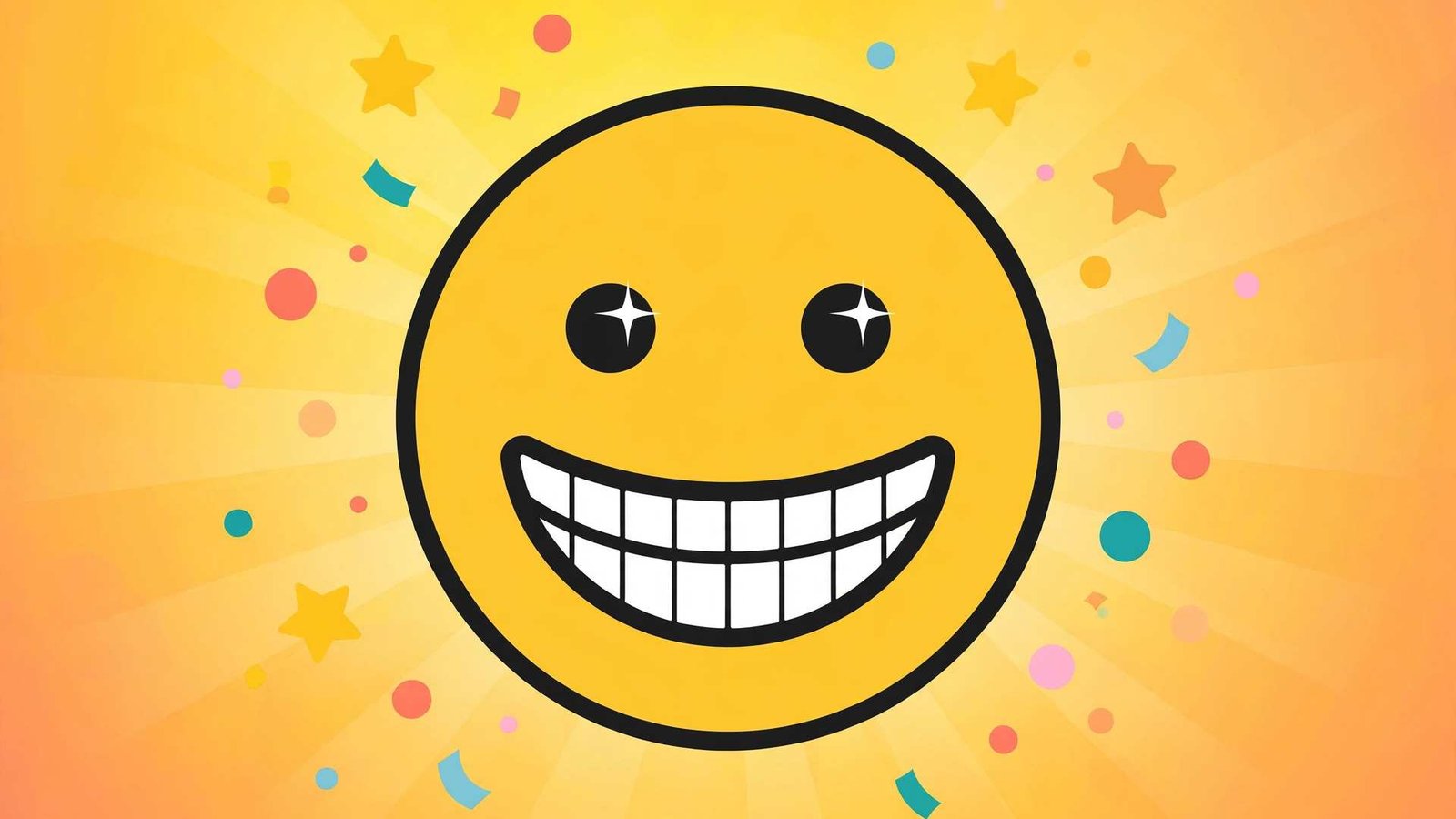
The big grin emoji is one of the happiest faces in the keyboard. It turns a plain sentence into a burst of joy.
Here is an honest note first. There is no single official emoji named “big grin emoji” in the Unicode list. The face most people mean is 😁, whose official name is Beaming Face with Smiling Eyes.
It shows a big toothy smile with smiling, squinted eyes. Some people also use 😀 for a big grin, but 😁 is the true big-grin face.
This guide explains the big grin emoji meaning in texts and on social apps. You will find emoji combinations, copy-and-paste options, similar symbols, platform differences, and common mistakes. The main idea is simple: read the words around 😁 before deciding what it means.
—
What does the big grin emoji mean?
The big grin emoji 😁 mainly means happiness, excitement, or a big cheerful mood. It can show that someone is proud, amused, friendly, or relieved. Its bright, squinted eyes make the smile look extra warm and genuine.
People use it when words alone feel too flat. “I passed the test 😁” feels much happier than the same sentence with no emoji. The face adds energy and friendliness.
Common examples include:
- “We won the match 😁” — excitement and pride.
- “That joke got me 😁” — amusement.
- “See you tomorrow 😁” — friendly warmth.
- “Finally done with work 😁” — relief and joy.
Different meanings of the big grin emoji
General meaning
😁 stands for a big, happy grin. It fits good news, jokes, friendly greetings, and cheerful replies.
Romantic meaning
In a romantic chat, it can mean delight or playful affection. Beside ❤️, 😘, or 🥰, it may feel flirty, but the full message matters.
Friendly meaning
Friends use 😁 to show warmth and good spirits. “Great seeing you 😁” feels like a real smile.
Funny meaning
It often reacts to humor: “I tried to be serious and failed 😁”. It can also laugh at itself.
Sarcastic meaning
A big grin can add a cheeky tone to a teasing line. Look at the situation and earlier messages to catch the joke.
Social media meaning
On social media, 😁 marks happy photos, funny clips, wins, and light captions. It signals a good mood.
Text message meaning
In texts, the text meaning is usually joy, relief, or friendliness. “All set 😁” shows confidence and cheer.
Workplace meaning
At work, 😁 may celebrate a win or keep a casual chat friendly. “Deadline met 😁” is upbeat. Keep it out of formal or serious messages.
When should you use the big grin emoji?
Use 😁 when you want a message to feel happy, proud, or warm. Good situations include:
- Sharing good news: “I got the job 😁”
- Reacting to a joke: “That’s hilarious 😁”
- Saying thanks: “Thanks for the help 😁”
- Cheering up a friend: “You will do great 😁”
- Showing relief: “We made it just in time 😁”
- Sending a friendly hello: “Hey! Long time 😁”
- Celebrating a win: “Team dinner tonight 😁🎉”
- Posting a happy photo: “Weekend mood 😁☀️”
Avoid it for serious, sad, or formal topics unless the other person already uses a playful tone. A big grin after bad news may seem careless.
What does the big grin emoji mean from a girl?
From a girl, 😁 may mean joy, amusement, or friendly warmth. “You are the best 😁” is a cheerful compliment, while “That was funny 😁” is a laugh.
In a flirty chat, hearts or sweet nicknames can add romance: “Talk to you soon 😁❤️.” Look at her words and your relationship rather than gender alone.
What does the big grin emoji mean from a boy?
From a boy, 😁 can mean pride, fun, or friendly energy. “Nailed it 😁” shows excitement; “Good game 😁” is warm sportsmanship.
Beside 😂, 🔥, or clear praise, playful energy is likely. In a happy chat, it simply means he is smiling. Context matters more than gender.
Big grin emoji on Snapchat
On Snapchat, 😁 fits funny snaps, selfies, streak messages, and reactions to friends’ stories. It adds instant cheer to a snap.
It is not a standard Snapchat friendship-status symbol like the official friend emojis. Read a private use from the snap, caption, and your usual tone.
Big grin emoji on WhatsApp
Among WhatsApp emojis, 😁 is a daily favorite. It works for good news, jokes, greetings, and warm replies: “On my way 😁” feels upbeat and kind.
The design may differ slightly from other apps, but its basic meaning stays the same.
Big grin emoji on Instagram
Instagram emojis create a visual mood. 😁 fits happy selfies, travel photos, reels, and playful captions: “Living my best day 😁✨.”
In comments, it can mean “love this” or “so fun.” One symbol is usually light praise, not a secret code.
Big grin emoji on TikTok
TikTok emojis change with trends, but 😁 often marks funny videos, wins, and wholesome moments. Creators use it to show joy in captions and replies.
A trend can add an inside meaning. Check the audio, caption, hashtags, and comments before assuming a fixed message.
Emoji combinations
Emoji combinations make the big grin emoji more specific. Here are easy ways to use it:
| Emoji combination | Meaning |
|---|---|
| 😁❤️ | Happy love |
| 😁🥰 | Joyful affection |
| 😁😘 | Playful, flirty mood |
| 😁😂 | Laughing hard |
| 😁🎉 | Celebration |
| 😁🏆 | Victory and pride |
| 😁✨ | Shining happiness |
| 😁🌟 | Star moment |
| 😁👍 | Happy approval |
| 😁🙌 | Cheers and excitement |
| 😁🎂 | Birthday joy |
| 😁🎁 | Happy gift |
| 😁☀️ | Sunny mood |
| 😁🌈 | Bright, colorful joy |
| 😁💪 | Proud strength |
| 😁🔥 | On fire, excited |
| 😁🍕 | Happy food moment |
| 😁🎶 | Joyful music mood |
| 😁🐶 | Cute pet happiness |
| 😁😅 | Relieved, nervous laugh |
Copy and paste big grin emoji
Tap or select the symbol you want, then copy it into a text, caption, bio, or comment.
- `😁` Copy
- `😁😁` Copy
- `😁❤️` Copy
- `😁✨` Copy
- `😁🎉🙌` Copy
- `🎂😁🎉` Copy
- `😁😂` Copy
- `So happy 😁` Copy
This copy and paste emoji is the Unicode character U+1F601. The receiving device draws its own version of the same character.
Similar emojis
| Emoji | Name | Meaning | Difference |
|---|---|---|---|
| 😀 | Grinning Face | Happy smile | Open eyes, less beaming than 😁 |
| 😃 | Grinning Face with Big Eyes | Very happy | Wide-open eyes, no squint |
| 😄 | Grinning Face with Smiling Eyes | Joyful smile | Shows a smile without visible teeth |
| 😆 | Grinning Squinting Face | Laughing hard | Squinted eyes, may suggest laughing |
| 😅 | Grinning Face with Sweat | Nervous laugh | Adds sweat, relief, or awkwardness |
| 🙂 | Slightly Smiling Face | Mild smile | Calmer, less excited |
| 😊 | Smiling Face with Smiling Eyes | Warm smile | Gentler, more tender mood |
| 😏 | Smirking Face | Smug smile | Suggests teasing or confidence |
| 🤣 | Rolling on the Floor Laughing | Extreme laughter | Much stronger laughing reaction |
| 😎 | Smiling Face with Sunglasses | Cool confidence | Adds a cool, relaxed tone |
| 🥳 | Partying Face | Celebration | Includes party hat and noise maker |
| 😇 | Smiling Face with Halo | Innocent, kind | Playful purity or kindness |
Emoji appearance across platforms
Unicode defines the character, but each company draws its own artwork. The teeth, eyes, smile width, and shading can change.
- Apple: A bright yellow face with a big toothy grin and closed, smiling eyes.
- Android/Google: Google’s own beaming face with bold teeth and cheerful squinted eyes.
- Samsung: The same grin idea in Samsung’s illustration style; updates may alter details.
- Windows/Microsoft: Often uses stronger outlines and flatter shapes than mobile designs.
- Facebook: Uses custom artwork that has changed across versions.
- WhatsApp: Uses its own grinning artwork, with small tooth and eye differences.
The code remains U+1F601 on every platform. If design details matter, compare the current versions on the actual devices.
Fun facts
- Its official Unicode name is Beaming Face with Smiling Eyes. The symbol’s code point is U+1F601.
- It has been in Unicode since version 6.0. That version was released in 2010.
- It joined Emoji 1.0 in 2015. This helped standardize its use as an emoji character.
- The squinted eyes are the key detail. Closed, happy eyes separate 😁 from 😀, which has open eyes.
- People often call it the “big grin emoji.” That is an unofficial nickname, not the Unicode name.
- A very popular happy face. Its cheerful look fits news, jokes, and greetings.
- Its artwork is not universal. Platforms interpret the same Unicode character with different teeth and eyes.
- It works without words. As a reply to good news, 😁 alone can say “I am so happy for you.”
Common mistakes
Confusing it with 😀: 😁 shows smiling, squinted eyes with teeth. 😀 has open eyes. They are close but not the same.
Assuming it always means flirting: A heart or romantic sentence may make 😁 flirty, but the face alone usually means joy or friendliness.
Reading too much into the sender’s gender: The meaning does not change by the sender’s gender. Conversation and relationship matter more.
Ignoring the teasing tone: A big grin can be sarcastic. “Oh great, more homework 😁” is probably a joke, not real joy.
Using it in serious messages: A playful grinning face may feel wrong in formal, urgent, or sensitive conversations. Use clear language when the stakes are high.
Expecting the same design everywhere: Apple, Android, Samsung, Windows, Facebook, and WhatsApp can draw the symbol differently. A visual change does not create a new emoji meaning.
FAQs:
What does the big grin emoji mean in texting?
In texting, 😁 usually means happiness, excitement, or cheerful relief. It can show pride after a win, amusement at a joke, or warm friendliness in a greeting. Read the nearby words first. The sentence and your relationship with the sender provide the clearest answer.
Is the big grin emoji flirty?
The big grin emoji can feel flirty beside a heart, kiss, pet name, or sweet compliment. On its own, it usually means joy or friendliness, not romance. Look at the full message. A simple “That was fun 😁” is playful, while “Missing you 😁❤️” leans romantic.
What is the difference between 😁 and 😀?
The 😁 emoji shows a beaming grin with closed, smiling eyes and visible teeth. The 😀 emoji shows a similar toothy smile with open eyes. The squinted eyes make 😁 look warmer and more joyful. Many people use them interchangeably, but 😁 feels slightly more expressive.
What does 😁 mean on social media?
On social media, 😁 often marks happy photos, funny clips, wins, and upbeat captions. Instagram emojis and TikTok emojis gain meaning from the photo, video, audio, hashtags, and comments around them. In most cases, it simply signals a cheerful, positive mood rather than a hidden message.
Can I use the big grin emoji at work?
Yes, in casual workplace chats. It works for celebrating wins, sharing good news, or keeping a friendly tone. For example, “Project done 😁” is upbeat and clear. Skip it in formal reports, difficult feedback, or urgent messages where a playful face could seem unprofessional.
Why does the big grin emoji look different on my phone?
Your phone or app draws the Unicode character using its own emoji artwork. Apple, Google, Samsung, Microsoft, Facebook, and WhatsApp can choose different teeth, eyes, smile width, and shading. You are still sending the same U+1F601 character, so its basic identity remains a big grin.
How do I copy and paste the big grin emoji?
Select this symbol: 😁. Choose Copy, tap where you want it, and choose Paste. You can use it in texts, captions, comments, profiles, and documents that support emoji. If it appears as an empty box, the device or font may lack proper support.
Does the big grin emoji have an official Unicode name?
There is no emoji officially named “big grin emoji.” The face most people mean is 😁, officially called Beaming Face with Smiling Eyes, code point U+1F601. “Big grin emoji” is simply the common nickname people search for, which is why this guide uses it.
Conclusion:
The big grin emoji 😁 can mean joy, excitement, amusement, relief, or warm friendliness. Its text meaning depends on the words, relationship, platform, and tone.
Use 😁 for good news, jokes, friendly greetings, happy photos, and light celebrations. Pair it with emoji combinations for clarity.
In serious conversations, choose plain words. With the right context, the big grin emoji adds a burst of sunshine.

I’m Ava Richardson, a passionate writer and author at Outrexora.com, where I share engaging, informative, and easy-to-understand content on the latest news, insights, and trends. My goal is to bring readers useful information in a clear and enjoyable way.