You are scrolling through your messages when it appears, a yellow face with its eyes squeezed shut and little puffs of steam shooting from its nose. Is the sender furious? Joking? Flirting?
The steam emoji is one of the most emotionally loaded faces on your keyboard. And reading it wrong can turn a fun chat awkward in seconds.
Most people know it as the angry face, but that is only the beginning. Depending on the conversation, the steam emoji can signal frustration, fierce determination, playful teasing, post workout pride. Or even flirty heat.
In this guide we decode every major meaning, show how it looks on different phones, explain the flirty versus friendly divide. And give you real chat examples.
The Official Meaning of the Steam Emoji
The emoji most people call the steam emoji is officially named face with steam from nose. It was approved as part of Unicode 6.0 back in 2010, which makes it one of the older faces on your keyboard. And for years it was also known by the nickname triumph face.
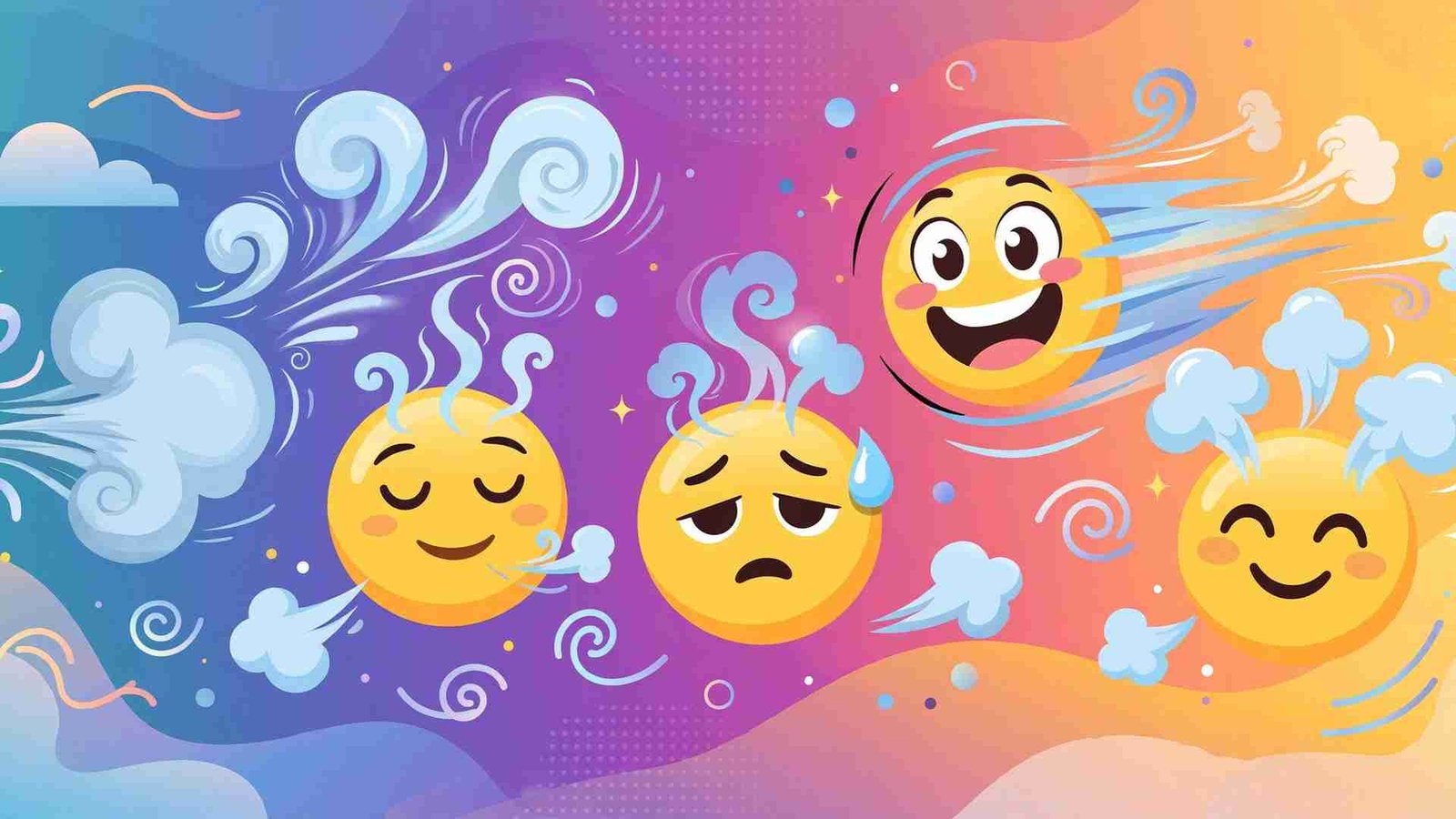
The design tells the whole story. The eyes are closed or scrunched, the mouth is set in a firm line. And visible puffs of steam blow outward from the nostrils. It is the cartoon version of someone so worked up that steam is practically coming out of their ears, a visual idea borrowed from classic animation where an angry character literally overheats.
Officially, then, the steam emoji expresses frustration, anger, and annoyance. It says I am fed up, this is infuriating, or I have reached my limit. When someone sends it after complaining about traffic, a canceled plan. Or a rude stranger, the meaning is exactly what it looks like, genuine irritation vented in a single character.
But official meanings only capture the starting point. Real people have stretched this emoji into far more territory, and the rest of this guide maps all of it.
What the Steam Emoji Looks Like on iPhone, Android, and Samsung
Like all emoji, the steam face changes its expression slightly from platform to platform. And those small shifts can nudge how intense it feels.
On iPhone, Apple draws it as a bright yellow face with tightly closed eyes, a small frown. And two neat white puffs of steam angled outward from the nose. The overall effect is clearly annoyed but still a little cartoonish, which softens the anger just enough to feel safe in casual chats.
On Android with Google design, the face looks rounder and the steam puffs are slightly larger and more dramatic. The scrunched eyes sit lower, giving it a somewhat more exasperated look, like someone sighing heavily through their nose rather than about to explode.
Samsung has historically given it a sharper, more angular style with bolder steam trails, which can make it read as the angriest of the three. WhatsApp uses its own softer rendering that lands somewhere in the middle, annoyed but approachable.
None of these versions change the core meaning, but the intensity dial moves a little. If a message feels harsher than the words suggest, the platform art may be doing half the shouting.
The Core Meanings of the Steam Emoji in Texts
Strip away the edge cases and the steam emoji reliably delivers five core messages. Learn these and you will decode the vast majority of sightings.
Frustration and annoyance. This is the number one use. Stuck in traffic, dealing with terrible customer service, waiting on a late friend, the steam emoji turns a complaint into a feeling. It says this situation is getting to me without needing a paragraph of ranting.
Anger and displeasure. One step up from annoyance. When someone is genuinely mad about an insult, an unfair decision, or a betrayal, the steam face carries real heat. It is less aggressive than the swearing face with symbols on its mouth, which makes it the go to choice for expressing anger while staying reasonably polite.
Determination and defiance. This is the meaning most guides underplay. Athletes post it before a big game, students use it during exam week. And anyone facing a challenge drops it to say I am not backing down. Here the steam is not anger at someone, it is competitive fire. Think of a bull pawing the ground before a charge.
Triumph and pride. The old nickname triumph face survives in this usage. After finishing a hard workout, winning an argument. Or pulling off something difficult, the steam emoji says I did it and I am still fired up about it. The pride reading is why you will see it all over gym posts and gaming victories.
Exaggerated venting for comedy. Friends constantly use it to dramatize tiny problems. Cold coffee, a phone at one percent battery, a show ending on a cliffhanger, the steam emoji turns minor suffering into a joke. The overreaction is the entire point, and everyone in the chat knows it.
Slang Meaning vs Official Meaning
The official meaning of the steam emoji is frustration and anger, full stop. It was designed as the face of someone blowing off steam because they are upset. And in formal emoji references that is still the definition.
The slang meaning has grown much wider. In everyday texting the steam face now also means fired up in a good way, as in pumped for the weekend or ready to compete. In fitness circles it signals post workout intensity. In banter between friends it can mean playfully annoyed, the equivalent of saying oh you did not just say that with a grin. And in flirty contexts, which we will unpack next, the heat turns romantic.
The key difference is direction. Officially the steam points outward at a problem. In slang it often points inward at the sender own energy, excitement, or attraction. When you see the steam emoji, ask yourself whether the sender is upset about something or hyped about something. That single question separates the official reading from the slang one almost every time.
Flirty or Friendly: Decoding the Steam Emoji
This is the question that brings most people to this article. You received a steam emoji in a chat that felt a little charged. And now you are wondering whether it was flirty or just friendly. Here is how to tell.
The steam emoji turns flirty when the heat is about attraction. Think of the cartoon logic, a character sees someone stunning and steam shoots from their ears. In texts this translates to you are making me confused in a good way. Signs it is flirty include timing, if it follows a compliment, a selfie. Or a suggestive joke, and pairing, if it arrives alongside a smirk, a wink, or a fire emoji. A message like stop being so cute with a steam face is teasing, not anger. It means you are getting to me, and I like it.
The steam emoji stays friendly when the heat is about literally anything else. Venting about work, hyping up a sports team, joking about a delayed food delivery, celebrating a gym session, all friendly. The tell is the topic. If the conversation is about a situation, a game, or a shared joke, the steam is platonic energy. Nobody is flirting about a parking ticket.
There is also a middle zone worth knowing. Playful fake anger is a classic flirting move. When someone pretends to be outraged that you beat them at a game or teased them too well, the steam emoji delivers the joke. It says I am pretending to be mad because this banter is fun. That is friendly on the surface with a flirty spark underneath. And it is extremely common in early stage dating chats.
When in doubt, look at the sentence attached to it. Flirty steam almost always sits next to words about you, your looks, your charm, or your teasing. Friendly steam sits next to words about situations, events, and third parties. The words name the target, and the target tells you everything.
What the Steam Emoji Means From a Guy vs From a Girl
The core meanings do not change with gender, but the patterns of use do lean in slightly different directions. And knowing the lean helps you read the room.
From a guy, the steam emoji most often shows competitive or venting energy. Guys tend to deploy it around sports, gaming, workouts, traffic, and work frustrations. A guy texting his friends after a tough loss might send it to say that game drove me confused. In romantic chats, a guy is more likely to use the flirty version as playful heat, pairing it with teasing or compliments. When a guy sends it to someone he is dating, check whether the message is about you or about his day, because that split usually reveals the intent.
From a girl, the steam emoji frequently carries venting and boundary setting energy. Girls often use it to flag that something crossed a line, from a rude comment to a canceled plan, in a way that is firm but not nuclear. It also appears heavily in funny exaggeration among friends, dramatizing small disasters for laughs. In flirty contexts from a girl, it often reads as cute frustration, the textual equivalent of playfully rolling her eyes at someone she likes.
These are tendencies, not rules. Individual texting style and the specific conversation always outweigh any gender pattern. So treat this section as a tiebreaker, not a verdict.
Real Chat Examples of the Steam Emoji
Context is everything with this face, so here are realistic exchanges covering its full range.
Example one, pure frustration:
Hassan: I have been on hold with the airline for forty minutes and they just hung up on me.
Hassan: Steam emoji.
Classic venting. Nobody reading this wonders whether Hassan is flirting with the airline.
Example two, fired up determination:
Coach: Championship game tomorrow, be ready.
Bilal: I have trained all season for this. Steam emoji.
The steam here is competitive fire, not anger at the coach.
Example three, flirty heat:
Zara: Just sent you the photos from the wedding.
Imran: Okay you need to stop looking that good. Steam emoji.
The compliment plus the steam equals attraction, decoded instantly.
Example four, playful fake anger:
Mahnoor: I ate the last slice of pizza, no regrets.
Danish: I cannot believe you. Steam emoji.
Both of them are laughing. The steam is theater, and the joke only works because they are close.
Example five, gym pride:
Usman: Leg day destroyed me but I finished every set. Steam emoji.
Triumph, sweat, and pride in one character. This is the old triumph face nickname alive and well.
How to Reply When Someone Sends You the Steam Emoji
When the steam emoji lands in a chat, it is usually shorthand for a moment, a plan, or a mood. Your reply lands best when it answers that moment, so glance at the photo, story. Or message it came with before you write anything.
React to what they shared: if it came with a photo or an update, comment on that first. People send this emoji to highlight the moment, and noticing the moment is the reply they wanted.
Add one of your own: sending the same emoji back with a short line of your own keeps the exchange balanced. It says you are in the moment with them, not just watching it.
Ask about the plan: when the emoji hints at an activity, a trip, a meal. Or a purchase, one question about the details turns a reaction into a real conversation.
Keep it short: this emoji does its best work in quick, casual exchanges. One or two sentences is plenty, and a long serious reply can make a light moment feel heavy.
Steam Emoji Combos to Copy and Paste
Combos let the steam emoji say more than it can alone. Tap and hold any combo below to copy it, then paste it into your chat. Each one keeps the steam emoji as the star and adds one clear extra feeling.
😤💢 Pure frustration: for the moment something breaks, fails, or goes wrong for the third time today.
😤🏋️ Workout pride: for gym posts where the steam means effort and determination, not anger.
😤🔥 Fired up: for competitive moments, big games, and challenges you are ready to win.
😤😂 Joking anger: for fake outrage between friends, where the laughing face proves nobody is really mad.
😤🏆 Determined to win: for exams, matches, and goals you refuse to give up on.
Use combos like these in casual chats and captions, and avoid them in serious complaints, work messages. And apologies, where the playful extra symbols can make a real feeling look like a joke.
FAQs:
Is the steam emoji flirty?
It can be, but it is not automatically flirty. It turns flirty when it follows a compliment, a teasing joke. Or a photo, because then the heat reads as attraction. In most everyday uses, venting, sports, workouts, jokes, it is completely platonic. Check what the message is about and you will have your answer.
Does the steam emoji always mean angry?
No. Anger is the official meaning. But real usage includes determination, pride, excitement, and playful exaggeration. A steam emoji after a workout means the opposite of anger, it means triumph. Context decides which version you are looking at.
What is the difference between the steam emoji and the angry face emoji?
The red angry face with furrowed brows signals straightforward rage, while the steam face is more versatile. Steam can be annoyed, fired up, proud, or joking, and it usually feels less aggressive. People pick the steam face when they want heat without hostility.
What does it mean when a guy sends the steam emoji?
Most often he is venting about something or hyping himself up, especially around sports, games. Or a frustrating day. If the message is about you, your looks, or your teasing, it leans flirty. If it is about his day or a situation, it is friendly frustration.
How should I reply to the steam emoji?
Match the energy. If someone is venting, acknowledge it with sympathy before offering solutions. If they are hyped, hype them back. If it was playful, keep the joke going. And if it felt flirty and you like it, a little teasing in return keeps the spark alive.
Steam Emoji in Family Group Chats
In a family group chat, the steam face often reads softer than it does anywhere else. Parents, siblings, and cousins know your sense of humor, so a burst of steam usually lands as everyday grumbling rather than real anger. It works best when the complaint is small, shared, and easy to laugh about later.
Mum, the Wi-Fi dropped right in the middle of my online class again.
Dad promised to fix the leaking tap last weekend, and it is still dripping.
Who finished the leftovers I was saving for lunch, because I had plans for those.
Traffic on the school run was so slow that we missed the start of the film.
My brother borrowed my charger again, and now my phone is almost dead.
Cheering on Friends With the Steam Emoji
Cheering for a friend can also call for steam, but here the heat points outward in support. Instead of saying you are angry, you are saying your friend is fired up, focused, and ready to win. It works in sports chats, exam week messages, and job interview pep talks, where a little extra fire feels encouraging rather than harsh.
Go get them tomorrow, you have trained for this all season.
Final exam today, show that paper who is boss.
You have got the interview, now walk in like you already belong there.
Last match of the season, leave everything on the field.
You survived the hardest week, one more push and it is done.
I am in your corner, no matter how tough this round gets.
Steam Emoji in Sports, Gaming, and Competition
In sports and gaming chats, the steam emoji rarely means real anger. It means competitive fire, the feeling of being ready, focused, and unwilling to back down. A player posts it before a final match, a gamer drops it after a close win, and a runner uses it after a personal best, and in each case the steam signals energy rather than hostility. Teammates read it as motivation, opponents read it as confidence, and friends read it as hype. That shared understanding is why the symbol works so well in competitive spaces, where a long motivational speech would feel heavy but a single heated face feels perfect.
Context still decides the exact shade. Steam beside a score, a training photo, or a trophy clearly means pride and determination. Steam beside a complaint about a referee or a lost match may mean genuine frustration, and steam sent during a heated argument can escalate the mood instead of lightening it. Smart players keep the symbol for hype moments and celebrations, and switch to plain words when a real disagreement needs solving. Used that way, the steam face becomes a team cheer rather than a warning sign.
- Use it before big matches, tournaments, and challenges to signal readiness and focus.
- Pair it with a trophy, fire, or muscle symbol when the message is about victory or effort.
- Avoid it in serious disputes with teammates, where it can read as anger instead of motivation.
- Save it for public hype posts, where its cartoon energy feels fun rather than aggressive.
Steam Emoji at Work and in Study Pressure
At work and during study pressure, the steam emoji has become a shorthand for being overwhelmed but still pushing through. A student posts it during exam week, a colleague sends it after a long day of back to back meetings, and a freelancer uses it when a deadline piles up. The message is not I am angry with you, it is I am under pressure and working hard. Friends and coworkers usually respond with encouragement, a joke, or practical help, which is exactly the support the sender wanted.
The symbol needs care in professional chats, because a manager or a client may read it as frustration with them rather than frustration with the workload. Add a short sentence that names the task, not the person, and the meaning becomes safe. For example, steam beside a note about a heavy deadline reads as honest effort, while steam alone after a manager message can read as defiance. Students face a similar balance. In a study group, the symbol builds solidarity. In a message to a teacher, plain polite words are almost always the better choice.
- Name the task in words, so the steam clearly means pressure from work, not anger at a person.
- Use it with study partners and close colleagues, where the joking tone is already understood.
- Avoid it in messages to managers, clients, and teachers unless the relationship is relaxed and friendly.
- Follow it with a plan when possible, such as a break, a revised deadline, or a request for help.
Frequently Asked Questions About the Steam Emoji
Does the steam emoji mean the same as the angry face? No, the angry face signals straightforward rage, while the steam face is more flexible. Steam can mean annoyance, determination, pride, playful exaggeration, or flirty heat, and the surrounding words decide which version applies.
Can the steam emoji be positive? Yes, it is often positive. After a workout, a win, or a finished challenge, it means triumph and fired up energy. The old nickname triumph face survives precisely because this positive use is so common.
Should I use it when I am genuinely angry? Use plain words for genuine anger, especially with people you care about. The steam emoji can soften a message, but it can also hide the real issue. A clear sentence explains what went wrong far better than a heated face alone.
Is it safe to use in a family group chat? Yes, for small shared frustrations and jokes, because family members usually know your humour. Avoid it for serious family disagreements, where a calm sentence prevents a joke from turning into a real argument.
Conclusion:
The steam emoji is far more than an angry face. Officially it means frustration, and that reading still covers most sightings. But in real chats it has grown into a full spectrum, from competitive fire and gym triumph to playful banter and unmistakable flirty heat.
The decoding trick never changes. Look at what the message is about, who sent it, and what came right before it. Do that, and the little puffs of steam will tell you exactly what the sender feels, every single time.

I’m Noah Mitchell, an author at Outrexora.com, where I share clear, engaging, and informative content covering the latest news, insights, trends, and topics that matter to readers.