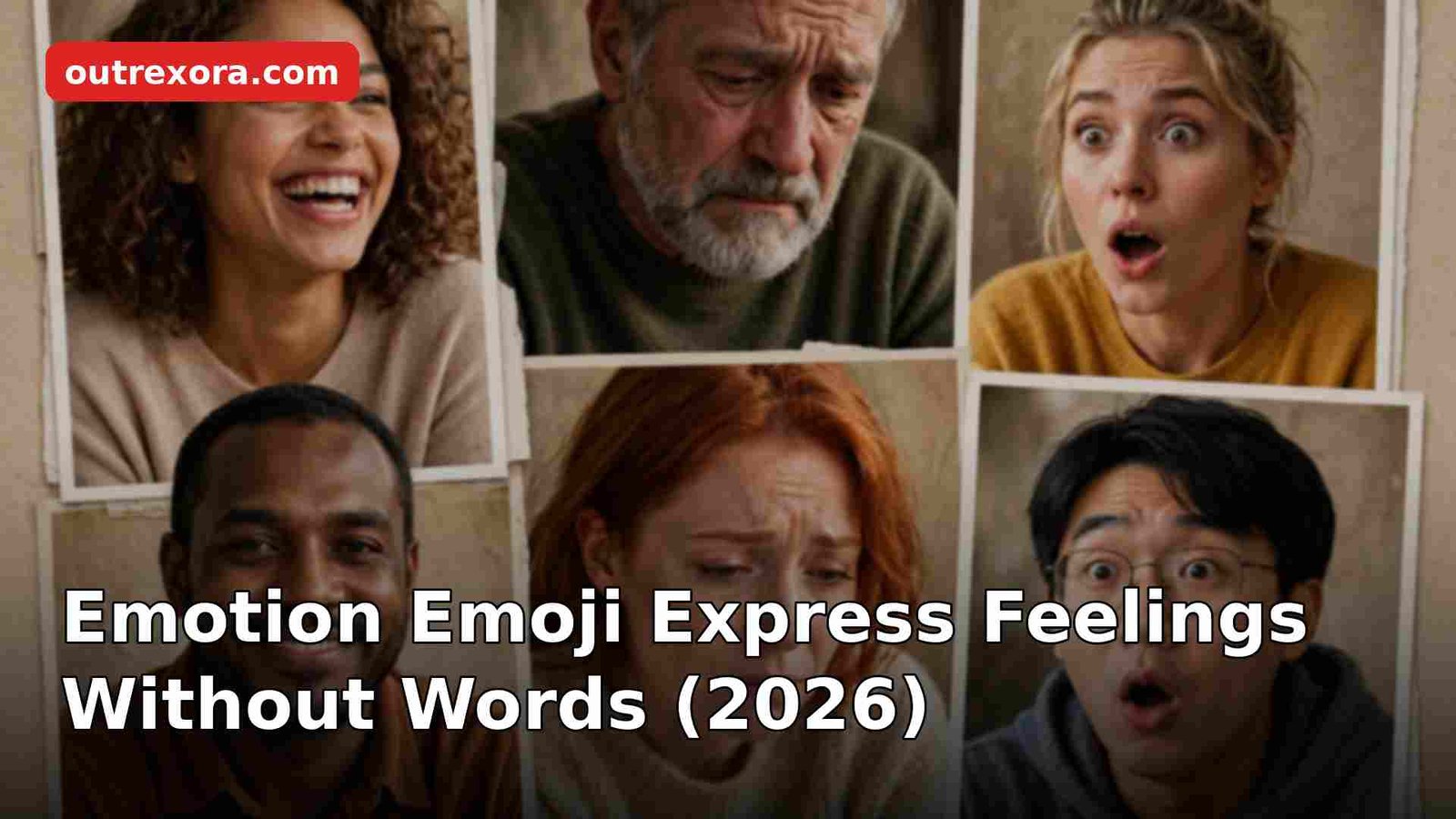
Sometimes, one tiny emoji can say what a whole paragraph cannot.
I remember trying to explain my feelings in a message and realizing that words alone did not always capture the moment.
That is where the emotion emoji becomes helpful. If you are happy, sad, excited, or simply trying to make a message warmer, the right expression can add personality.
In this guide, we will explore emotion emoji meanings, copy-paste options, and practical ways to use them on WhatsApp, Instagram, and TikTok.
The right emotion emoji can turn an ordinary message into something that feels genuinely personal.
What do emotion emoji mean?
Emotion emojis are digital expressions that help communicate feelings, reactions, and moods. Their meaning depends on the face, the surrounding words, and the relationship between the people using them.
For example, a smiling face may express happiness in one conversation but gentle sarcasm in another. A crying face might show sadness, laughter, or emotional overwhelm, depending on the context.
Here are six common emotion emojis and how their meanings can change:
| Emoji | Core meaning | Misread as | Best used when |
| 😊 | Warm happiness | Formal politeness | Friendly messages |
| 😂 | Strong amusement | Laughing at someone | Funny moments |
| 🥹 | Emotional tenderness | Sadness only | Heartfelt reactions |
| 😭 | Intense emotion | Sadness only | Dramatic or funny reactions |
| 😍 | Admiration and delight | Romantic interest | Compliments and excitement |
| 😔 | Sadness or disappointment | Anger | Difficult moments |
😊 Smiling Face with Smiling Eyes
Meaning: Warm happiness, friendliness, and appreciation.
Example 1: Thank you for helping me 😊
Example 2: I am so happy to hear that 😊
😂 Face with Tears of Joy
Meaning: Strong amusement or laughter.
Example 1: That video was hilarious 😂
Example 2: You really said that in front of everyone 😂
🥹 Face Holding Back Tears
Meaning: Tenderness, gratitude, or being emotionally touched.
Example 1: You remembered my birthday 🥹
Example 2: This is so sweet of you 🥹
😭 Loudly Crying Face
Meaning: Intense sadness, dramatic emotion, or exaggerated laughter.
Example 1: I cannot believe the movie ended like that 😭
Example 2: You are making me laugh so hard 😭
😍 Smiling Face with Heart-Eyes
Meaning: Admiration, delight, or strong affection.
Example 1: This cake looks amazing 😍
Example 2: Your new outfit is beautiful 😍
😔 Pensive Face
Meaning: Sadness, disappointment, or quiet reflection.
Example 1: I wish things had worked out 😔
Example 2: Missing those old days 😔
🥰 Smiling Face with Hearts
Meaning: Affection, warmth, and feeling loved.
Example 1: You made my day 🥰
Example 2: Sending you a big thank-you 🥰
🙈 See-No-Evil Monkey
Meaning: Shyness, embarrassment, or playful awkwardness.
Example 1: I cannot believe I said that 🙈
Example 2: Stop making me blush 🙈
😎 Smiling Face with Sunglasses
Meaning: Confidence, coolness, or playful self-assurance.
Example 1: Finished my work early 😎
Example 2: We are ready for the weekend 😎
🤣 Rolling on the Floor Laughing
Meaning: Extremely funny or uncontrollable laughter.
Example 1: Your joke was too much 🤣
Example 2: I am still laughing at that moment 🤣
🤗 Smiling Face with Open Hands
Meaning: A welcoming, friendly, or supportive gesture.
Example 1: Welcome to the group 🤗
Example 2: Sending you a virtual hug 🤗
😢 Crying Face
Meaning: Sadness, emotional hurt, or feeling moved.
Example 1: I miss our old conversations 😢
Example 2: That ending made me emotional 😢
How to use emotion emoji the right way
The same emotion emoji can feel different depending on the platform. Consider the audience, the conversation, and the overall tone before adding an expression.
WhatsApp: Personal and expressive
WhatsApp emojis work well in everyday conversations with friends, family, and classmates. Add one after a sentence to make a message feel warmer or more expressive.
- Do: Match the expression to your actual message.
- Do: Use familiar emojis when chatting with people you know.
- Don’t: Add too many expressions to a serious conversation.
- Don’t: Assume everyone understands an ironic reaction.
Instagram: Aesthetic and branding-focused
Instagram emojis can complement captions, comments, bios, and stories. Content creators often choose expressions that match a post’s mood, visual style, or personality.
For example, a cheerful caption can include 😊, while a playful fashion post might use 😎. Keep the overall presentation easy to read, especially when emojis appear beside important text.
TikTok: Humor, trends, and irony
TikTok emojis often appear in comments, captions, and reactions to short videos. Expressions such as 😂, 😭, and 🤣 can add dramatic humor or signal that a comment is not meant literally.
Context matters. A reaction that looks funny under a comedy video might seem insensitive under a serious story.
Best emotion emoji combos copy & paste
These combinations use familiar expressions to help you communicate affection, playfulness, and everyday feelings.
Romantic
- 😍🥰 A sweet reaction to someone you adore.
- 🥰😊 Showing affection in a warm message.
- 😍🤗 Sending admiration and a friendly embrace.
Cute
- 🥹🥰 Reacting to something especially sweet.
- 😊🤗 A cheerful welcome or kind greeting.
- 🙈🥰 A shy, affectionate reaction.
Flirty
- 😍😎 A playful compliment with confidence.
- 🙈😍 A shy response to a charming message.
- 😎🥰 Mixing cool confidence with affection.
Missing someone
- 😔🥹 A heartfelt message about someone you miss.
- 😢😔 Expressing quiet sadness or longing.
- 🥹🤗 Sending emotional support from a distance.
Good night
- 😊🥰 A warm good-night message.
- 😔🤗 A gentle message when someone has had a difficult day.
- 😍🥰 Ending a sweet conversation with affection.
Trending emotion emoji in 2026
In 2026, emotion emojis continue to be useful in short-form communication, especially when people want to convey reactions quickly. Online conversations often use familiar expressions in playful, dramatic, or affectionate ways.
Their popularity can vary by community, platform, and current internet culture. The following examples describe recognizable usage patterns rather than measured popularity rankings.
| Emoji | Why trending | Who uses it | Platform |
| 😭 | Dramatic reactions and humorous exaggeration | Content creators and younger users | TikTok, Instagram |
| 🥹 | Heartfelt reactions and emotional posts | Friends and online communities | Instagram, WhatsApp |
| 😂 | Familiar reaction to funny content | Everyday users and commenters | WhatsApp, TikTok |
| 😎 | Playful confidence and casual captions | Creators and social groups | Instagram, TikTok |
Emoji use continues to evolve alongside online humor, changing communication habits, and the visual styles of social platforms.
FAQs:
1. What is the most popular emotion emoji?
There is no single universal winner for every country, platform, or time period. Commonly recognized choices include 😊, 😂, and 😭, but usage varies with context and community.
2. What does 😊 mean from a girl or boy?
😊 generally communicates friendliness, warmth, or happiness regardless of gender. It does not automatically indicate romantic interest; the surrounding message provides more context.
3. Why do emojis look different on iPhone vs Android?
Apple, Google, and other platforms design their own emoji artwork. The same Unicode emoji can therefore have different colors, shapes, or facial details on different devices.
4. Are emotion emojis used differently in other countries?
Yes. Cultural habits, online slang, and local communication styles can influence how people interpret expressions. A playful emoji in one community may feel more serious in another.
How to Pick the Right Emotion Emoji for the Feeling You Mean
Picking the right emotion emoji starts with naming the feeling honestly before you open the emoji keyboard. Are you warmly happy, quietly sad, playfully teasing, or deeply touched. Each of those feelings has a different face, and choosing the closest match keeps your message clear. A smiling face for gentle happiness, a tearful face for being moved, and a laughing face for real amusement all land better than a random cheerful symbol.
Intensity matters as much as the feeling itself. A soft smile suits a polite thank you, while a loudly crying face suits a dramatic or overwhelming moment. Using the strongest emoji for a mild feeling can make you sound exaggerated, while using the mildest emoji for a huge feeling can make you sound distant. Match the strength of the symbol to the strength of what you feel.
When you are unsure, choose the simpler and kinder option. A warm smile is almost never misunderstood, while an ironic or exaggerated face can confuse people who do not share your humor. You can always add words to explain the nuance, and a clear sentence plus a gentle emoji beats a clever emoji that leaves the reader guessing.
A useful test is to read your message out loud before sending it. If the emoji makes the sentence sound warmer, clearer, or kinder, it belongs there. If it makes the sentence sound louder, colder, or confusing, try a gentler face or drop the emoji and let the words do the work.
Emotion Emoji in Work Chats, Family Groups, and School Chats
In work chats, emotion emojis should stay light and professional. A smile or a thumbs up can soften a request or thank a colleague, but tearful, flirty, or dramatic faces can feel out of place in a professional setting. The safest approach is to mirror the tone of your team and keep expressive emojis for colleagues you know well.
Family groups are usually more forgiving, and emotion emojis help bridge generations. A heart or a warm smile can make a message to a parent or grandparent feel affectionate, while a playful face keeps sibling chats fun. Still, remember that older relatives may read faces literally, so an ironic laughing face next to serious family news can cause confusion.
In school and class chats, emotion emojis work best when they keep the mood friendly and respectful. A cheerful face can encourage a classmate, and a supportive face can comfort someone stressed before exams. Avoid using mocking or sarcastic faces about teachers or classmates, because screenshots travel fast and a joke that felt harmless in the moment can look unkind later.
Emotion Emoji for Anger, Fear, and Disgust
Meaning: Hard feelings need faces too, and the emoji keyboard covers them well. Anger, fear, and disgust each have a full range, from mild to intense.
Anger runs from the slightly annoyed 😠 to the red faced 😡 and the face with symbols on mouth 🤬, which is best saved for jokes between close friends, never for a real argument. Fear runs from the worried 😟 to the fearful 😨 and the face screaming in fear 😱, which fits horror movies, sudden shocks, and dramatic reactions to surprising news. Disgust has its own faces as well, from the nauseated 🤢 to the face vomiting 🤮, and both work best with humor or exaggeration, such as reacting to terrible food or a truly awful smell.
These faces are useful because they let you name a strong feeling without writing a harsh sentence. A single angry face can say that was not okay, while words might come out sharper than you meant. Use them with care in group chats and work chats, where a strong face can be screenshotted and read without context. In a private chat with a close friend, though, an honest angry or scared face can clear the air faster than a long explanation.
Examples:
- That decision was not fair 😠
- I cannot believe what just happened 😱
- The traffic today was a nightmare 😡
- That food looked terrible 🤢
Emotion Emoji for Surprise and Confusion
Meaning: Surprise and confusion are two of the most common feelings in chats, and they have a full set of faces, from a small gasp to a mind blown reaction.
The face with open mouth 😮 fits a small surprise, such as unexpected news or a plot twist in a show. The astonished face 😲 is stronger, with wide eyes and an open mouth, and it suits moments that truly stop you, like a surprise party or a result you never expected. The exploding head 🤯 goes further still, for news so surprising that it feels like your mind just burst, such as a shocking announcement or a fact that changes everything.
Confusion has quieter faces: the thinking face 🤔 for doubt or a question, the face with raised eyebrow 🤨 for skepticism, and the confused face 😕 for a moment when nothing quite makes sense. A good habit is to match the size of the face to the size of the surprise. A huge exploding head for a tiny surprise feels noisy, while a small open mouth for enormous news feels flat. When you are genuinely confused, pair the face with a short question, so the other person knows what you need explained.
Examples:
- Wait, that actually happened 😮
- You won, I cannot believe it 😲
- That fact just broke my brain 🤯
- Hmm, I am not sure about that 🤔
Conclusion
Emotion emojis make digital conversations more expressive, helping people communicate feelings with a simple visual touch. Choose expressions that fit your words, audience, and relationship.
If you are chatting on WhatsApp, posting on Instagram, or reacting on TikTok, thoughtful emoji use can make your messages feel more natural and personal.

I’m Noah Mitchell, an author at Outrexora.com, where I share clear, engaging, and informative content covering the latest news, insights, trends, and topics that matter to readers.