Sometimes one tiny emoji can make a message feel sharp, funny, or unexpectedly expressive.
I once saw a friend reply to a photo of extremely sour candy with just 🍋. Somehow, that tiny symbol said everything without needing a long explanation.
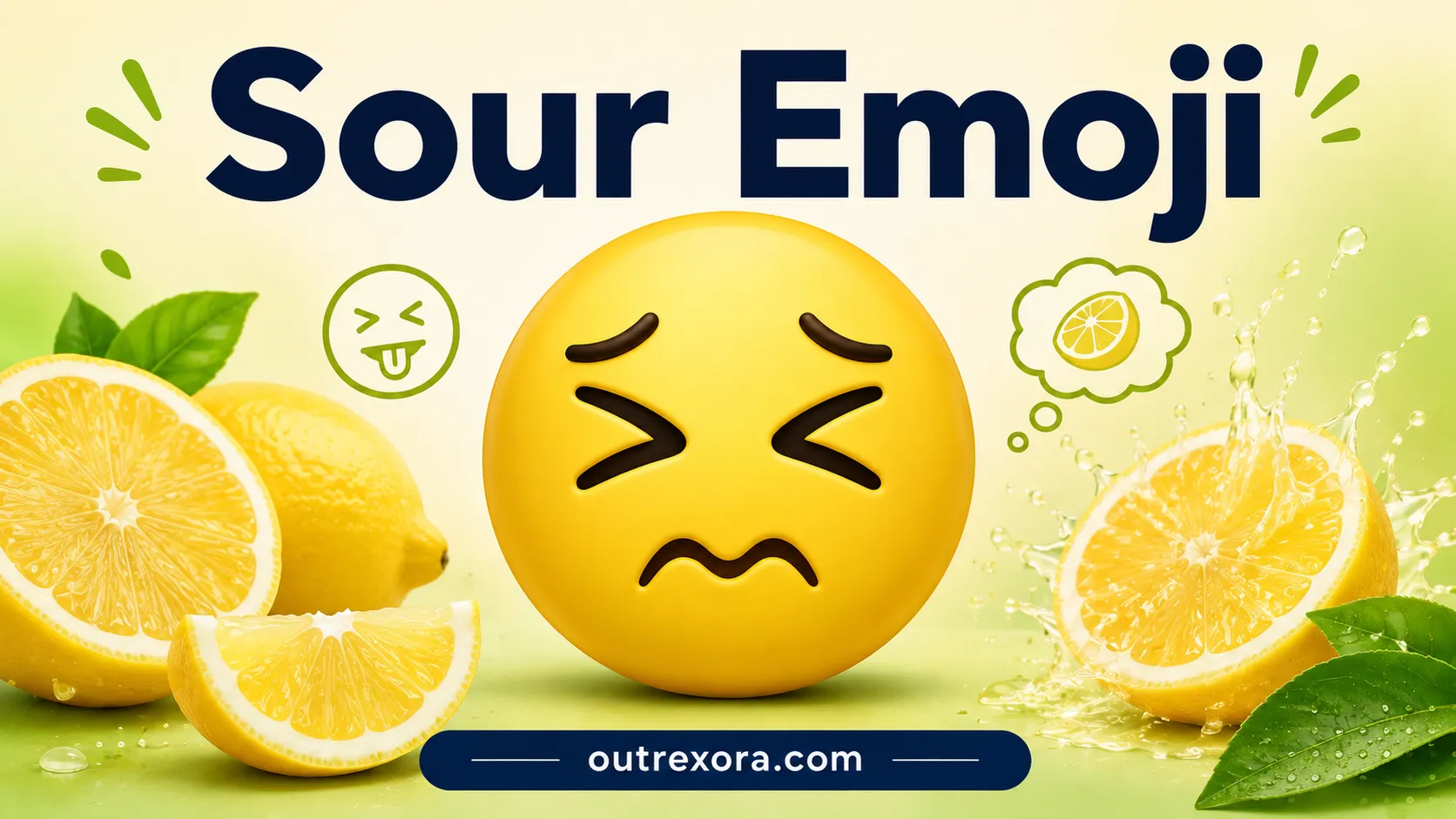
That is the appeal of the sour emoji. It can fit food posts, funny reactions, casual chats, and playful captions.
Depending on the surrounding words, it can feel literal or expressive. Let’s explore the most useful sour themed emojis and the easiest ways to use them naturally.
The sour emoji adds a little tang to ordinary messages, captions, and reactions.
What do sour emoji mean?
The phrase “sour emoji” most commonly points to 🍋. But people also use a small family of food and reaction emojis around sour experiences. Context is important because the same symbol can work differently in a food caption, private message, or funny comment.
🍋 is the clearest choice for lemons, citrus flavors, sour candy, lemonade. Or other tart foods. 🍋🟩 works similarly when the subject is specifically lime or a fresh citrus theme.
😖 and 😣 can accompany an intense tasting reaction, especially when someone wants to make the experience sound dramatic. 😝 and 😛 make the reaction more playful and teasing.
🤢 gives a much stronger negative reaction, while 🥴 can make an intense tasting moment feel goofy or exaggerated. 😬 suits an awkward first bite. And 😩 can add playful dramatic frustration.
| Emoji | Core meaning | Misread as | Best used when |
| 🍋 | Lemon or tartness | General fruit | Sour food or drinks |
| 🍋🟩 | Lime or citrus | Lemon | Lime themed content |
| 😖 | Strong discomfort | Serious distress | Dramatic taste reaction |
| 😣 | Strained discomfort | Anger | Intense sour experiences |
| 😝 | Playful reaction | Mocking | Funny food moments |
| 😛 | Playful teasing | Rudeness | Light teasing |
| 🤢 | Strong dislike | Mild dislike | Very unpleasant taste |
| 🥴 | Goofy or overwhelmed reaction | Confusion | Exaggerated reactions |
| 😬 | Awkward reaction | Fear | Surprising first bites |
| 😩 | Dramatic frustration | Genuine sadness | Playful complaints |
Meaning & Example
🍋 Lemon
Meaning: A lemon, citrus flavor. Or something literally sour.
Example 1: This drink needs more 🍋
Example 2: That was seriously sour 🍋
🍋🟩 Lime
Meaning: Lime, citrus flavor. Or a lime themed food and drink.
Example 1: Fresh lime makes it better 🍋🟩
Example 2: I love this lime flavor 🍋🟩
😖 Confounded Face
Meaning: A strong uncomfortable reaction that can suit an intense taste.
Example 1: That bite was so sharp 😖
Example 2: I was not ready for that flavor 😖
😣 Persevering Face
Meaning: Strained discomfort that can emphasize a difficult tasting experience.
Example 1: I tried the whole slice 😣
Example 2: That flavor is intense 😣
😝 Squinting Face with Tongue
Meaning: A playful, exaggerated reaction suited to teasing or food jokes.
Example 1: That lemon candy got me 😝
Example 2: I definitely made a funny face 😝
😛 Face with Tongue
Meaning: A playful expression that keeps a sour food reaction light.
Example 1: Trying the sour challenge 😛
Example 2: Okay, that was unexpected 😛
🤢 Nauseated Face
Meaning: A strong negative reaction to an unpleasant taste or sensation.
Example 1: That flavor was too much 🤢
Example 2: I cannot finish that bite 🤢
🥴 Woozy Face
Meaning: A goofy or overwhelmed expression for an intense reaction.
Example 1: That sour candy is wild 🥴
Example 2: My taste buds are confused 🥴
😬 Grimacing Face
Meaning: An awkward reaction that can emphasize a sharp or surprising bite.
Example 1: Here goes nothing 😬
Example 2: That first bite was intense 😬
😩 Weary Face
Meaning: A dramatic reaction for playful frustration during a sour food moment.
Example 1: Why did I try that? 😩
Example 2: I should have expected this 😩
How to use sour emoji the right way
On WhatsApp, sour emoji combinations work well in personal and expressive conversations. A simple 🍋 can make a food message feel cheerful, while a reaction face can add humor to a friend’s tasting story.
On Instagram, these emojis can become aesthetic caption elements. 🍋 and 🍋🟩 fit food photography, recipes, drinks, summer themed posts. And lifestyle content without making captions look crowded.
On TikTok, sour reactions are useful for humor, challenges, exaggerated reactions, and ironic comments. A facial emoji can make a short reaction feel much more dramatic.
Do choose an emoji that matches your message and use combinations naturally.
Do consider the tone and your relationship with the person receiving it.
Don’t overload one sentence with reactions when one or two are enough.
Don’t assume a dramatic face always signals a serious emotion.
Best sour emoji combos copy & paste
Romantic
👉 🍋❤️ A playful citrus touch for an affectionate message.
👉 🍋🟩❤️ A fresh combination for a sweet caption.
👉 😝🍋 A teasing reaction to a sour treat together.
Cute
👉 🍋😊 A cheerful citrus themed caption.
👉 🍋🟩😛 A playful food moment with a fresh twist.
👉 😖🍋 A cute exaggerated reaction to a tart bite.
Flirty
👉 😝🍋 A cheeky reaction after tasting something sour.
👉 😛🍋🟩 A playful line about a citrus treat.
👉 😬🍋 A teasing “should I try it?” moment.
Missing someone
👉 🍋❤️ A small citrus touch for an affectionate message.
👉 😩❤️ A dramatic but warm expression of missing a moment.
👉 🍋🟩❤️ A fresh caption for a shared citrus memory.
Good night
👉 🍋😴 A quirky bedtime message after a long day.
👉 😩😴 A dramatic “I’m exhausted” mood.
👉 🍋🟩😴 A playful citrus themed good night caption.
Trending sour emoji in 2026
In 2026, sour themed emoji use fits naturally into food videos, short captions, reaction comments, and playful messaging. Their appeal comes from combining familiar visuals with expressive reactions.
🍋 works especially well for food, drink, recipe. And lifestyle content. 🍋🟩 offers a similar visual style for lime focused posts and fresh citrus themes.
😝 and 🥴 are useful for humorous short form content because they can make reactions feel intentionally exaggerated. Their exact tone depends on the words, image, or video surrounding them.
| Emoji | Why trending | Who uses it | Platform |
| 🍋 | Strong food and citrus visual | Food creators, casual users | Instagram, TikTok |
| 🍋🟩 | Fresh citrus aesthetic | Creators, food fans | Instagram, WhatsApp |
| 😝 | Playful reaction style | Younger users, casual texters | TikTok, WhatsApp |
| 🥴 | Exaggerated reaction | Content creators, commenters | TikTok, Instagram |
As emoji culture keeps evolving, familiar symbols are often combined in creative ways to match the tone of short form communication.
How to Reply When Someone Sends You the Sour Emoji
When the sour emoji lands in a chat, it is usually shorthand for a moment, a plan, or a mood. Your reply lands best when it answers that moment, so glance at the photo, story. Or message it came with before you write anything.
React to what they shared: if it came with a photo or an update, comment on that first. People send this emoji to highlight the moment, and noticing the moment is the reply they wanted.
Add one of your own: sending the same emoji back with a short line of your own keeps the exchange balanced. It says you are in the moment with them, not just watching it.
Ask about the plan: when the emoji hints at an activity, a trip, a meal. Or a purchase, one question about the details turns a reaction into a real conversation.
Keep it short: this emoji does its best work in quick, casual exchanges. One or two sentences is plenty, and a long serious reply can make a light moment feel heavy.
FAQs:
1. What is the most popular sour emoji?
🍋 is the clearest choice for showing lemons, citrus flavors, sour foods, or lemon themed ideas. It is simple and widely recognizable.
2. What does 🍋 mean from a girl or boy?
The meaning usually depends on the conversation rather than the sender’s gender. It can simply refer to lemon or sour flavor, while surrounding words provide the tone.
3. Why do emojis look different on iPhone vs Android?
Different platforms and software vendors create their own emoji artwork, so shapes and details can vary. The basic Unicode meaning remains broadly consistent.
4. Are sour emoji used differently in other countries?
Yes, local messaging habits and cultural context can influence emoji use. Food related uses are usually easy to understand, while playful reactions may vary.
The Literal Side: Lemons, Limes, and Sour Foods
Food content is where the sour emoji earns its keep. A 🍋 in a recipe caption instantly signals citrus, brightness, and tang. Food bloggers use it for lemonade stands, lemon bars, preserved lemons, and citrus marinades. The lime version 🍋🟩 marks its own territory: taco Tuesday, key lime pie, mojitos. And anything with a fresh zesty kick.
Sourness as a flavor category goes far beyond citrus. Think sourdough bread, with its tangy fermented crumb, and pickles, kimchi. And sauerkraut, where sourness comes from fermentation rather than fruit acid. Sour candy gets its punch from citric acid coatings. Yogurt, tamarind, passion fruit, and green mango bring their own sour notes. And the 🍋 works as a general flag for all of them when no exact emoji exists.
In drink culture, the lemon wedge is practically a uniform. Cocktail posts, iced tea photos, infused water bottles. And detox drink trends all use 🍋 as visual shorthand for fresh and zesty.
The Hidden Slang: When 🍋 Means a Dud, Not a Fruit
This is where the guide gets serious, because misreading this one changes the whole message. In English slang, a lemon is something defective: a car that keeps breaking down, a phone that arrived faulty, a plan that fell apart. “This car is a total lemon 🍋” is a complaint, not a recipe note. The same logic covers “that movie was a lemon 🍋” and “another lemon of a meeting 🍋”.
There is also a gentler figurative side. Because lemons signal cleaning and freshness, 🍋 sometimes marks a fresh start: “new week, fresh slate 🍋”. And motivational culture gave the lemon its famous redemption arc: when life gives you lemons, you make lemonade. The saying turns sourness into a lesson about resilience. And 🍋 captioned under a comeback story borrows all of that meaning in a single character.
The Sour Candy Challenge Phenomenon
No discussion of the sour emoji is complete without the sour candy challenge, the viral tasting gauntlet where participants eat intensely sour candy without making a face. Spoiler: everyone makes a face. The challenge became a staple of short-form video because the reaction is involuntary, hilarious, and over in seconds.
The emoji storytelling of a challenge video usually follows an arc. It opens with 😬, the nervous grimace before the first bite. Then comes 😖, the full pucker as the sour coating dissolves. Survivors graduate to 😝, while the defeated reach for 🤢 or 🥴. Creators caption these stages with 🍋 to tie the whole sequence together. And comment sections fill with reaction faces mirroring the journey.
If you are posting your own attempt, a caption like “sour candy challenge: level expert 🍋😖” tells viewers exactly what to expect. And if you are just watching, a well-timed 😖 in the comments shows you felt that pucker through the screen.
Sour as Slang: Moods, Grapes, and Bad Deals
The metaphorical life of “sour” is rich. A sour mood is a grumpy, irritable state. And texting “woke up sour today 🍋” is a playful way to warn friends that you are not at your sunniest. Sour grapes comes from the old fable about the fox who could not reach the grapes and declared they were probably sour anyway. It now describes pretending to dislike something you simply could not get. And “total sour grapes 🍋” is a compact way to call it out.
Relationships have their own sour vocabulary. A friendship that turned sour went bad gradually. Milk that soured is a classic metaphor for plans gone off. And in music, one of the most famous album titles of the decade used “sour” to bottle up heartbreak and frustration, which cemented the word’s emotional meaning for a whole generation of listeners. Fans even attach 🍋 to the lemonade-era pop culture moment when a certain superstar turned heartbreak into an anthem, proving this little fruit punches far above its weight in music lore.
The trick is that the 🍋 softens these sharper meanings. “This plan turned sour 🍋” reads as rueful rather than bitter, because the bright little fruit keeps the tone light.
Texting Examples That Taste Right
- Recipe share: “Made lemon bars today 🍋 recipe in my bio”
- Drink post: “Fresh lemonade hits different in this heat 🍋”
- Taco night: “Extra lime on everything 🍋🟩”
- Challenge invite: “Sour candy challenge tonight, who is brave enough 😖🍋”
- Reaction: “Tried the most sour sweet in the shop 😖 never again”
- Playful: “That joke was almost as sour as this candy 😝🍋”
- Mood: “Monday has me feeling sour 🍋 send coffee”
- Teasing: “Bet you cannot eat this without making a face 😛🍋”
- Baking: “Sourdough day 5, the tang is perfect 🍞🍋”
WhatsApp: sour emoji style
WhatsApp is where sour emojis feel most personal. Drop a 🍋 into a family chat with a photo of your baking. Or react to a friend’s cooking experiment with 😖 and a laughing follow-up. The lime emoji 🍋🟩 works beautifully in dinner-planning chats: “taco night at mine 🍋🟩”.
Instagram: sour emoji style
Instagram turned the lemon into an aesthetic object. Citrus flat-lays, lemonade stand photos, and bright summer drink posts use 🍋 as both caption punctuation and color coordination. Carousel posts showing a recipe step by step can use 🍋 as a recurring marker. And challenge clips thrive in Reels where the reaction arc plays out in seconds.
TikTok: sour emoji style
TikTok is the natural habitat of the sour candy challenge and the exaggerated tasting reaction. Creators build entire series around ranking sour candies, with 🍋 in every caption and 😖, 🥴. And 🤢 marking the verdicts. The comment culture rewards dramatic reactions, so a simple “😖😖😖” under a challenge video is a complete and understood review.
Platform Designs: iPhone vs Android
On iPhone, 🍋 is a bright yellow lemon with a textured peel and a small green leaf, instantly recognizable as citrus. Android’s version keeps the same cheerful yellow with slightly bolder shading. The lime emoji 🍋🟩 is newer. So older devices may show it as a lemon followed by a green square instead of a single lime image. If your audience includes people on older phones, the plain 🍋 is the safer choice.
The reaction faces vary more. 😖 shows squeezed-shut eyes and a wavy mouth on most platforms. But the exact degree of distress shifts. 😝 and 😛 differ mainly in eye style, squinted versus open, a small detail that changes the teasing tone. When the precise face matters, preview on the recipient’s likely device or stick to the fruit emojis, which are visually stable everywhere.
Cultural Notes: Sourness Around the World
Fermentation cultures deserve a special mention. Korean kimchi, German sauerkraut, and San Francisco sourdough all rely on controlled souring by friendly bacteria. The global sourdough revival turned home bakers into amateur microbiologists. And 🍋 sometimes appears in their posts as a general tang marker even though no lemon is involved.
The phrase “zest for life” gives the lemon a purely positive spin: bright, energetic, unstoppable. So the next time someone sends you a lemon, check the vibe before you assume they are complaining. They might be cheering you on.
Related Emojis for Sour Moments
Expand the palette with these companions. 🍊 covers the sweeter side of citrus. 🍍 brings tropical tang. 🍬 marks the candy itself. 🥤 pairs with lemonade and citrus drinks. 😋 shows the delicious aftermath once the sour passes. And 🤪 captures the full zany face that extreme sour candy produces.
Sour Emoji in Lemonade Stand and Summer Drink Posts
A lemonade stand on a hot day is a small taste of summer, and the lemon emoji makes the post feel fresh. A photo of a glass with ice, a straw, and a lemon slice with the lemon symbol tells followers the drink is cold and tart. The symbol works because it pictures the flavour itself, so readers can almost taste the lemonade. Families use it for garden parties, picnics, and school fundraisers, because a lemonade stand turns a simple drink into a happy memory.
Summer drink posts gain charm when the recipe is shared in the words. A caption such as fresh lemons, a spoon of honey, and plenty of ice with the lemon symbol gives followers a drink they can make at home. The trick is to keep the recipe short and the photo bright, so the post feels like an invitation rather than an advert. Friends who try the recipe often reply with their own twists, and the lemon becomes the start of a sunny thread.
Sour Emoji for Describing a Bad Day With Humour
A bad day feels lighter when it is told as a joke, and the sour face helps carry that humour. A message such as today gave me lemons, and they were all sour with the lemon symbol tells friends the day was rough but the sender is still smiling. The symbol works because it turns a complaint into a punchline, and friends who laugh along can lift the mood. The key is balance, because a joke about a bad day should invite comfort, not hide a real problem.
Humour works best when the sender also says what would help. A line such as a sour day, a kind word would fix it with the lemon symbol tells friends exactly how to help. The trick is honesty, because a friend who knows the truth can offer real support, while a friend who only sees a joke may miss the need. A sour day shared with humour and honesty often ends with a kind reply, a funny meme, or a plan to meet, and that is a good ending for any bad day.
Quick Answers About the Sour Emoji
Does the sour emoji always mean a lemon? No, it can mean a sour mood, a bad deal, or a tart taste. Read the message first, because a drink post means flavour, while a complaint means a rough day.
Can I use it for a candy challenge video? Yes, it is perfect for that. A caption such as sour candy challenge, who can keep a straight face with the lemon symbol tells viewers exactly what to expect.
Is it rude to call a person sour? It can be, because it suggests a bitter attitude. Keep the symbol for food, moods, and jokes about your own day, and avoid aiming it at another person.
Conclusion
The sour emoji is a simple way to make food messages, captions, and reactions more expressive.
Use citrus symbols for clear visual context and reaction faces when your message needs extra personality.A little context goes a long way. So choose combinations that naturally fit your conversation.

I’m Ava Richardson, a passionate writer and author at Outrexora.com, where I share engaging, informative, and easy-to-understand content on the latest news, insights, and trends. My goal is to bring readers useful information in a clear and enjoyable way.