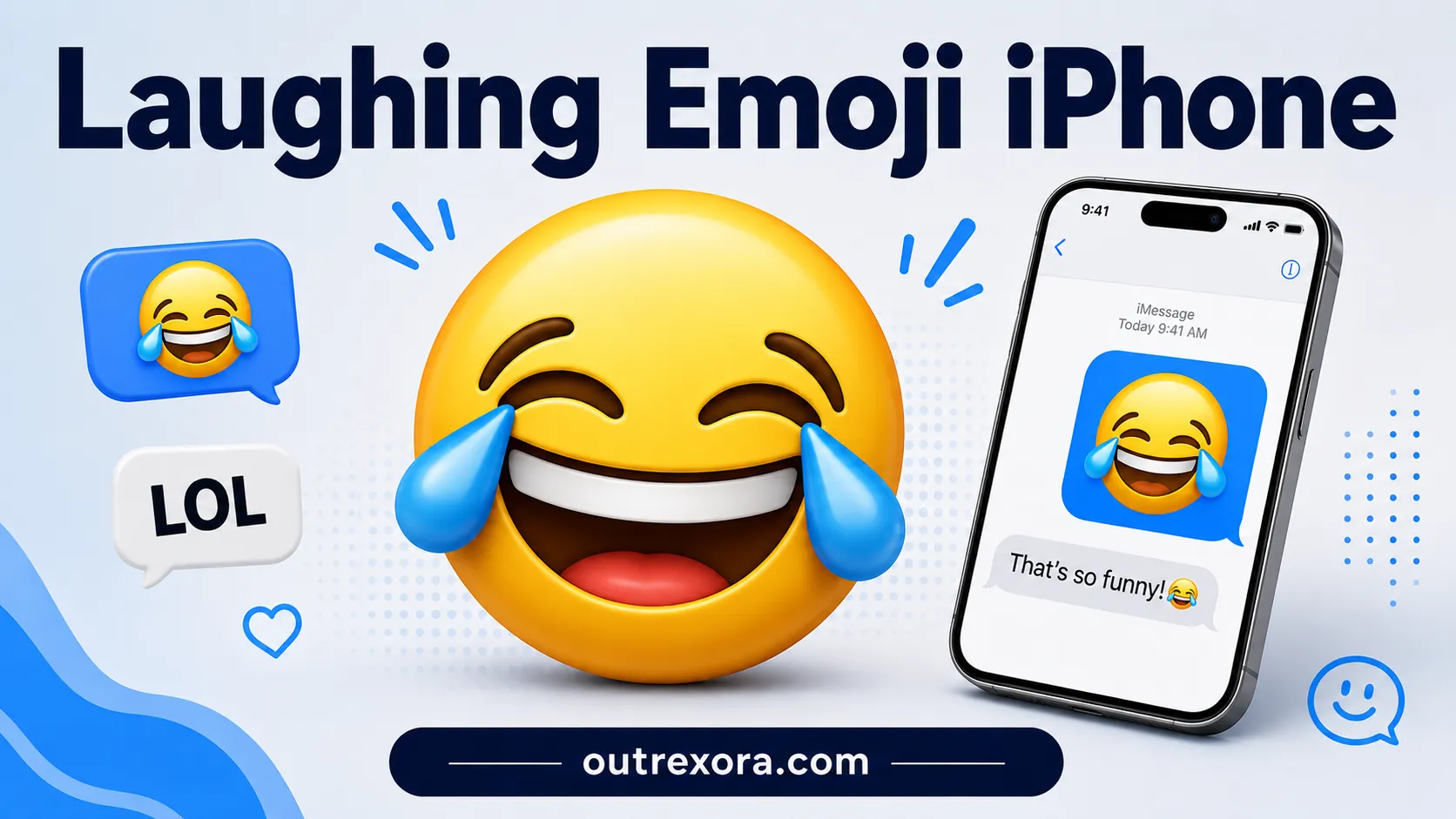
A tiny laughing face can make an iPhone message feel instantly funnier.
You are texting a friend on your iPhone, something ridiculous happens, and you instinctively add a laughing emoji.
But then you notice that 😂, 🤣, 😆, or 😹 can each create a slightly different feeling. That is what makes the laughing emoji iPhone collection so useful.
These expressions can make a joke warmer, show genuine amusement, or add playful exaggeration.
Understanding the small differences helps you choose the right expression for WhatsApp emojis, Instagram emojis, and everyday conversations.
On iPhone, the right laughing emoji can turn an ordinary message into a moment worth smiling about.
What do laughing emoji iphone mean?
The laughing emoji iPhone family includes several expressions that communicate amusement, laughter, embarrassment, or playful reactions. Although they belong to the same general family, the emotional intensity can change depending on the situation.
| Emoji | Core meaning | Misread as | Best used when |
| 😂 | Strong amusement | Fake laughter | A joke is genuinely funny |
| 🤣 | Explosive laughter | Overreacting | Something is extremely funny |
| 😆 | Big cheerful laugh | Nervous smile | Reacting enthusiastically |
| 😹 | Laughing reaction | Random cat humor | Playful online conversations |
| 😄 | Happy laughter | Simple friendliness | Sharing cheerful humor |
| 😁 | Excited grin | Forced smile | Showing playful excitement |
| 😅 | Awkward laughter | Nervousness | A funny but slightly embarrassing moment |
| 😭 | Overwhelmed laughter | Actual sadness | Dramatically reacting to something hilarious |
| 😹 | Cat style laughter | Confusing reaction | Memes and playful exchanges |
| 🥹 | Emotional reaction | Sadness only | Laughing or feeling touched at once |
Meaning & Example
😂 Face with Tears of Joy
Meaning: Strong amusement, especially when something is genuinely funny.
Example 1: That story was too funny 😂
Example 2: I cannot stop laughing 😂
🤣 Rolling on the Floor Laughing
Meaning: Very intense laughter used for something exceptionally funny.
Example 1: Your message took me out 🤣
Example 2: That was absolutely hilarious 🤣
😆 Grinning Squinting Face
Meaning: Energetic, cheerful laughter with a strongly playful feeling.
Example 1: You really said that 😆
Example 2: I knew you would laugh at this 😆
😹 Cat With Tears of Joy
Meaning: A playful cat themed reaction to something amusing.
Example 1: That meme is ridiculous 😹
Example 2: You always find the funniest things 😹
😄 Grinning Face With Smiling Eyes
Meaning: Warm, cheerful happiness with a light laughing tone.
Example 1: That made my day 😄
Example 2: You are too funny 😄
😁 Beaming Face With Smiling Eyes
Meaning: A bright, enthusiastic grin that can make a reaction feel extra playful.
Example 1: Okay, you got me 😁
Example 2: I am actually excited now 😁
😅 Grinning Face With Sweat
Meaning: Lighthearted laughter mixed with awkwardness, relief. Or embarrassment.
Example 1: I completely forgot 😅
Example 2: That was almost embarrassing 😅
😭 Loudly Crying Face
Meaning: An exaggerated emotional reaction often used online for overwhelming humor.
Example 1: Why is this so funny 😭
Example 2: I am finished after reading that 😭
😹 Cat With Tears of Joy
Meaning: A humorous cat themed expression that adds extra silliness to a reaction.
Example 1: You cannot be serious 😹
Example 2: This conversation is getting wild 😹
🥹 Face Holding Back Tears
Meaning: A tender, overwhelmed expression that can accompany humorous or deeply emotional moments.
Example 1: That was unexpectedly sweet 🥹
Example 2: I cannot handle this 🥹
How to use laughing emoji iphone the right way
On WhatsApp, laughing expressions usually work best in personal conversations. They can soften a joke, make teasing feel friendly, or show that you are genuinely enjoying what someone said.
On Instagram, these emojis can fit captions, comments, Stories, and replies. They often work well when the goal is to make a reaction feel expressive without adding a long explanation.
On TikTok, laughing expressions frequently appear alongside humor, memes, trends, and irony. The surrounding text matters because the same emoji can sound sincere, exaggerated, or deliberately dramatic.
A simple rule is to match the intensity of the expression with the situation. Using a highly dramatic reaction for a tiny joke can be funny, while using a gentle expression can keep a conversation relaxed.
Do: Use emojis to reinforce your natural tone and make reactions clearer.
Don’t: Add several different laughing expressions when one already communicates your reaction.
Best laughing emoji iphone combos copy & paste
Romantic
👉 😂❤️ A playful response when someone you like makes you laugh.
👉 😄❤️ A warm way to react to a sweet or funny message.
👉 😁❤️ Works for a cheerful, playful romantic conversation.
Cute
👉 😸😄 A cheerful and adorable reaction.
👉 😹😸 A playful combination for a funny cute moment.
👉 😄😸 Adds a friendly, wholesome feeling to a chat.
Flirty
👉 😁😂 A playful reaction when teasing someone you like.
👉 😆😁 Good for a fun back and forth conversation.
👉 😹😁 Adds a mischievous, joking tone.
Missing someone
👉 😅😂 Useful when talking about a funny memory you share.
👉 😄😹 Keeps a nostalgic conversation light and playful.
👉 😂😄 Works when remembering something funny together.
Good night
👉 😄😸 A cheerful way to end a lighthearted conversation.
👉 😂😄 Good after sharing a final joke before sleeping.
👉 😸😁 A cute, upbeat closing combination.
Trending laughing emoji iphone in 2026
In 2026, laughing expressions continue to be useful because online communication often depends on quick visual reactions. 😂 and 🤣 are especially recognizable, while 😭 can add exaggerated internet style humor.
Content creators commonly use strong reactions in captions, comments. And short form videos, while everyday users may choose softer expressions for private conversations. The choice often depends more on personality and context than on a fixed rule.
On Instagram and TikTok, exaggerated reactions can complement memes and humorous content. On WhatsApp, the same expressions can feel more personal because they appear directly inside conversations with friends and family.
| Emoji | Why trending | Who uses it | Platform |
| 😂 | Familiar and instantly understood | Everyday users | WhatsApp, Instagram |
| 🤣 | Strong exaggerated reaction | Friends and creators | TikTok, Instagram |
| 😭 | Dramatic online humor | Younger users and creators | TikTok, Instagram |
| 😆 | Energetic and playful | Everyday users | WhatsApp, Instagram |
As digital communication keeps evolving, emoji use can continue shifting with online humor, memes, and changing conversational styles.
How to Reply When Someone Sends You the Laughing Emoji
A lone laughing emoji with no words around it can mean several things. So the safest reply starts from the messages just before it. Read the last few lines, decide whether the mood is serious, playful. Or somewhere in between, and then answer that mood rather than the symbol alone.
Match the energy: if the chat has been light, keep your reply light too. A short reaction in the same tone tells the sender you understood them without making the moment bigger than it is.
Name the feeling: putting the emotion into words, kindly and without guessing too hard, works in almost every case. It shows you paid attention and gives the sender an easy way to confirm or correct you.
Ask one short question: when the tone is genuinely unclear, a simple check in question beats a wrong assumption. It keeps the conversation moving and avoids an awkward misread.
Send one back, with words: returning the same emoji plus one real sentence is the warmest option of all. The emoji mirrors their feeling, and the sentence makes sure your meaning cannot be missed.
FAQs:
1. What is the most popular laughing emoji iphone?
😂 is one of the most recognizable laughing expressions and is widely understood as a strong reaction to something funny. Its familiar appearance makes it easy to use across conversations.
2. What does 😂 mean from a girl or boy?
Its basic meaning does not change based on gender. A person may use it to show genuine amusement, friendly teasing, or a playful reaction depending on the surrounding message.
3. Why do emojis look different on iPhone vs Android?
Apple, Google, and other platforms create their own visual designs for Unicode emojis. The underlying emoji is generally the same, but its artwork, facial details, and appearance can vary between devices.
4. Are laughing emoji iphone used differently in other countries?
Yes, conversational habits can vary between cultures and online communities. An expression that feels casual in one place may be used more dramatically or playfully somewhere else.
Quick Decoder: Every Laughing Emoji at a Glance
| Emoji | Official name | Core meaning | Often misread as | Best used when |
|---|---|---|---|---|
| 😂 | Face with Tears of Joy | Strong, genuine amusement | Fake or dated laughter | A joke is truly funny |
| 🤣 | Rolling on the Floor Laughing | Explosive, physical laughter | Overreacting | Something is extremely funny |
| 😆 | Grinning Squinting Face | Big cheerful laugh | Nervous smile | Reacting with energy |
| 😹 | Cat with Tears of Joy | Playful cat themed laughter | Random cat humor | Memes and playful chats |
| 😄 | Grinning Face with Smiling Eyes | Warm, cheerful happiness | Simple friendliness | Sharing light humor |
| 😁 | Beaming Face with Smiling Eyes | Excited, beaming grin | Forced smile | Showing playful excitement |
| 😅 | Grinning Face with Sweat | Awkward or relieved laughter | Nervousness only | A funny but embarrassing moment |
| 😭 | Loudly Crying Face | Ironic, dramatic laughter online | Actual sadness | Reacting to something hilarious |
| 💀 | Skull | Slang for I am dead from laughing | Something dark or morbid | Gen Z humor and memes |
| 🥲 | Smiling Face with Tear | Bittersweet or touched laughter | Hidden sadness | Laughing through an emotional moment |
| 🫠 | Melting Face | Ironic give up laughter | Actual distress | Self aware cringe humor |
| 😜 | Winking Face with Tongue | Silly, teasing laughter | Being unserious | Playful joking around |
Face with Tears of Joy
Meaning: Strong amusement, especially when something is genuinely funny. This is the default laughing reaction and the safest choice in almost any casual chat. On iPhone it shows tilted, squeezed eyes with two large tears.
Example 1: That story was too funny, tears of joy face
Rolling on the Floor Laughing
Meaning: Very intense laughter for something exceptionally funny. It tilts further than the tears of joy face and feels more physical, like you are actually doubled over. Save it for the truly hilarious moments so it keeps its power.
Example 1: Your message took me out, rolling laughing face
Cat with Tears of Joy
Meaning: A playful cat themed reaction to something amusing. It adds extra silliness and works best in meme heavy conversations or with fellow cat lovers. The meaning is the same as the human tears of joy face, just cuter.
Example 1: That meme is ridiculous, cat tears of joy face
Skull
Meaning: In Gen Z slang, this means I am dead from laughing. It replaced the tears of joy face in many youth heavy chats as the go to reaction for something hilarious. Older readers may still see a literal skull, so know your audience.
Example 1: That video ended me, skull
Smiling Face with Tear
Meaning: A tender, bittersweet expression that can accompany humor or deeply emotional moments. It says I am laughing but also feeling something. Perfect for proud, nostalgic, or gently sad laughs.
Example 1: That was unexpectedly sweet, smiling tear face
Melting Face
Meaning: Ironic acceptance of a chaotic or embarrassing situation. The subtext is I know this is bad and I have made peace with it. It is self aware humor, not literal distress, and it has become a favorite for cringe comedy.
Example 1: I just waved back at someone who was not waving at me, melting face
Winking Face with Tongue
Meaning: Silly, teasing laughter for jokes that are playful rather than hilarious. It softens teasing and signals that you are joking around, not making fun.
Example 1: Nice try, but I saw that coming, winking tongue face
Why the Tears of Joy Face Reads as Dated to Some People
In the early 2020s, younger users started treating the tears of joy face as slightly dated and shifted toward the skull and the loudly crying face for the same hilarious reaction. The shift was strong enough that the classic laugh briefly lost its top spot in some most used emoji rankings before reclaiming it.
For general audiences, the tears of joy face is still perfectly fine. On TikTok and in Gen Z heavy chats, the skull or the crying face may land with a more current tone. Match your audience: using the classic laugh sincerely is never wrong, it just quietly signals you are probably over thirty.
How to Find Laughing Emojis Fast on iPhone
Finding the right laughing face on iPhone takes seconds once you know where to look. Tap the Globe key or the smiley key at the bottom left of the keyboard to switch to the emoji keyboard, then use the search field at the top and type words like laugh, joy, cry. Or cat. iPhone filters the results instantly.
Three tricks make this even faster. Predictive text suggests emojis as you type, your Frequently Used section keeps your favorites at the front. And in iMessage you can tap a received laughing emoji to see its official name.
Make Your iPhone Read Emoji Meanings Aloud
Here is a trick most iPhone owners never discover. iOS has a built in accessibility feature that speaks the official name of any emoji.
- Open Settings, tap Accessibility, then Spoken Content, and turn on Speak Selection.
- In the Notes app, insert the emoji, press and hold it, tap Select, then Speak.
- Your iPhone reads the official Unicode name aloud. No third party tools needed.
Common Mistakes to Avoid
- Sending the tears of joy face to a serious message: Because it reads as strong laughter, it can make bad news feel mocked. Read the message twice before adding any laughing face to a sensitive reply.
- Using the crying face literally in front of someone who reads it as crying: In a heartfelt conversation, the loudly crying face still means sadness to many people. Save the ironic reading for meme contexts where everyone shares the joke.
- The laughing face pileup: Sending six laughing faces does not make a joke six times funnier. It makes the reaction look forced. One face plus genuine words always lands better.
- Mixing tones: Pairing the bittersweet smiling tear face with a purely silly joke confuses the reader. Keep the emotional tone of the face and the words aligned.
- Ignoring your audience: The skull delights Gen Z friends and confuses grandparents. The tears of joy face warms older audiences and reads as dated to teens. Know who you are texting.
Fun Facts About the Laughing Emoji Family
The tears of joy face is officially named Face with Tears of Joy and carries the codepoint U+1F602. It was added in Unicode 6.0 in 2010 and was named the Oxford Dictionaries Word of the Year in 2015, the first pictograph ever given that honor. The rolling laughing face arrived in 2016 as U+1F923, and the melting face joined in 2021, quickly becoming a favorite for ironic humor.
Laughing Emoji iPhone for Birthday Messages That Feel Warm
Birthday messages on iPhone feel warmer when the laughing emoji matches the friendship, not just the joke. A message like another year, same legendary laugh, happy birthday 😂🎂 tells the birthday person they are loved and funny at once, and it reads as celebration rather than teasing. Keep the laugh gentle for older relatives, using the classic tears of joy face, and save the skull laugh for close friends who share that humor.
For a group birthday chat, one laughing emoji plus one personal memory works better than a wall of faces. A line like remember your dance at last years party, still laughing 😆🎉 brings the group into a shared memory, and everyone can add their own version. Avoid jokes about age that might sting, and let the laugh celebrate the person instead.
When replying to birthday wishes, a laughing emoji closes the loop kindly. A message like thank you all, you made my day, laughing at every single message 😄💛 shows gratitude with warmth, and it tells friends their effort landed. One face, one thank you, and one memory is the recipe for a birthday message that feels truly warm.
Laughing Emoji iPhone in Apology Texts That Stay Light
Apology texts need care, because a laughing emoji can soften a sorry or accidentally mock it. A safe pattern is words first, laugh second: a message like sorry I missed your call, my phone was on silent all day 😅 owns the mistake, then adds a light face to show you are not defensive. The sweat laugh works here because it signals awkwardness, not amusement at the other person.
Avoid the biggest laughs in apologies for anything serious. A rolling on the floor face after a missed important event can read as careless, while a simple grinning face keeps the tone humble. If the apology is for a small mix up, like a late reply or a wrong emoji, a light laugh is fine, and it helps both sides move on quickly.
After the apology lands, let the other person set the tone. If they reply with a laugh, you can match it, and if they reply seriously, answer seriously without another emoji. A line like glad we are good, coffee is on me next time 😄 ends the apology with kindness, and it turns a small mistake into a warmer connection.
Laughing Emoji for Group Chats That Stay Kind
Group chats thrive on laughter, but a laughing face lands best when it includes everyone in the joke. A reaction to a shared memory, a funny photo, or a harmless mishap tells the group that the moment was fun for all. When the joke targets one person, a laughing face can feel like piling on, even if no harm was intended. A quick check helps: if the person being joked about is laughing too, the symbol is safe, and if they are quiet, a kinder reply is better.
Kind group humour also benefits from variety. Using the same loud laugh for every message can make reactions feel automatic, while matching the laugh to the moment shows real attention. A gentle grin suits a sweet joke, a rolling laugh suits a truly hilarious story, and a sweat laugh suits an awkward but harmless slip. That variety keeps the chat lively and shows that members are actually reading each other, not just reacting on autopilot.
Laughing Emoji for Work Wins and Team Celebrations
Work chats can use laughing symbols to celebrate wins without losing professionalism. A light laugh after a project ships, a deadline passes, or a funny team moment occurs tells colleagues that success can be joyful as well as serious. The key is to keep the laugh tied to the achievement or the shared effort, so it reads as team spirit rather than distraction. A message such as we did it, what a week with a cheerful laugh closes a project on a warm note.
Leaders should model this balance, because teams copy the tone set at the top. A manager who celebrates with warmth and humour creates a safer space for honest reactions, while a manager who never laughs can make a chat feel stiff. One well placed laughing face from a leader can do more for morale than a long formal message, because it shows that good work and good humour belong together.
Frequently Asked Questions About Laughing Emoji on iPhone
Which laughing face is safest for general use? The tears of joy face is the safest classic choice for most audiences. It reads as strong, genuine amusement, and older readers recognise it instantly, even if younger users sometimes prefer newer reactions.
When should I avoid a laughing face? Avoid it in replies to serious, sad, or sensitive news, where laughter can feel like mockery. Read the message twice, and choose caring words instead when the moment calls for support.
Does the skull mean laughter too? Yes, in younger online chats it often means dead from laughing. Older readers may still read it literally, so know your audience before using it as a laugh.
Conclusion
The laughing emoji iPhone family gives everyday conversations plenty of ways to show amusement and personality.
Choosing an expression that matches the moment can make texts, comments, and reactions feel much more natural.
Keep your choices simple, let the surrounding words provide context, and use the expression that best matches your mood.

I’m Olivia Bennett, a writer at Outrexora.com, where I share clear, engaging, and informative stories about the latest news, insights, and trends.