You just saw the face with head bandage emoji, and it looks hurt, but you want to know if the sender is really injured or just joking about a rough day.
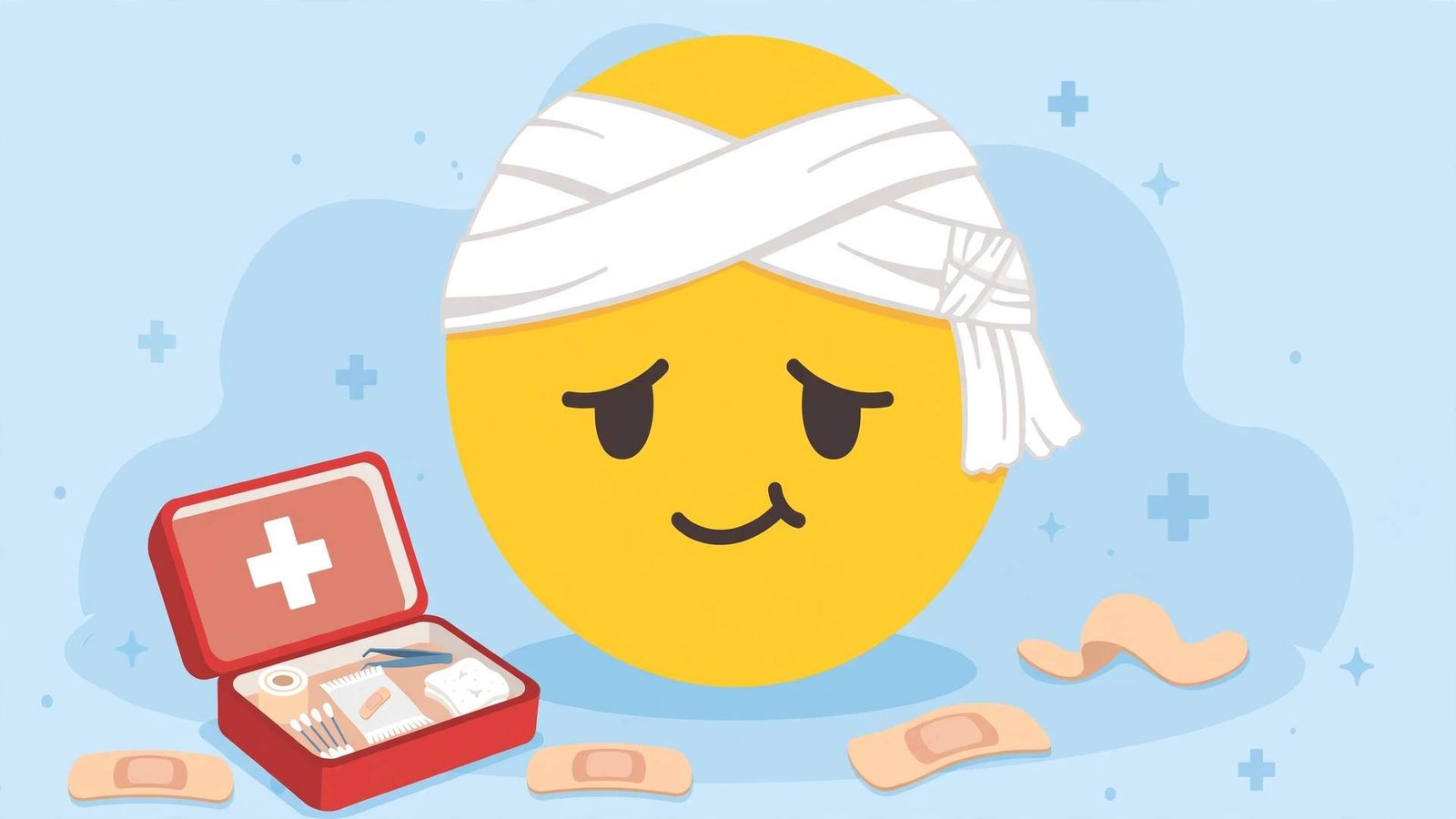
The face with head bandage emoji 🤕 shows a yellow face with a white bandage wrapped around its head and a small, pained smile. It is a symbol of injury, pain, sickness, and recovery. People send it after accidents, headaches, hard workouts, or even emotional rough days.
In this guide, we will explain every common meaning of the face with head bandage emoji, show real text examples, and help you reply the right way. By the end, you will know when it means real pain, sympathy, humor, or burnout.
Face With Head Bandage Emoji for Recovery, Rest, and Getting Better
The bandaged face is also a recovery emoji, not only an injury emoji. After a cold, a flu, a small operation, or a tough week, people send it to say I am healing, slowly but surely. A message like day three of rest, feeling a little better today, with a bandaged face, tells friends that you are on the mend without a long health update. It invites gentle check ins, not worried questions.
Recovery mode is a common caption for this use. Athletes post it after a hard training block, students post it after exam season, and workers post it after a draining project. The message is the same in each case: I gave a lot, now I need rest. A reply like take your time, rest well, fits perfectly, because the sender is asking for patience, not pity.
This emoji also pairs well with small self care updates. A message like soup, sleep, and no phone today, with a bandaged face, is a warm way to set a boundary. It says I need quiet, and it says it with humor, so friends understand without feeling pushed away. A message like back soon, just recharging, works the same way in a group chat.
When someone else is recovering, you can send the bandaged face back as sympathy. A reply like hope you feel better soon, rest up, with the same face, mirrors their feeling and shows that you understand. It is a small gesture, but in a short chat it can feel caring and close.
Face With Head Bandage Emoji for Clumsy Moments, Hangovers, and Bad Luck
A large share of bandaged face messages are not about real injuries at all. They are about clumsy moments, bad luck, and mornings after a long night. A message like walked into the same door again, with a bandaged face, is a joke about being accident prone. A message like tripped over nothing, in front of everyone, turns an embarrassing fall into a funny story that friends can laugh along with.
Hangovers are another common use. The headache is real even when the injury is not, and the bandaged face captures that feeling better than a sick face, because it suggests self inflicted damage with a comic twist. A message like never again, my head is pounding, with a bandaged face, is honest and funny at once. Friends usually answer with water, rest, and a gentle tease, which is exactly the comfort the sender wants.
Bad luck days fit too. A message like dropped my phone, missed the bus, and spilled my coffee, with a bandaged face, turns a rough morning into a small drama that friends can relate to. The emoji says life beat me up today, and the list of small disasters makes the joke land. It works because the pain is real but small, and the humor keeps it light.
The key in all three uses is proportion. A bandaged face after a stubbed toe is funny. The same face after a serious accident needs care, not a joke. Read the story first, then decide whether to laugh along or to offer real help.
What Does the Face With Head Bandage Emoji Mean
Meaning: The face with head bandage emoji means injury, pain, sickness, or recovery. It says, “I am hurt,” “I feel awful,” or, “I had a rough time.”
The official name of this emoji is Face With Head Bandage, and it joined Unicode in 2015. Its design is easy to read. The white bandage wraps around the head, and the face wears a tired, pained smile. That picture says, “I got hurt, but I am still standing.” In literal use, it means a head injury, a bump, a headache, or a trip to the doctor. In wider use, it means any kind of pain: a sore body, a bad cold, a rough day, or even a broken heart. People also use it to show sympathy. If a friend says they are hurt, a reply with this emoji says, “I feel your pain.” It is a caring emoji with a touch of humor, because the bandage makes even a small bump look dramatic.
Examples:
- “I bumped my head on the cabinet door, it hurts 🤕”
- “I have had a headache all day and nothing helps 🤕”
- “That workout left me sore in every muscle 🤕”
- “Today was brutal, I feel completely beaten up 🤕”
Face With Head Bandage Emoji Meaning in Text
Meaning: In a text message, the face with head bandage emoji reports pain, injury, or exhaustion. It can be a real health update or a dramatic joke about a hard day.
Text messages have no voice tone, so this emoji fills in the feeling. A plain message like “I am hurt” sounds serious. A message like “I am hurt 🤕” sounds honest and a little funny at the same time. The emoji tells the reader that the sender is in pain but still able to joke about it. It is often used after small accidents, like tripping, bumping into furniture, or dropping something on a foot. It is also used after long days, hard exams, or tough workouts. In a friend chat, it can be a playful way to say, “Life beat me up today.” Read the sentence first. If the sentence is about a real injury, take it seriously. If the sentence is about a hard day, it is a joke about burnout.
Examples:
- “I tripped over my own feet again, classic me 🤕”
- “I fell off my bike and scraped my knee 🤕”
- “Three exams back to back, my brain is injured 🤕”
- “I stayed up all night, I feel like this 🤕”
Face With Head Bandage Emoji Meaning From a Girl
Meaning: When a girl sends the face with head bandage emoji, it usually means she feels hurt, sick, tired, or emotionally drained. The tone can be serious or playful, depending on the message.
Girls often use this emoji to explain why they are quiet, why they cancelled plans, or why they need rest. A message like “Headache all day, staying in bed 🤕” is a simple health update. In a friend chat, it can be a dramatic way to describe a bad day. A message like “My day beat me up, send snacks 🤕” is a joke that also asks for comfort. In a crush chat, it can be a gentle way to ask for care. A message like “I feel awful today 🤕” may really mean, “Check on me.” Some girls also use it after an embarrassing moment, as if to say, “That hurt my pride.” If she sounds truly unwell, reply with care, not jokes. If she sounds playful, laugh along and offer comfort.
Examples:
- “I have a migraine and the light hurts my eyes 🤕”
- “I twisted my ankle at practice, ouch 🤕”
- “That meeting drained my whole soul 🤕”
- “I need tea, rest, and a long hug 🤕”
Face With Head Bandage Emoji Meaning From a Guy
Meaning: When a guy sends the face with head bandage emoji, it usually means he is hurt, sore, tired, or joking about a rough experience. He may also use it to ask for sympathy without saying it directly.
Guys tend to use this emoji in a direct and funny way. After a sports injury, a message like “Took a ball to the head, I am fine though 🤕” is a classic tough guy update. After a hard workout, it means sore muscles. In group chats, guys use it as a quick reaction to a painful story, a bad fall, or a brutal exam. It can also mean emotional pain. A message like “That game broke my heart 🤕” means deep disappointment, not a real injury. In a crush chat, a guy who sends it while sick may be hoping for a caring reply. Read his words first. Injury words mean real pain. Joke words mean a funny reaction.
Examples:
- “I walked into the door frame, my forehead hurts 🤕”
- “Leg day destroyed me, I cannot climb stairs 🤕”
- “That loss hurt more than any tackle 🤕”
- “Man, this week has beaten me up 🤕”
Face With Head Bandage Emoji Meaning in Love
Meaning: In love and crush chats, the face with head bandage emoji usually means emotional hurt, a need for comfort, or playful drama. It says, “I am hurting, please be gentle with me.”
Love chats are full of small signals, and this emoji is one of the softest. A person might send it after a fight, a rejection, or a sad moment. A message like “Your words hurt me more than you know 🤕” is a quiet plea for an apology. Someone who is sick might send it to a crush to ask for care without saying it directly. A message like “I feel awful and I miss you 🤕” is really a request for comfort. It can also appear after a romantic embarrassment, as if the sender is saying, “That hurt my pride.” In long term love, partners use it to joke about rough days. A message like “Life beat us up today, but we are okay 🤕” is a small bond. If the chat is tender, read it as a call for care.
Examples:
- “I miss you and it hurts a little 🤕”
- “That argument left me feeling bruised inside 🤕”
- “I am sick and all I want is your company 🤕”
- “You hurt my feelings, but I still care about you 🤕”
Face With Head Bandage Emoji Meaning in Chat
Meaning: In group chats and one to one chats, the face with head bandage emoji works as a fast reaction. It can mean “ouch,” “that hurt,” “I am sick,” or “I feel beaten up.”
Chats move fast, and people often reply with one emoji instead of a sentence. In a group chat, the bandaged face often appears after a painful story, a fall, a bad grade, or a harsh joke. It tells the group, “That hurt, and I feel it too.” In a one to one chat, it can explain silence. A message like “Sorry, I was at the doctor all day 🤕” explains everything in a few words. In study or work chats, it means burnout. A message like “This project has me like 🤕” means the sender feels drained. The emoji is useful because it fits so many painful, tiring, or dramatic moments. Just remember that a single emoji alone can be vague. If you are unsure whether the person is truly hurt, ask a quick follow up question instead of guessing.
Examples:
- “That fall looked painful, are you okay? 🤕”
- “Sorry for the late reply, I have been sick 🤕”
- “Monday morning has me feeling like this 🤕”
- “He really said that in front of everyone 🤕”
Face With Head Bandage Emoji Meaning on Social Media
Meaning: On social media, the face with head bandage emoji appears in captions, comments, and stories to show injuries, illness, hard workouts, or dramatic humor.
On Instagram, TikTok, Snapchat, and X, this emoji shows up in many settings. Athletes use it after tough games and hard training. Students use it during exam season to joke about mental pain. Creators use it when they are sick but still posting, which tells followers why the content is late. In comments, people use it to show sympathy: “That fall looked awful, hope you are okay 🤕”. In memes, it reacts to embarrassing moments, bad luck, or painful truths. A meme caption like “Me after my own decisions 🤕” is a classic use. The emoji is almost always sympathetic or funny on social media. The only exception is a serious post about a real accident, where it means real pain. That use is easy to spot from the words around it.
Examples:
- “Day three of this cold and I am over it 🤕”
- “Leg day check: I cannot walk, send help 🤕”
- “My own choices really did this to me 🤕”
- “Hope you feel better soon, that looked painful 🤕”
Common Misunderstandings About the Face With Head Bandage Emoji
Meaning: The biggest misunderstanding is thinking this emoji always means a real head injury. It often means general pain, sickness, burnout, or emotional hurt, with no head injury at all.
Many people read this emoji too literally. If a friend sends it after a bad day, they may think the friend hit their head, when the friend really means, “I feel beaten up by life.” Another common mix up is thinking it means the sender is in the hospital. It can mean a hospital visit, but in most chats it means a small bump, a headache, or a rough day. A third mix up is confusing it with the face with thermometer. The thermometer face 🤒 means fever and real illness. The bandaged face 🤕 means injury and pain. The two can overlap, but they are not the same. When in doubt, read the sentence around it. The topic tells you the meaning almost every time.
Examples:
- Wrong read: “She hit her head.” Right read: “She feels beaten up by a hard day.”
- Wrong read: “He is in the hospital.” Right read: “He has a headache or a small bump.”
- Wrong read: “It always means a real injury.” Right read: “It often means burnout or emotional pain.”
How to Reply to the Face With Head Bandage Emoji
Meaning: The best reply shows care first. If the person is hurt, offer sympathy. If the person is joking, laugh gently and offer comfort.
Your reply does not need to be long. If someone is injured, a caring reply helps: “Oh no, are you okay? Take care of yourself.” If someone is sick, show sympathy: “Get well soon, rest and drink water.” If someone is joking about a rough day, you can play along: “Same here, today beat us both up.” If a crush sends it, a sweet reply can build closeness: “Rest up, I will check on you later.” Avoid making fun of someone who is truly hurt. A joke that lands well in a funny chat can feel cold when a person is actually in pain. Read the mood first, then reply with the same energy.
Examples:
- “Oh no, are you okay? Take care of yourself 🤕”
- “Get well soon, rest and drink lots of water 🤕”
- “Same here, today was brutal for me too 🤕”
- “Rest up, I will check on you later 🤕”
- “Do you need anything? I am here if you need help.”
Similar Emojis to the Face With Head Bandage Emoji
Meaning: Emojis close in meaning include the face with thermometer, the nauseated face, the tired face, and the pleading face. Each one points to a slightly different feeling.
The face with thermometer 🤒 means fever and real illness, and it is more about sickness than injury. The nauseated face 🤢 means strong disgust or nausea, and it is more about the stomach. The tired face 😩 means exhaustion and stress without the injury part. The pleading face 🥺 means asking for care and sympathy, and it often pairs with the bandaged face. People often combine these symbols to sharpen the message. A bandaged face plus a thermometer means a real illness. A bandaged face plus a pleading face means “Please take care of me.” Learning these pairs helps you read chats faster and reply with the right tone.
Examples:
- “I have a fever and a pounding headache 🤒🤕”
- “That food made my stomach turn 🤢🤕”
- “So tired and so done with this week 😩🤕”
- “Please take care of me, I feel awful 🥺🤕”
Frequently Asked Questions About the Face With Head Bandage Emoji
Meaning: Most questions about this emoji come down to one worry: is the sender really hurt or joking? The sentence around the emoji gives the answer almost every time.
People also ask if the bandaged face emoji is rude. It is not rude on its own. It becomes rude only when it mocks someone who is truly injured. Another common question is whether it is safe to use at work. A plain health update with this emoji is fine. A dramatic joke about a coworker is not wise. A third question is whether it can be flirty. On its own, no, it is not a flirty emoji. In a warm chat, though, it can be a cute way to ask for care. Keep the topic and tone in mind, and you will read it correctly.
Examples:
- “Does the bandaged face emoji mean injury?” Often yes, but it can mean burnout or emotional pain.
- “Is the bandaged face emoji rude?” No, unless it mocks a person who is truly hurt.
- “Can I use it at work?” Yes, for a simple health update, but skip dramatic jokes.
Conclusion:
Meaning: In the end, the face with head bandage emoji is a caring little symbol. It can mean injury, pain, sickness, burnout, or emotional hurt, all depending on context.
The next time you see it, read the full message before you react. Ask yourself what the topic is. Injury, health, work, or feelings. That one question will point you to the right meaning almost every time. If the person is hurt, reply with care.
If the person is joking, laugh gently and offer comfort. If you are still unsure, ask. A quick question is always better than a wrong guess.
And when you use the emoji yourself, pair it with a few clear words so your reader never has to guess. That small habit makes your chats clearer, kinder, and much more fun.

I’m Noah Mitchell, an author at Outrexora.com, where I share clear, engaging, and informative content covering the latest news, insights, trends, and topics that matter to readers.