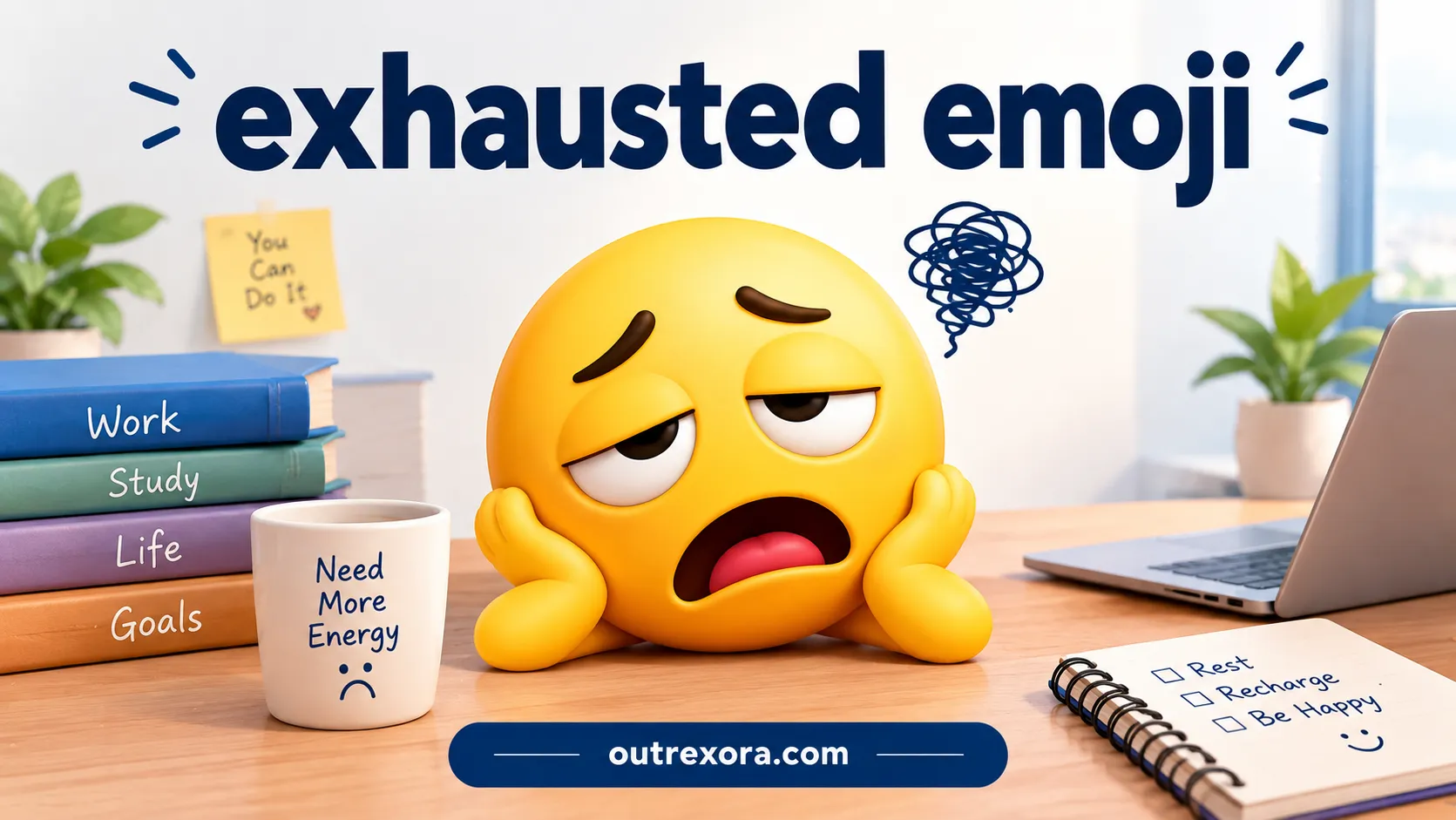
Seeing an exhausted emoji in a message can make you wonder what the person is trying to say. Is the person tired, stressed, frustrated, or simply having a difficult day?
This emoji is popular because it can express several strong feelings without needing a long explanation. Its exact meaning depends on the conversation, the platform, and the relationship between the people using it.
The emoji is often used after a busy day, a stressful task, a sleepless night, or an annoying situation.
Someone might send it after studying for hours, working late, or dealing with too many messages. In other situations, it can be playful or dramatic rather than genuinely serious.
Understanding the emoji meaning becomes easier when you look at the words around it. A message such as “I have three exams tomorrow 😩” clearly shows stress and tiredness, while “You ate the last slice 😩” may be funny and dramatic.
What Does Exhausted Emoji Mean?
The exhausted emoji 😩 usually represents extreme tiredness, stress, frustration, or emotional exhaustion. It shows a face with closed eyes, a wrinkled expression, and an open mouth, creating the feeling of someone who has had enough.
People commonly use 😩 when they want to say:
- “I am so tired.”
- “This is too much.”
- “I cannot deal with this.”
- “Today was exhausting.”
- “I am really frustrated.”
- “I need a break.”
For example:
“I worked for ten hours today 😩”
Here, 😩 emphasizes physical or mental exhaustion.
It can also describe emotional exhaustion. Someone going through a stressful situation might write, “I have been dealing with problems all week 😩.”
The important point is that the emoji does not always mean literal physical tiredness. Context gives it its exact text meaning.
Different Meanings of Exhausted Emoji
The 😩 emoji can have several meanings depending on who sends it and why.
General Meaning
The general meaning is being extremely tired, overwhelmed, frustrated, or emotionally drained.
Example:
“I have so much homework 😩”
Romantic Meaning
In romantic conversations, 😩 can show emotional exhaustion, longing, or dramatic affection.
Example:
“I miss you so much 😩❤️”
In some conversations, it may also be used playfully when someone finds their partner extremely attractive. The surrounding message determines the intended meaning.
Friendly Meaning
Friends often use 😩 to complain about everyday problems together.
Example:
“Another Monday morning 😩”
It can create a feeling of shared frustration.
Funny Meaning
Sometimes 😩 is intentionally dramatic.
Example:
“You finished the pizza without me 😩”
The person may not actually be upset. They are exaggerating the situation for humor.
Sarcastic Meaning
The emoji can also make a sarcastic statement more obvious.
Example:
“Wow, you only sent me 20 pictures 😩”
The person is pretending that the situation is exhausting or overwhelming.
Social Media Meaning
On social media, 😩 is often used in captions, comments, and reactions to express dramatic tiredness, frustration, attraction, or emotional overwhelm.
Text Message Meaning
In texting, 😩 can quickly replace a sentence such as “I am exhausted” or “I cannot handle this anymore.”
Workplace Meaning
At work, it may describe a long meeting, difficult project, deadline, or busy schedule.
Example:
“Three meetings before lunch 😩”
In professional communication, however, it is better to use it only when the conversation is informal.
When Should You Use Exhausted Emoji?
You can use 😩 when the situation feels tiring, overwhelming, frustrating, or dramatically difficult.
Good situations include:
- After a long day at work.
- After studying for several hours.
- When you have too much homework.
- When you are stuck in traffic.
- After staying awake all night.
- When a task becomes frustrating.
- When joking about a small problem.
- When sharing a stressful social-media moment.
Texting Examples
“I have been cleaning all morning 😩”
“This assignment is so difficult 😩”
“I woke up at 5 AM today 😩”
“The bus was late again 😩”
“Why is Monday so long? 😩”
The emoji works best when it adds emotion instead of simply being added to every message.
What Does Exhausted Emoji Mean from a Girl?
When a girl sends 😩, it commonly means that she is tired, stressed, frustrated, overwhelmed, or being dramatic about something.
For example:
“I have so much work today 😩”
This probably means she feels genuinely tired or overwhelmed.
However, the emoji can have a playful meaning too:
“You look so good in that picture 😩”
Here, the emoji may express strong admiration or attraction.
In a romantic conversation, 😩 can sometimes make a message sound more emotional or flirty. Still, you should not assume romantic interest from the emoji alone. Look at the entire conversation and the relationship between you.
What Does Exhausted Emoji Mean from a Boy?
When a boy sends 😩, it can similarly express tiredness, stress, frustration, or dramatic humor.
For example:
“I have been working since morning 😩”
Usually, he is saying that he is exhausted.
Among friends, it might be used jokingly:
“Bro, you sent me 50 questions 😩”
In a romantic conversation, the meaning can become more emotional or flirty:
“I really need to see you 😩❤️”
The exact meaning depends on context rather than gender. The same emoji can communicate completely different emotions in different conversations.
Exhausted Emoji on Snapchat
On Snapchat, 😩 can appear in chats, captions, stories, or replies. Users often use it to react quickly to stressful, funny, or dramatic situations.
For example:
“Studying all night 😩”
A Snapchat story with 😩 may tell friends that the person is tired or overwhelmed.
It can also be used for humorous reactions:
“My friend canceled our plans again 😩”
Snapchat is highly casual, so exaggerated emoji meanings are common.
Exhausted Emoji on WhatsApp
On WhatsApp, 😩 is commonly used in personal chats, group conversations, status updates, and reactions.
People may send it after discussing:
- Work
- School
- Family tasks
- Travel
- Traffic
- Late nights
- Difficult problems
For example:
“I finally finished everything 😩”
In WhatsApp conversations, the emoji often works as a short emotional response when the sender does not want to explain everything.
Exhausted Emoji on Instagram
Instagram users often use 😩 in comments, captions, direct messages, and story replies.
A person might comment:
“This outfit 😩🔥”
Here, the emoji may express strong admiration rather than tiredness.
Another example is:
“Monday is already destroying me 😩”
In this case, it clearly means frustration or exhaustion.
This is why Instagram emojis can be highly context-dependent.
Exhausted Emoji on TikTok
On TikTok, 😩 is frequently used in comments and captions to make reactions more dramatic.
For example:
“This song is too good 😩”
The person may be expressing strong emotional excitement or admiration.
Another comment might say:
“Me trying to understand this tutorial 😩”
Here, it means confusion and frustration.
TikTok emojis often work together with humor, trends, and exaggerated reactions.
Emoji Combinations
Emoji combinations can change or strengthen the meaning of 😩.
| Emoji Combination | Meaning |
| 😩❤️ | Emotional or romantic exhaustion |
| 😩😂 | Frustrated but laughing |
| 😩😭 | Extremely overwhelmed |
| 😩💔 | Emotional pain or sadness |
| 😩🔥 | Strong admiration or attraction |
| 😩😴 | Very tired or sleepy |
| 😩🙄 | Frustration and annoyance |
| 😩🤦 | “I cannot believe this” |
| 😩💀 | Something is ridiculously overwhelming or funny |
| 😩🙏 | Desperately asking for help |
| 😩😫 | Very strong exhaustion |
| 😩🥲 | Tired but trying to stay positive |
| 😩🤯 | Overwhelmed or shocked |
| 😩🫠 | Completely drained |
| 😩📚 | Tired from studying |
| 😩💻 | Tired from work or computer tasks |
| 😩☕ | Needing coffee because of tiredness |
The combination should always be interpreted within the surrounding message.
Copy and Paste Exhausted Emoji
Want a quick copy and paste emoji? Here are some combinations you can use:
😩 Copy
😩😩 Copy
😩❤️ Copy
😩😂 Copy
😩😭 Copy
😩💔 Copy
😩🔥 Copy
😩😴 Copy
😩🙄 Copy
😩🙏 Copy
😩💀 Copy
😩🫠 Copy
😩📚 Copy
😩☕ Copy
😩💻 Copy
Similar Emojis
Several emojis can look similar to 😩 but have different emotional meanings.
| Emoji | Name | Meaning | Difference |
| 😩 | Weary Face | Exhaustion or frustration | Strong tiredness and emotional strain |
| 😫 | Tired Face | Extreme tiredness | Usually looks more physically exhausted |
| 😪 | Sleepy Face | Sleepiness | More focused on wanting to sleep |
| 😴 | Sleeping Face | Sleep or deep tiredness | Clearly connected with sleeping |
| 😓 | Downcast Face with Sweat | Stress or nervousness | Often suggests worry or pressure |
| 😥 | Sad but Relieved Face | Sadness with relief | More emotional than exhausted |
| 😭 | Loudly Crying Face | Intense sadness | Stronger focus on crying |
| 🥲 | Smiling Face with Tear | Mixed emotions | Shows sadness while still smiling |
| 🫠 | Melting Face | Overwhelmed or embarrassed | Often expresses feeling mentally melted |
| 🙄 | Face with Rolling Eyes | Annoyance | Focuses more on irritation |
| 😤 | Face with Steam From Nose | Anger or determination | More forceful and angry |
| 🥱 | Yawning Face | Sleepiness or boredom | Specifically suggests yawning |
Understanding these differences helps you choose the right emoji for the emotion you want to express.
Emoji Appearance Across Platforms
The appearance of 😩 can vary slightly across different devices and platforms.
Apple
Apple’s version generally has a strongly expressive, tired-looking face. Small design details can affect how emotional or dramatic it appears.
Android
Android devices may display the emoji with slightly different facial features depending on the operating system and font.
Samsung
Samsung’s emoji design may have its own expression and proportions. The basic meaning remains the same.
Windows
Windows displays emojis using Microsoft’s emoji design. The appearance may look different from mobile versions.
Facebook may use its own emoji rendering in some areas, while the underlying Unicode character remains the same.
WhatsApp displays emojis in its own visual style, so 😩 can look slightly different from Apple’s or Samsung’s version.
Although the artwork changes, the Unicode emoji and its general meaning remain recognizable across platforms.
Fun Facts
- 😩 is commonly associated with feeling extremely tired, frustrated, or overwhelmed.
- The emoji can communicate an entire emotional reaction without a sentence.
- Its meaning can change significantly depending on nearby emojis.
- People often use it humorously for small problems.
- 😩 can sometimes express attraction rather than exhaustion.
- Social-media users frequently use it to create dramatic reactions.
- The same emoji can have different emotional intensity depending on the conversation.
- Emoji design can look slightly different across operating systems and platforms.
Common Mistakes
One common mistake is assuming that 😩 always means physical exhaustion. It can also communicate frustration, emotional pressure, dramatic humor, or admiration.
Another mistake is assuming that the emoji has a romantic meaning whenever someone sends it. Romance depends on the surrounding words and relationship.
People also sometimes confuse 😩 with 😫, 😴, or 🥱. These emojis overlap, but their expressions and common uses are different.
A final mistake is ignoring context. A message like “I have to work late 😩” has a different meaning from “That picture of you 😩❤️.”
Always read the full message before deciding what the emoji means.
How to Reply When Someone Sends You the Exhausted Emoji
A lone exhausted emoji with no words around it can mean several things, so the safest reply starts from the messages just before it. Read the last few lines, decide whether the mood is serious, playful, or somewhere in between, and then answer that mood rather than the symbol alone.
Match the energy: if the chat has been light, keep your reply light too. A short reaction in the same tone tells the sender you understood them without making the moment bigger than it is.
Name the feeling: putting the emotion into words, kindly and without guessing too hard, works in almost every case. It shows you paid attention and gives the sender an easy way to confirm or correct you.
Ask one short question: when the tone is genuinely unclear, a simple check in question beats a wrong assumption. It keeps the conversation moving and avoids an awkward misread.
Send one back, with words: returning the same emoji plus one real sentence is the warmest option of all. The emoji mirrors their feeling, and the sentence makes sure your meaning cannot be missed.
FAQs:
What does the exhausted emoji 😩 mean?
The exhausted emoji 😩 usually means extreme tiredness, frustration, stress, or feeling overwhelmed. People use it after a difficult day, a stressful task, or an annoying situation. It can also be used humorously or romantically, so the exact meaning depends on the conversation and the other emojis around it.
What does 😩 mean in texting?
In texting, 😩 commonly means “I am exhausted,” “This is too much,” or “I cannot deal with this.” It can describe physical tiredness, emotional stress, frustration, or dramatic humor. For example, someone might text “I have three exams tomorrow 😩” to show that they feel overwhelmed.
What does 😩 mean from a girl?
When a girl sends 😩, she may be expressing tiredness, frustration, stress, or playful exaggeration. In a romantic conversation, it can sometimes show attraction or strong emotion. However, the emoji alone does not prove romantic interest. The words, relationship, and overall tone provide important context.
What does 😩 mean from a boy?
A boy may use 😩 to say that he is tired, stressed, frustrated, or overwhelmed. Friends can also use it jokingly when something seems difficult or ridiculous. In romantic messages, it may express longing or attraction, but you should consider the entire conversation rather than interpreting the emoji by itself.
What does 😩 mean on WhatsApp?
On WhatsApp, 😩 is commonly used to express exhaustion, frustration, stress, or dramatic humor. Someone might send it after discussing work, school, traffic, or a difficult problem. It can also appear in group chats and status updates when someone wants to show an emotional reaction quickly.
What does 😩 mean on Instagram?
On Instagram, 😩 can express tiredness, frustration, admiration, attraction, or dramatic excitement. Its meaning depends heavily on the post or comment. For example, “This week is exhausting 😩” suggests tiredness, while “That outfit 😩🔥” may communicate strong admiration or attraction.
Is 😩 a flirty emoji?
Sometimes 😩 can be flirty, especially when it appears with ❤️, 🔥, or romantic words. However, it is not automatically a flirty emoji. It is also widely used for tiredness, frustration, and humor. Context is the best way to determine whether someone intends a romantic or playful meaning.
What is the difference between 😩 and 😫?
Both 😩 and 😫 can show extreme tiredness or frustration. 😩 often feels emotionally overwhelmed or dramatically exhausted, while 😫 commonly looks like intense physical or mental strain. Their meanings overlap, and people may use either one depending on personal preference and the tone they want to create.
The Japanese Roots: Giving Up and Being Drained
Like many classic emojis, 😩 began life in Japan, and the Japanese language captures its spirit with two perfect words. The first is akirame, which means giving up or resignation: the moment you stop fighting the day and surrender to the couch. The second is hetoheto, an onomatopoeia for being completely drained, wobbly, and out of energy.
That heritage explains why the face looks so theatrical. Japanese emoji design drew from manga expressions, where a strained face instantly reads as comic exhaustion: part genuine fatigue, part dramatic performance.
Unicode History: From Proposal to Your Keyboard
The weary face did not appear overnight. It was proposed to the Unicode Consortium in working drafts filed in 2007 and 2009, alongside hundreds of other emoji candidates. It was approved as U+1F629 in Unicode 6.0 in 2010, and joined Emoji 1.0 in 2015, which put it on virtually every phone on the planet.
Its official English name is Weary Face. Developers insert it with the HTML entity 😩 or the decimal code 😩, and in Slack, Discord, and GitHub, the shortcode :weary: converts automatically.
The 7 Moods of the Exhausted Emoji
The 😩 emoji wears many hats. Here are its seven main personalities, each with a real example.
2. Mental Overwhelm
When the to-do list, the inbox, or the group chat becomes too much, 😩 becomes shorthand for a fried brain. Example: “Forty unread emails and it is only Tuesday 😩”
3. Frustration and Annoyance
Traffic jams, slow Wi-Fi, and canceled plans all earn this face. It says “this is testing my patience” without starting an argument. Example: “The train is delayed again 😩”
5. Exaggerated Admiration
In comments and flirty chats, 😩 can mean someone or something is overwhelmingly attractive or impressive. The “exhaustion” is from being stunned. Example: “That guitar solo was unreal 😩🔥”
6. Sarcasm
Paired with obviously positive news, the emoji flips into irony, pretending that good fortune is a burden. Example: “Oh great, another day off 😩”
7. Longing and Emotional Intensity
In romantic or deeply emotional messages, 😩 can express longing, missing someone, or feelings too big for plain words. Example: “Two more weeks until I see you 😩❤️”
😩 vs the New Face With Bags Under Eyes
There is a new rival in town. The face with bags under eyes arrived with a recent Unicode update and shows a tired yellow face with drooping eyes and dark shadows underneath them. It captures pure physical exhaustion: the drained, zombie-like state after an all-nighter.
Pick when the tiredness is physical and visible: no sleep, long shifts, burnout. Pick 😩 when the feeling is emotional, dramatic, or funny: frustration, overwhelm, sarcasm, or admiration.
Exhausted Emoji for Study Burnout and Exam Season
Exam season gives the exhausted face its most honest use. After hours of revision, a student who sends this face is not performing tiredness, they are reporting it. A message that says three chapters done and brain empty plus the weary face tells friends exactly where the sender stands. That honesty helps, because study groups can then offer a break, a simpler task, or just company, instead of adding more pressure. The face works because it is dramatic enough to be noticed, but familiar enough not to alarm anyone.
There is a limit worth respecting. When the same face appears every day for weeks, it stops being a joke and starts being a signal. Friends should notice the pattern and offer real help, like sharing notes or suggesting a proper rest day. The sender can also use the pattern as a check on themselves. If rest no longer restores energy, the problem may be overload rather than one hard week, and a lighter schedule or a talk with a teacher can help more than another late night. The emoji can start that conversation, but words must finish it.
Exhausted Emoji in Parenting and Night Shift Chats
Parents and night shift workers use this face as shorthand for a shared reality. A parent up at night with a restless child does not need a paragraph to explain the day, one weary face plus a short line says it all. Night shift workers use it the same way at dawn, when the body wants sleep but the day is just beginning. In both cases, the face builds solidarity. Other parents and other shift workers recognise the feeling instantly, and that recognition feels like support even before any advice arrives.
Humour keeps these chats kind. A weary face after a funny mishap, like a spilled bottle or a shift that ran long, turns frustration into a story the group can laugh with, not at. The key is keeping the humour aimed at the situation, never at a person who is struggling. When the chat is supportive, the face becomes a badge of effort, a small sign that says I showed up even though I am tired. That meaning is far warmer than simple complaint, and it is why the face endures in family and work groups alike.
Can the exhausted emoji mean admiration?
Yes, in comments it can mean stunned admiration, especially beside a fire symbol or a strong compliment. The context decides: a comment on a performance reads as awe, while a comment on a long day reads as tiredness.
Is the exhausted emoji safe for work chats?
It is safe in informal team chats for long days and shared deadlines. Skip it in formal messages and messages to managers you barely know, where plain words about workload sound more professional.
Should I reply with advice when someone sends this face?
Start with empathy, not advice. Acknowledge the tiredness first, then ask if they want help or just company. Unsolicited advice can feel dismissive when someone simply wanted to be heard.
Does the exhausted emoji mean the same as the tired face?
Not exactly. The weary face leans emotional and dramatic, while the tired face leans physical and strained. Many people use them interchangeably, but the weary face suits frustration and overwhelm best.
Exhausted Emoji in Travel Delays and Long Journey Chats
Travel delays test even the calmest traveller, and the exhausted face has become the honest symbol for a journey that refuses to end. A message such as third delay, still at the gate with this face tells friends the situation without a long complaint, and the replies usually bring sympathy, jokes, and offers to pick the traveller up late. The symbol works because it shows the feeling plainly, tired, drained, and ready for home, and readers who have waited in an airport recognise it instantly. A delayed traveller who can laugh about it with a weary face often feels better, because the shared joke breaks the boredom.
Long journeys use the same symbol at the end, when the traveller finally arrives and the relief mixes with tiredness. A message such as home at last, what a day with the exhausted face tells friends the trip is over and the bed is calling, and nobody expects a full story until morning. That honest sign off is kinder than silence, because friends stop worrying and start letting the traveller rest. Travel is full of bright moments, yet the tired ending deserves its own symbol too, and the weary face gives it one.
Exhausted Emoji for Creative Burnout and Slow Sundays
Creators know the feeling of an empty tank, when ideas stop coming and even a favourite project feels heavy, and the exhausted face has become their quiet way to say it. A post such as edited all day, brain is done with this face tells followers that the creator is human, and the comments usually fill with encouragement and rest tips. The symbol works because it is honest without being dramatic, and followers respect a creator who admits tiredness instead of faking endless energy. That honesty builds trust, because audiences can tell the difference between a real person and a polished performance.
Slow Sundays offer the cure, and the exhausted face can mark the decision to rest without guilt. A message such as no plans today, recharging with this face gives friends permission to do the same, and the replies often share cosy plans like a nap, a book, or a slow walk. Rest is not laziness, it is the fuel for the next creative push, and a creator who rests well returns with better ideas. The weary face, used this way, becomes a small reminder that even the busiest people need a quiet day.
Frequently Asked Questions About the Exhausted Emoji
Is the exhausted emoji the same as the tired face? They are close, but the exhausted face shows deeper weariness, like giving up after a long effort. The tired face suits a late night, while the exhausted face suits a draining day.
Can I use it for exam stress? Yes. It is a popular choice for study burnout, because it shows tiredness without drama, and classmates who see it often share their own stress and support.
Does it mean I am sick? Not usually. It means tired or drained, not ill. If you are unwell, plain words explain the situation far better than any emoji.
Exhausted Emoji in Gym and Workout Chats
Gym chats use the weary face as a badge of honest effort. A message such as leg day done and I can barely walk plus the exhausted face tells friends the workout was real, and the replies usually bring encouragement, jokes, and respect. The face works because it shows the cost of the session without complaining, and fellow gym goers recognise that tired feeling instantly. It turns a hard workout into a shared story rather than a lonely struggle.
The symbol also helps workout partners stay accountable without pressure. A short post after each session, naming the exercise and adding the weary face, builds a visible streak that friends can cheer on. Keep the humour aimed at the workout, never at a person who is struggling, and celebrate rest days too, because recovery is part of training. A weary face after a tough session says I showed up and gave my best, and that message motivates far more than a perfect photo ever could.
Exhausted Emoji for Monday Blues and End of Week Relief
Monday mornings give the weary face one of its most familiar jobs. A message such as alarm rang and Monday is already too much plus the exhausted face captures the slow start to the week in a single line, and friends reply with the same face because they feel it too. That shared groan builds connection, since nobody likes Mondays alone. The face keeps the complaint light, so the chat feels funny rather than gloomy, and the week starts with a smile instead of a sigh.
Friday evenings flip the same face into relief. A message such as long week finally over plus the exhausted face says the tiredness is real but the weekend has arrived, and that mix of weariness and joy is exactly what the face does best. Use it to close the working week with warmth, thank colleagues for shared effort, and let the face mark the boundary between work and rest. A tired face on Friday night is not a complaint, it is a small celebration of surviving the week together.
More Exhausted Emoji Questions Answered
Can I use the exhausted emoji after a workout? Yes, it is perfect after a hard session because it shows honest effort. Name the workout in words, so friends know what made you tired.
Does the exhausted emoji suit Monday morning chats? Yes, it suits Monday chats because it captures shared tiredness with humour. Keep it light, so the message feels funny rather than gloomy.
Is the exhausted emoji good for Friday night posts? Yes, it marks the end of a long week with relief and warmth. Pair it with words about rest, so readers feel the weekend joy behind the tiredness.
Conclusion:
The 😩 emoji is a flexible way to express tiredness, stress, frustration, and emotional exhaustion. It can also become funny, dramatic, friendly, or even romantic when used in the right context.
Its meaning is not fixed. A message about work may use 😩 to show genuine exhaustion, while an Instagram comment may use it to express admiration. On WhatsApp, Snapchat, Instagram, and TikTok, people often use it in creative ways.
The best way to understand this emoji is to look at the complete conversation. Pay attention to the words, other emojis, relationship, and situation.
If you are texting a friend, replying to a social-media post, or sharing a stressful moment, 😩 can add emotion that words sometimes cannot express. Use it naturally, and remember that context always matters when understanding emoji meanings.

I’m Olivia Bennett, a writer at Outrexora.com, where I share clear, engaging, and informative stories about the latest news, insights, and trends.