Small finger gestures can say a lothere’s how to use them naturally in chats and posts.
I still remember sending a simple finger gesture in a message when words felt like too much. Sometimes, one tiny symbol can show affection, confidence, humor, or attitude instantly.
That is why emoji fingers are so useful in everyday conversations. From WhatsApp chats to Instagram captions and TikTok comments, these expressive hand gestures can completely change the tone of a message.
Let’s explore their emoji meanings, practical uses, copy-paste combinations, and the trends shaping how people use them in 2026.
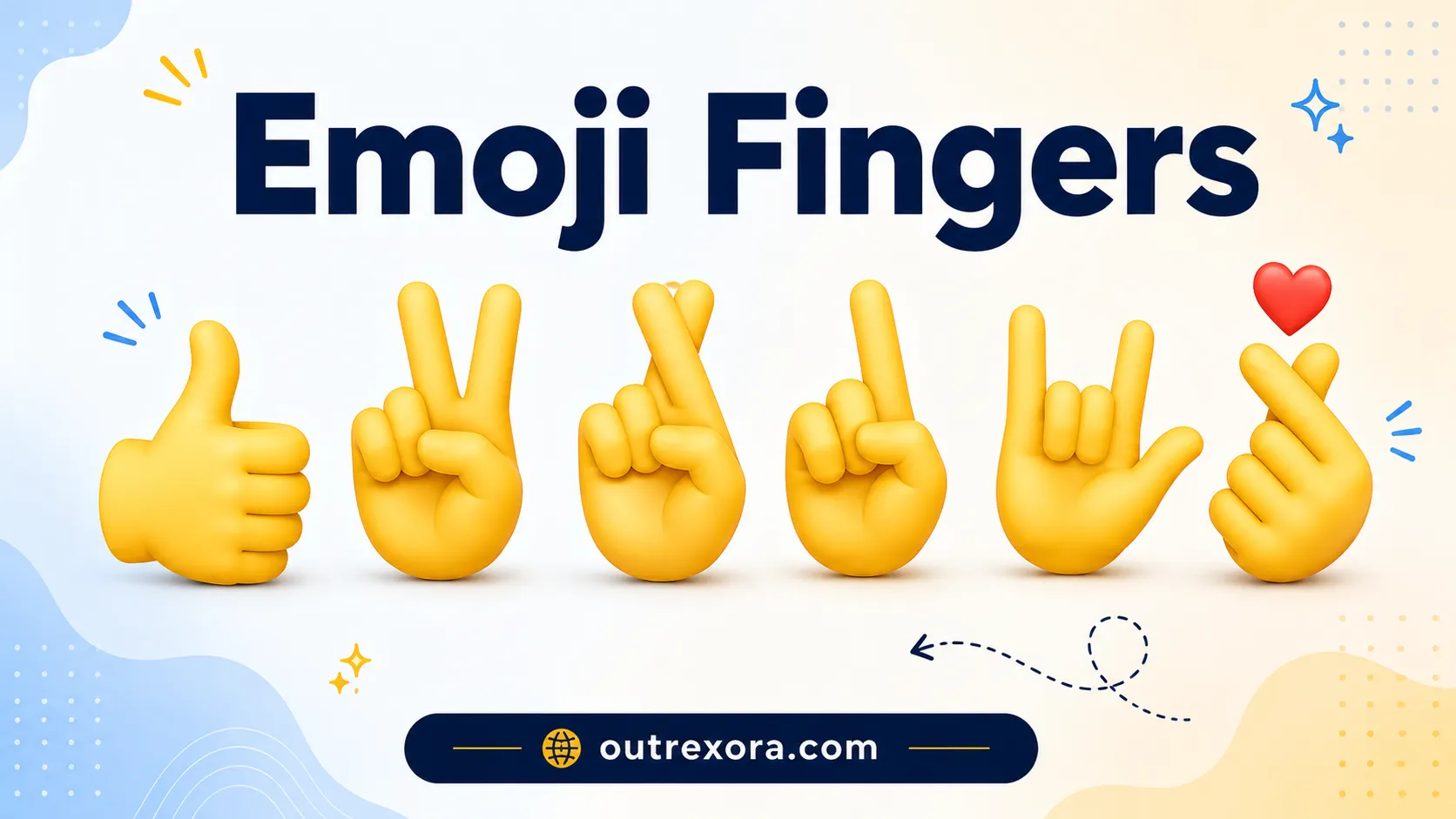
Emoji fingers turn tiny gestures into big expressions.
What do emoji fingers mean?
Emoji fingers represent gestures that communicate feelings, reactions, attitudes, or social cues without requiring a long explanation. Their meaning often depends on the conversation, relationship, and platform.
| Emoji | Core meaning | Misread as | Best used when |
| 🫰 | Affection or a heart gesture | Random hand pose | Showing warmth or appreciation |
| 🤞 | Hope or wishing for luck | Crossing fingers casually | Hoping for a good result |
| 🤟 | Love or affectionate gesture | Rock gesture | Showing friendly affection |
| 🫶 | Heartfelt support or love | Hand pose | Expressing care and appreciation |
| 🖕 | Strong annoyance or insult | Playful teasing | Only when the relationship and context clearly allow it |
| ✌️ | Peace, victory, or casual positivity | Two-finger pose | Celebrations or relaxed messages |
Meaning & Example
These gestures can be especially useful when text feels too serious. A short message paired with the right symbol can make the tone feel softer, funnier, or more expressive.
❤️ Red Heart
Meaning: Deep love, affection, and emotional connection.
Example 1: I miss you ❤️
Example 2: You are my everything ❤️
🫰 Finger Heart
Meaning: A small affectionate heart gesture.
Example 1: Sending you a little love 🫰
Example 2: That was so sweet of you 🫰
🤞 Crossed Fingers
Meaning: Hope, luck. Or wishing for something positive.
Example 1: Wish me luck 🤞
Example 2: Hopefully everything works out 🤞
🤟 Love-You Gesture
Meaning: A friendly or affectionate gesture of love and connection.
Example 1: Love you guys 🤟
Example 2: Thanks for always supporting me 🤟
🫶 Heart Hands
Meaning: Warmth, appreciation, care. And heartfelt support.
Example 1: Thank you for being here 🫶
Example 2: Sending lots of love 🫶
🖕 Middle Finger
Meaning: A very strong gesture of annoyance, rejection, or insult.
Example 1: Seriously? 🖕
Example 2: Not today 🖕
✌️ Victory Hand
Meaning: Peace, victory, confidence. Or a relaxed positive mood.
Example 1: We did it ✌️
Example 2: Have a great day ✌️
🤌 Pinched Fingers
Meaning: Emphasis, disbelief, questioning, or expressive reaction.
Example 1: What do you mean? 🤌
Example 2: Explain that again 🤌
🤏 Pinching Hand
Meaning: Something small, tiny. Or a small amount.
Example 1: Just a little 🤏
Example 2: Give me a minute 🤏
🫵 Index Pointing at the Viewer
Meaning: Direct attention toward the person receiving the message.
Example 1: Yes, I mean you 🫵
Example 2: You need to see this 🫵
How to use emoji fingers the right way
On WhatsApp, emoji fingers usually feel personal and conversational. Friends may use them to add humor, affection, encouragement, or emphasis without making a message sound overly formal.
For example, “Wish me luck 🤞” feels warmer than the same sentence alone. The gesture adds emotional context while keeping the message short.
On Instagram, these gestures can work well in captions, comments, Stories, and profile-related content. Creators often choose expressive symbols because they make short text visually noticeable and fit naturally into aesthetic posts.
On TikTok, context matters even more. Finger gestures can support jokes, reactions, trends, or ironic comments. A playful gesture can make a short response feel more dramatic without adding extra words.
A simple rule is to match the gesture with your relationship and the mood. If a gesture could sound rude or confusing, choose something softer.
Do use emoji fingers to make emotions clearer, add personality, and keep messages natural. Don’t overload every sentence with gestures or assume everyone will interpret them exactly the same way.
Best emoji fingers combos copy & paste
Here are easy copy paste emojis combinations using the same finger-gesture family. Choose them according to the mood of your message.
Romantic
👉 🫰🫶 A sweet way to send affection to someone special.
👉 🫶🫰 Works well for a warm “thinking of you” message.
👉 🤟🫶 Adds a friendly but affectionate feeling.
Cute
👉 🫰🤏 A playful little gesture for a cute message.
👉 🫶✌️ Great for a cheerful, supportive reply.
👉 🤟✌️ Casual, upbeat. And friendly.
Flirty
👉 🫵🫰 A playful way to direct affection toward someone.
👉 🤌🫰 Adds expressive attitude to a teasing message.
👉 🫰🫶 A softer choice when you want to show interest.
Missing someone
👉 🫶🫰 A gentle way to send warmth from a distance.
👉 🤟🫶 Useful for a heartfelt message to someone you miss.
👉 🫵🫶 Directly tells someone they are on your mind.
Good night
👉 🫶✌️ A relaxed way to end the conversation positively.
👉 🫰🫶 Gives a warm, caring good-night tone.
👉 🤟✌️ Keeps the goodbye casual and friendly.
Trending emoji fingers in 2026
In 2026, expressive hand gestures continue to fit naturally into short-form conversations because they communicate reactions quickly. Younger users, creators, and everyday chatters often combine gestures with short phrases rather than relying on long explanations.
The finger heart 🫰 remains useful for affectionate messages and visual captions. Heart hands 🫶 also suit supportive comments and posts where users want to communicate warmth without writing a lengthy response.
The crossed fingers 🤞 gesture works naturally in conversations about hopes, plans, exams, goals, or uncertain outcomes. Meanwhile, ✌️ remains an easy choice for casual positivity and celebratory content.
| Emoji | Why trending | Who uses it | Platform |
| 🫰 | Compact affectionate gesture | Friends, creators, couples | Instagram, TikTok |
| 🫶 | Strong visual expression of support | Creators and everyday users | Instagram, WhatsApp |
| 🤞 | Quickly communicates hope | Students, friends, creators | WhatsApp, TikTok |
| ✌️ | Simple and versatile reaction | Broad everyday audiences | Instagram, TikTok |
As digital communication keeps becoming more visual, hand gestures offer a simple way to add personality and emotional context to short messages.
How to Reply When Someone Sends You the Finger Emojis
When the finger emojis lands in a chat, it is usually shorthand for a moment, a plan, or a mood. Your reply lands best when it answers that moment, so glance at the photo, story. Or message it came with before you write anything.
React to what they shared: if it came with a photo or an update, comment on that first. People send this emoji to highlight the moment, and noticing the moment is the reply they wanted.
Add one of your own: sending the same emoji back with a short line of your own keeps the exchange balanced. It says you are in the moment with them, not just watching it.
Ask about the plan: when the emoji hints at an activity, a trip, a meal. Or a purchase, one question about the details turns a reaction into a real conversation.
Keep it short: this emoji does its best work in quick, casual exchanges. One or two sentences is plenty, and a long serious reply can make a light moment feel heavy.
FAQs:
1. What is the most popular emoji fingers?
There is no single universal winner, because popularity changes by context and platform. Gestures such as 🫰, 🫶, 🤞, and ✌️ are especially easy to use in everyday conversations.
2. What does 🫰 mean from a girl or boy?
The gesture usually communicates affection, appreciation, or a playful heart gesture. Its exact tone depends more on the surrounding message and relationship than on the sender’s gender.
3. Why do emojis look different on iPhone vs Android?
Apple, Google, Samsung, and other platforms design their own emoji artwork. The underlying Unicode character can be the same while its appearance, finger position, or expression looks slightly different.
4. Are emoji fingers used differently in other countries?
Yes, gestures can carry different cultural associations depending on the country and community. A symbol that feels friendly in one place may have a different interpretation elsewhere, so context matters.
The Story Behind Pinched Fingers
The pinched fingers emoji is one of the most culturally rich hand gestures on your keyboard. It shows all fingertips gathered together pointing upward, the classic Italian gesture often voiced as ma che vuoi, meaning what do you want or what are you saying. Researchers once catalogued two dozen different interpretations of this one gesture, from frustration to dramatic emphasis.
Online it also became the chefs kiss, shorthand for perfection, especially about food. That pasta was perfect needs no further explanation when the pinched fingers follow it. The emoji arrived with Emoji 13.0 in 2020 and supports skin tone modifiers.
The Story Behind Finger Heart
The finger heart, made by crossing the thumb and index finger, comes from South Korean celebrity culture, where stars have used it for years as a tiny sign of love and support for fans. K-pop fandoms spread it worldwide until it earned its own emoji in Unicode 14.0. Today it is the cutest way to send love without typing a word.
The Story Behind Folded Hands
The folded hands emoji is deliberately ambiguous, and that is its strength. In Western chats it usually reads as please or thank you, a grateful gesture after a favor. In many Asian cultures it reads as a respectful greeting or a literal prayer. Because both readings are warm, it rarely offends. But pairing it with words like thank you so much removes all doubt about which meaning you intended.
Tricky Lookalikes: Pairs People Mix Up
Several finger emojis look almost identical at small sizes. Learning the differences saves you from embarrassing mix ups.
Love You Gesture vs Sign of the Horns: The love you hand extends the thumb plus the index finger plus the pinky. And it means I love you in American Sign Language. The horns extend only the index finger and pinky, and it means rock on. One thumb changes affection into attitude.
Pinched Fingers vs Pinching Hand: Pinched fingers point upward with all fingertips touching, the Italian emphasis gesture. The pinching hand holds thumb and index finger close together sideways, meaning a tiny amount. One is about emphasis, the other is about size.
Victory Hand vs Crossed Fingers: The victory hand spreads two fingers in a V for peace or the number two. Crossed fingers overlap the middle finger over the index finger for luck. At a glance they blur together, so double check before sending.
Raised Hand vs Waving Hand vs Splayed Hand: The raised hand shows the palm flat and means stop or high five. The waving hand tilts as if in motion and means hello or goodbye. The splayed hand spreads all fingers wide and reads as an open, welcoming gesture.
Hand Emojis That Can Offend: The Cultural Taboo Guide
This is the section most guides skip, and it matters more than any other. A gesture that is friendly in one country can be rude in another.
The OK hand: In most Western countries it means perfect. But in parts of Europe and South America it is considered obscene. In some contexts it can also mean zero or nothing. Use it freely with friends at home, and avoid it in international chats.
Thumbs up: Broadly positive in the West. But in parts of the Middle East and West Africa it carries a rude meaning similar to a raised middle finger. When messaging across cultures, a simple smiling face is the safer yes.
Victory hand, palm inward: With the palm facing out it means peace. But with the palm facing inward it is a serious insult in the UK, Ireland, Australia, and New Zealand. Phone art usually shows the palm outward, yet it is worth knowing the flip side exists.
Middle finger: A genuine insult in most cultures. Even as a joke it can offend, so reserve it for friendships where the humor is mutual and obvious.
Thumbs down and pointing: Pointing directly at someone with the index finger feels accusatory in many Asian cultures. The open hand or a gentle sideways point reads as politer.
The golden rule for international chats: when a gesture has two meanings, assume the stricter one until you know your audience.
Skin Tones on Hand Emojis
Most finger and hand emojis support five skin tone modifiers, from light to dark. So you can match the gesture to yourself. Long press the emoji on iPhone or Android to pick a tone. A few, like folded hands and clapping hands, support tones on most platforms. The default yellow is intentionally neutral and works everywhere. Picking a tone that represents you makes messages feel more personal. And most people set one favorite and use it consistently.
Finger Emojis on iPhone, Android, and Samsung
Hand emojis are drawn differently on each platform, and small art differences can change how a gesture reads:
iPhone (Apple): Clean, slightly cartoonish hands with smooth shading. The most widely recognized style.
Android (Google): Bolder outlines and a slightly more realistic shape. Some gestures look a touch more serious here.
Samsung: Softer, rounder hands with gentle gradients, giving gestures a friendlier feel.
Because of these differences, a gesture like pinched fingers can look more dramatic on one phone and more playful on another. When tone matters, pair the emoji with words that make your meaning clear.
Finger Gestures for Everyday Politeness and Boundaries
Finger gestures can express politeness as clearly as they express excitement, when they are chosen with care. A crossed fingers symbol before an exam, a heart hands symbol after a favour, or a victory hand at the end of a friendly chat all signal warmth without a long message. The gesture works because it is small and specific, so readers understand the feeling instantly. Politeness in emoji form is really about matching the gesture to the relationship, so a close friend gets playful warmth and a new acquaintance gets calm respect.
Boundaries also benefit from clear gestures paired with clear words. A raised hand can signal pause, a pinching hand can signal just a little, and a pointing hand can direct attention without sounding bossy. When a gesture could be read as rude, a short sentence beside it removes the risk. A line such as just a moment please, I need to check this turns a hand symbol into a polite pause rather than a sharp stop. Words and gestures together protect tone far better than either one alone.
Finger Gestures in Sign Language Awareness and Inclusion
Many finger gestures come from sign languages, and knowing that history makes texting more thoughtful. The love you gesture, the victory hand, and several other hand shapes all carry meaning in American Sign Language that goes beyond a casual chat symbol. Readers who use sign language may notice those connections first, so a sender who knows the background can avoid accidental confusion. Context usually clears up the intended meaning, but awareness shows respect for a language that many people use every day.
Inclusion also means remembering that hand art looks different across devices. A gesture that looks clear on one phone can look cramped or unclear on another, especially at small sizes. Pairing a gesture with words ensures that the message survives a design difference. That habit helps older readers, readers with low vision, and readers using screen readers, who may hear the emoji name rather than see the hand shape. Clear words make every gesture more inclusive.
Frequently Asked Questions About Finger Emoji
Which finger gesture means love most clearly? The finger heart and heart hands both mean love and appreciation clearly. The finger heart feels casual and cute, while heart hands feel warmer and more supportive for bigger moments.
Can a friendly gesture offend abroad? Yes. Gestures such as thumbs up, the OK hand, and the victory hand carry different meanings in some countries. When messaging across cultures, choose a smiling face or a heart for a safer yes.
How do I avoid mixing up similar gestures? Check the hand shape before sending. Love you extends thumb, index finger, and pinky, while horns extend only index finger and pinky. One thumb changes affection into attitude, so a second glance matters.
Conclusion:
Emoji fingers make digital conversations more expressive without requiring extra words.
Use them according to the mood, relationship. And platform so your message feels natural.
If you are chatting privately or posting publicly, the right gesture can add personality in an instant.

I’m Ava Richardson, a passionate writer and author at Outrexora.com, where I share engaging, informative, and easy-to-understand content on the latest news, insights, and trends. My goal is to bring readers useful information in a clear and enjoyable way.