A tiny owl can say more than a full reminder messageespecially when you are talking about language learning.
The duolingo emoji is often used when someone jokes about studying, maintaining a streak, learning a new language. Or avoiding their daily lesson.
If you post on WhatsApp, Instagram, or TikTok, these familiar symbols can make your message feel playful and instantly recognizable.
The duolingo emoji turns everyday language learning struggles into a funny little conversation.
What do duolingo emoji mean?
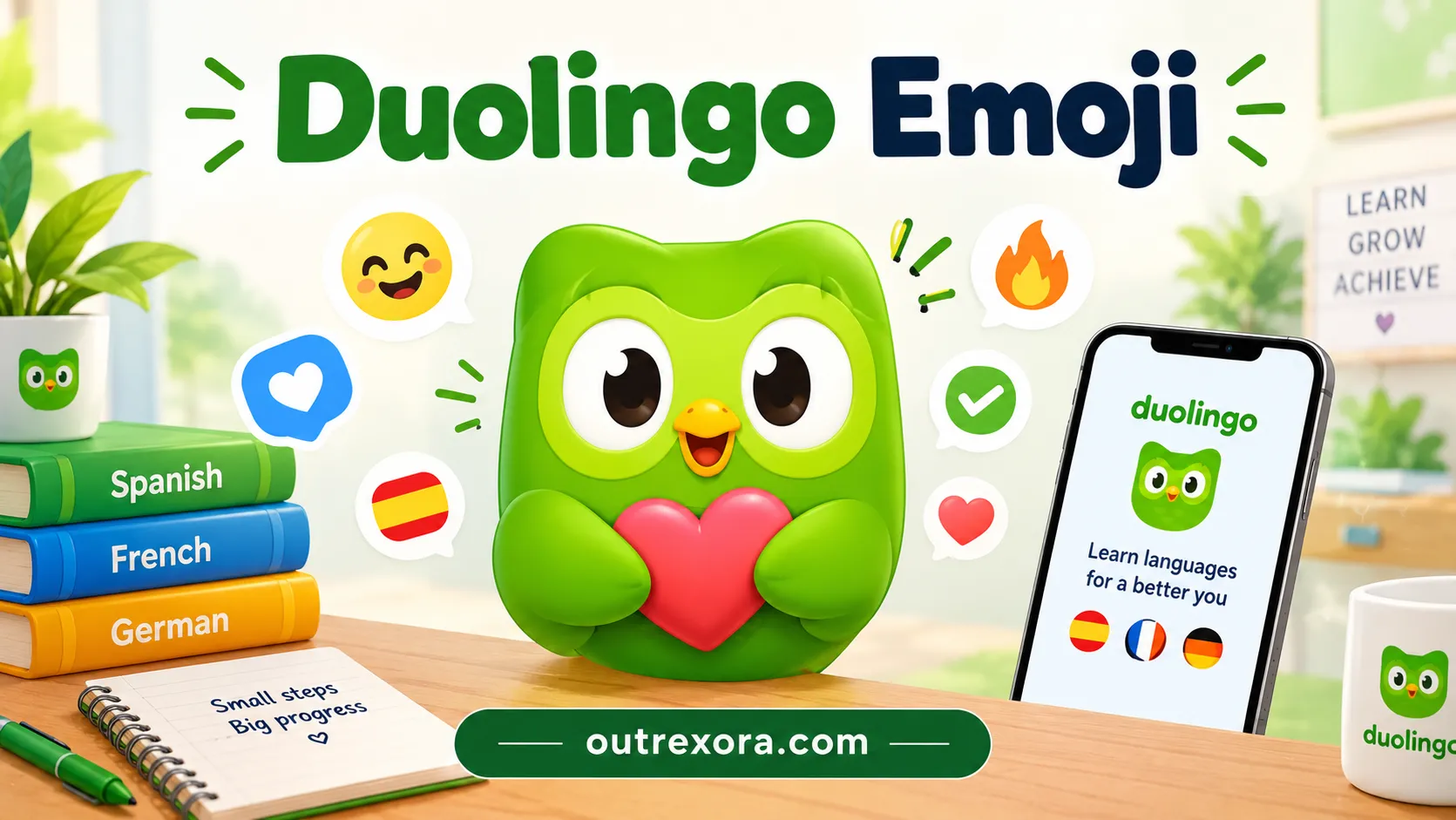
The duolingo emoji is not one official Unicode emoji. Instead, people usually use a small family of emojis connected with the famous green owl, learning, books, languages. And funny study reminders.
🦉 is commonly used to represent the owl mascot and language learning energy. 📚 often appears when someone talks about lessons, while 📝 adds a study or practice vibe.
🗣️ can make a message feel connected to speaking and communication. 🌍 is useful when discussing languages from around the world. And 🔥 is often paired with streak related jokes.
| Emoji | Core meaning | Misread as | Best used when |
| 🦉 | Owl and Duolingo style learning | Nature content | Talking about lessons |
| 📚 | Learning and study | School homework only | Sharing study moments |
| 📝 | Practice and written lessons | Serious work | Mentioning exercises |
| 🗣️ | Speaking and language practice | General conversation | Discussing pronunciation |
| 🌍 | Global languages | Travel only | Learning world languages |
| 🔥 | Motivation and streak energy | Anger | Celebrating consistency |
Meaning & Example
🦉 Owl
Meaning: Playful language learning, study reminders. And Duolingo related jokes.
Example 1: Time for my lesson 🦉
Example 2: The owl is watching me 🦉
📚 Books
Meaning: Learning, studying, and building knowledge.
Example 1: Study time starts now 📚
Example 2: Another lesson completed 📚
📝 Memo
Meaning: Practice, notes, exercises. And written learning.
Example 1: Taking notes for my lesson 📝
Example 2: I need more practice 📝
🗣️ Speaking Head
Meaning: Conversation, pronunciation. And speaking practice.
Example 1: Practicing Spanish today 🗣️
Example 2: Speak it, do not just read it 🗣️
🌍 Globe
Meaning: International languages and connecting with the world.
Example 1: Learning languages opens the world 🌍
Example 2: One language at a time 🌍
🔥 Fire
Meaning: Motivation, consistency, and energetic learning progress.
Example 1: Keeping the streak alive 🔥
Example 2: Still studying every day 🔥
🎯 Bullseye
Meaning: Focus, goals. And reaching a learning target.
Example 1: Today’s goal is complete 🎯
Example 2: Staying focused on my lessons 🎯
💚 Green Heart
Meaning: Support, enthusiasm. And a playful connection with the green owl theme.
Example 1: Learning mode activated 💚
Example 2: My favorite study challenge 💚
😂 Face with Tears of Joy
Meaning: Funny reactions to difficult lessons or relatable study struggles.
Example 1: I forgot everything again 😂
Example 2: That question was impossible 😂
😅 Grinning Face with Sweat
Meaning: Nervous effort, awkward mistakes. And trying hard.
Example 1: I barely finished my lesson 😅
Example 2: Pronunciation practice is hard 😅
How to use duolingo emoji the right way
On WhatsApp, the duolingo emoji works best in personal and expressive messages. You can joke with friends about forgetting a lesson or celebrate finishing daily practice.
Example: “Did you finish your lesson today? 🦉🔥”
On Instagram, these emoji meanings can support captions, study posts, language learning pages, and personal branding. Keep the emoji combination simple so your caption still feels clean.
Example: “Learning something new every day 📚🌍”
On TikTok, humor and irony often make the duolingo emoji more entertaining. People can use 🦉😂 or 🦉😅 when creating relatable videos about difficult lessons.
Dos: Keep the emojis relevant, match them with your message, and use copy paste emojis naturally.
Don’ts: Do not overload every sentence, use unrelated symbols, or assume everyone understands the same joke.
Best duolingo emoji combos copy & paste
Romantic
👉 🦉💚🌍 A cute message about learning a language together.
👉 📚💚🎯 Use when sharing a sweet study goal with someone.
👉 🗣️💚🌍 Perfect for practicing a new language with a special person.
Cute
👉 🦉📚💚 A friendly language learning combination.
👉 🦉😂📚 Great for a funny study post.
👉 🦉😅📝 Use after making a small learning mistake.
Flirty
👉 🗣️💚😅 A playful message when practicing conversations together.
👉 🌍🗣️💚 Use for a fun international conversation.
👉 🦉🎯😅 A humorous way to show you are trying your best.
Missing someone
👉 🌍💚🗣️ A message about wanting to talk across distance.
👉 🦉📚🗣️ Perfect when you miss your language learning partner.
👉 😅🗣️💚 A light and personal conversation starter.
Good night
👉 🦉📚🌍 Share after finishing your final lesson of the day.
👉 📝🎯💚 A calm way to celebrate completing your goal.
👉 🦉🔥😅 Perfect for joking about keeping your streak going before bed.
Trending duolingo emoji in 2026
Among trending emojis 2026, the Duolingo style emoji family is especially useful because it connects learning with humor and online culture. The same symbols can work in casual messages, short videos, captions, and memes.
🦉 is popular in jokes about daily lessons and reminders. 🔥 often appears in conversations about maintaining habits, while 😂 and 😅 help users turn learning mistakes into relatable content.
| Emoji | Why trending | Who uses it | Platform |
| 🦉 | Recognizable learning humor | Language learners and creators | TikTok, Instagram |
| 🔥 | Fits progress and consistency posts | Students and casual users | WhatsApp, Instagram |
| 😂 | Makes mistakes feel relatable | Younger users and creators | TikTok, WhatsApp |
| 😅 | Expresses effort and awkward moments | Learners and students | Instagram, TikTok |
As online communication changes, emoji use may continue becoming more connected to communities, inside jokes, and shared digital experiences.
Copy and Paste the Closest Duolingo Emoji
There is no official Duolingo emoji on any keyboard, so the owl is the stand in everyone uses. Here it is on its own line, ready to copy on any phone or computer. Tap and hold it on mobile. Or highlight it and copy it on a desktop, then paste it into your chat or caption.
🦉
Pair the owl emoji with a book, a flag. Or a fire emoji and readers who know the app will get the joke at once, especially in streak and study chats.
FAQs:
What is the most popular duolingo emoji?
🦉 is the most recognizable duolingo emoji because it immediately brings the famous owl and language learning jokes to mind. It is often paired with other learning related emojis.
What does 🦉 mean from a girl or boy?
From a girl or boy, 🦉 usually depends on the conversation. In a Duolingo related message, it commonly refers to learning, lessons, reminders, or a playful joke.
Why do emojis look different on iPhone vs Android?
Different companies design their own versions of Unicode emojis. The basic symbol stays similar, but its artwork, facial expression, or style may look different.
Are duolingo emoji used differently in other countries?
Yes, context can vary because humor, language learning culture, and messaging habits differ. However, symbols connected with studying and communication are generally easy to understand.
The Evil Duo Meme Timeline
The threatening owl did not appear overnight. From 2011 to 2016, Duo debuted as a cheerful mascot while his push notifications grew increasingly persistent. And users began joking that the owl sounded too invested in their Spanish.
From 2017 to 2018, tweets exaggerated the notifications into tiny threats. The shared guilt of skipping a lesson became universal. And the owl became its face: an overbearing teacher who takes your streak personally.
In 2019, evil Duo went mainstream. Parody images of a menacing owl flooded social media, joking that Duo would track you down for a broken streak. And major outlets covered the meme.
From 2020 onward, Duolingo joined the joke. Its marketing turned unhinged and self aware, a dancing Duo amassed millions of TikTok followers. And Super Bowl ads played up the owl’s obsessive personality. The meme stopped being something done to Duolingo and became something done with it.
Duolingo as Slang, Beyond the Emoji
The meme escaped the emoji and became slang: Duolingo now means looming accountability itself. Calling something Duolingo jokes about being caught or punished for slacking, in a fun, meme like context.
Common uses include the playful warning (better finish that report. Or Duolingo is coming for you), the accountability joke (my mom is like Duolingo, always watching). And the self callout (me to me: do not skip study time, Duolingo is watching). The slang works because everyone recognizes the feeling: small guilt over an unfinished task, personified as a relentless green owl. Use it casually with friends who get the joke, and never in formal settings where the reference will confuse people.
8 Things You Did Not Know About Duo
The mascot behind the meme has a surprisingly rich history.
- Designed in 2011 by an artist aiming for wisdom that felt cute and non intimidating worldwide.
- The green symbolizes growth in language skills, matching the brand from the first beta.
- His name plays on language itself, evoking duo for two languages with a coin like twist.
- He starred in Super Bowl ads, including one where Duo dramatically confronts a lesson skipper.
- He dances on TikTok, where the official mascot account earned millions of followers.
- He speaks Gen Z, after updates gave his notifications a lowercase, short message style.
- He teaches fictional languages too, with courses covering Klingon and High Valyrian.
- His streak legacy is enormous, with the longest learner streaks passing 5,000 days.
How to Use the Duolingo Emoji in Your Own Texts
- To nudge a study buddy: Send 🦉 when your language partner goes quiet. Add Duo is watching for the full meme effect.
- To celebrate a streak: Pair 🦉 with 🔥 for milestones. Thirty days plus 🦉 plus 🔥 is a victory post.
- To joke about the meme: Drop the owl with 👀 after someone admits skipping practice.
- To mark study time: Use 🦉 plus a book to signal heads down, learning mode.
- To build your Duolingo logo: Combine the green heart with 🦉 for group chat names and study group icons.
How to Reply When Someone Sends You the Owl
For a streak nudge, answer with playful surrender: fine, opening the app right now. For a threat joke, play along: tell Duo I will do double lessons tomorrow. The meme rewards commitment, so a deadpan reply beats a confused one.
For a celebration, match the hype: one hundred days is real dedication, plus 🔥 of your own. For a study invite, just say yes and bring snacks, because the owl approves of snacks. The only wrong reply is taking it literally. Nobody believes an owl is actually watching; they believe in the shared joke, so join it.
Real Conversation Examples With the Duolingo Emoji
Example 1, streak reminder:
Elena: I am so tired, I might skip Spanish today
Marco: 🦉👀 Duo sees you, Elena
Elena: Fine, fine, doing my lesson right now
Marco: The owl accepts your apology
Example 2, celebrating a milestone:
Aisha: One hundred day streak 🦉🔥
Tom: One hundred days, that is real dedication
Aisha: Duo and I are basically family now
Tom: Tell Duo I said thanks for the motivation
Example 3, playful threat:
Jake: Haven’t opened the app in a week, living dangerously
Lily: 🦉 Bold words from someone within owl distance
Jake: Tell Duo I will do double lessons tomorrow
Lily: Too late, he already knows where you live
Example 4, study plans:
Sofia: Library at six for French practice 🦉📚
Noah: Bringing snacks, Duo approved
Sofia: Only healthy snacks, the owl is judging
Noah: Carrots it is, then
Related Emoji Combos With the Duolingo Emoji
- Owl plus eyes: 🦉 plus 👀 is the signature Duo is watching combo.
- Owl plus fire: Streak energy for milestones and hot learning streaks.
- Owl plus books: Study mode for practice sessions and homework time.
- Owl plus green heart: The mini Duolingo logo in the app’s signature green.
- Owl plus globe: Language learning in general, perfect for polyglot chats.
- Owl plus warning sign: Streak danger, the meme threat level rising.
- Owl plus party popper: Celebrating course completion or a big milestone.
Common Mistakes to Avoid With the Duolingo Emoji
- Assuming everyone knows the meme: With someone unfamiliar, 🦉 may read as a random bird, so add context.
- Overusing the threat joke: Hilarious the first dozen times, odd when every message is a threat.
- Sending it to strangers: A random owl with staring eyes can unsettle someone outside the joke. Keep Duo in friend and learner circles.
- Mixing it up with the generic owl: In nature chats 🦉 means a real bird. The Duolingo reading needs language learning or meme context.
- Using it as a real guilt trip: Fun between willing participants, but skip the owl for someone stressed and offer encouragement instead.
Duolingo Emoji Meaning for Families and Classrooms
Families have turned the owl into a gentle study mascot at home. A parent might send the owl when a child finishes a lesson, to celebrate a small win without making a big speech. A sibling might send it to tease a brother or sister who forgot practice, in a kind and familiar way. In a family chat, the owl means encouragement first and a joke second. The shared routine gives the symbol its warmth.
Classrooms use the same family of symbols in a similar spirit. A teacher might use the owl in a class group to remind learners about a fun challenge, a word of the day, or a short speaking task. Students reply with the owl and a fire symbol when they finish, which turns homework into a small team effort. The symbols work because they are playful, and play helps learners return the next day.
One habit keeps family and classroom uses healthy. Praise should come before pressure. A message that celebrates effort, even a short lesson, builds confidence. A message that only warns about a broken streak can feel heavy for a young learner. When the owl appears beside praise, a goal, or a shared plan, it becomes a friendly coach rather than a strict watcher.
Duolingo Emoji Meaning in Streak Recovery and Comeback Chats
Every learner breaks a streak sooner or later, and the owl becomes the symbol of the comeback. A friend who returns after a busy week might send the owl with a note about starting again. The message says that the habit matters, even after a gap. It does not need a long apology. A short, honest restart is enough, and friends who reply with encouragement make the return easier.
Streak recovery chats also work as gentle accountability. A study partner might send the owl in the morning as a nudge, and the learner replies after the lesson is done. That small loop keeps the habit alive without daily lectures, and it celebrates a return without shaming a missed day.
Comeback messages feel strongest when they name a simple next step. A learner might promise one short lesson, a five minute review, or a single speaking exercise. Small steps rebuild confidence faster than grand promises. When the owl appears beside a modest plan, it stops being a threat and becomes a marker of a fresh start, which is exactly what a returning learner needs.
Duolingo Emoji Meaning in Travel and New Language Goals
Travel gives the owl a hopeful new job. A traveller learning a few phrases before a trip might use the owl beside a note about greetings, directions, or ordering food. The symbol then means preparation and excitement, not a school task. Friends reply with globe and book symbols, which turns a solo study plan into a shared adventure before the journey even begins.
New language goals also benefit from the owl as a planning tool. A learner who sets a goal for a new language might use the owl in a message that lists a start date, a daily time, and a first milestone. That message feels like a promise to oneself, shared with friends for support. When friends cheer the goal, the learner gains a small circle of encouragement that makes the early, difficult weeks easier to survive.
During travel itself, the owl becomes a diary symbol. A traveller might send it after using a new phrase successfully, after a funny misunderstanding, or after a kind local corrected pronunciation with a smile. Those small stories show real progress better than any streak number. They prove that language learning is not only about an app. It is about connection, courage, and the joy of being understood in a new place.
Conclusion:
The duolingo emoji makes language learning conversations more playful, expressive, and relatable.
From WhatsApp emojis to Instagram emojis and TikTok jokes, the same small emoji family can add personality to your message.
Use them naturally, keep the context clear, and enjoy sharing your learning journey.

I’m Ava Richardson, a passionate writer and author at Outrexora.com, where I share engaging, informative, and easy-to-understand content on the latest news, insights, and trends. My goal is to bring readers useful information in a clear and enjoyable way.