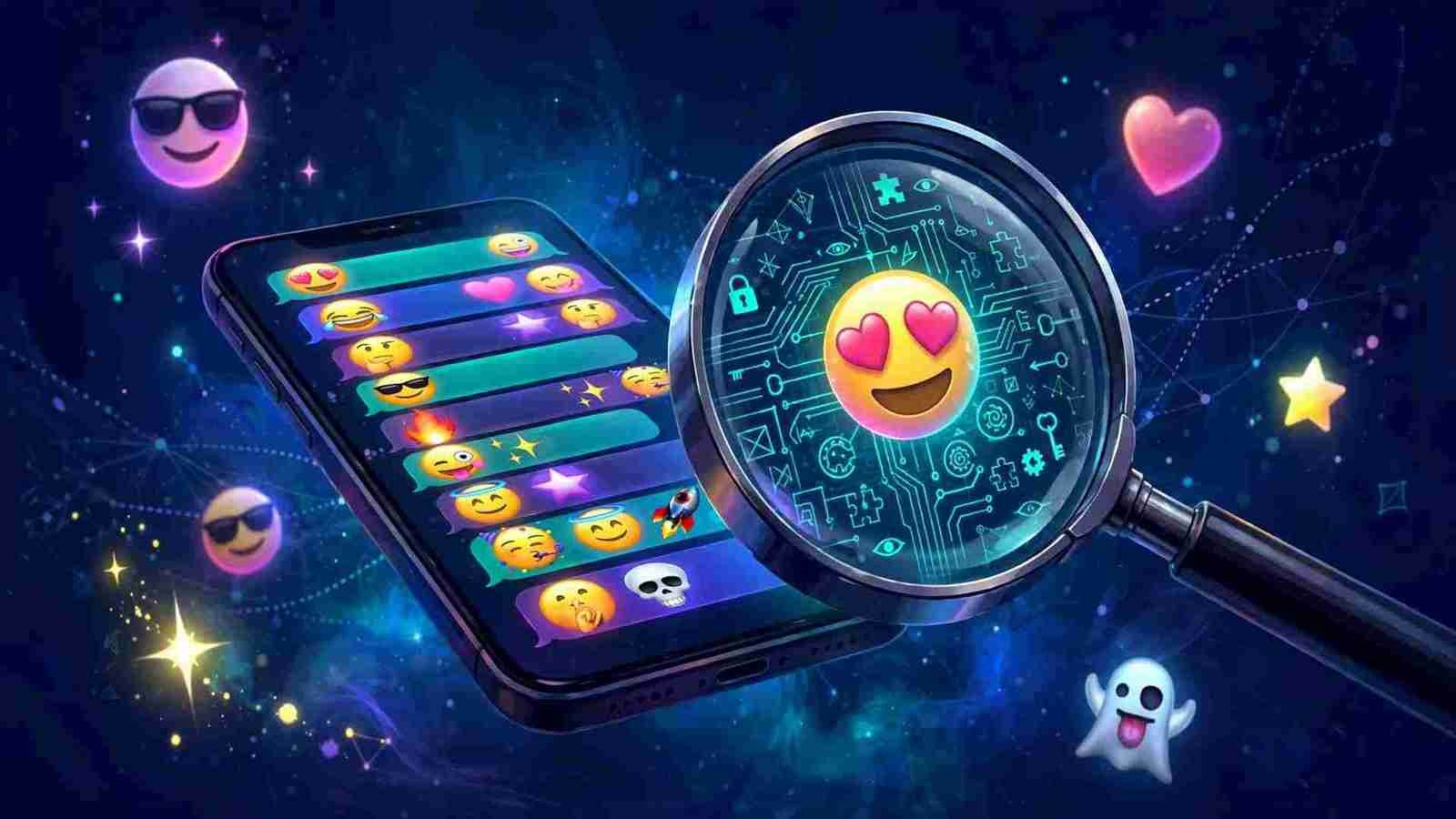
Do emojis have hidden meanings? The short answer is yes. Many emojis carry a second meaning that has nothing to do with the object they show. A peach is rarely just a fruit in a flirty chat. A goat can mean greatest of all time.
A simple thumbs up can feel warm to one person and cold to another. Emojis look simple, but they have grown into a rich visual language with slang, inside jokes, cultural codes, and generational differences.
This happens because emojis are used by billions of people who constantly invent new ways to say things. The official name of an emoji is only the starting point.
Real meaning comes from how people actually use it in chats, captions, and comments. Over time, communities give certain emojis new jobs.
Some of these new meanings are playful, some are romantic, some are rude, and some are genuinely secret codes used by small groups. In this guide, we will show you the main categories of hidden emoji meanings, why they form, how to spot them, and how to avoid embarrassing mistakes.
Most short guides only list a few famous examples, like the peach and the eggplant. That is not enough. Hidden meanings also live in hand gestures, heart colors, faces, animals, and everyday objects.
They change with age, culture, and platform. We cover all of it below, with many real examples, so you can read any chat with confidence and never get caught by a secret meaning again.
Yes, Emojis Have Hidden Meanings
Meaning: Yes, many emojis have hidden meanings. A hidden meaning is a second meaning that a community gives to an emoji, different from its official name and picture.
Hidden meanings form in three main ways. First, shape resemblance: an emoji looks like something else, so people use it to stand for that thing. The peach and the eggplant became famous this way. Second, wordplay: an emoji sounds like a word or phrase, or it matches the first letters of a phrase. The goat became greatest of all time this way, because the first letters spell GOAT. Third, group codes: a small community agrees that an emoji means something private, like a drug reference or a group identity marker. Outsiders see a harmless symbol, while insiders read a clear message.
It is important to remember that hidden meanings do not replace the normal meaning. The peach still means a fruit in a recipe chat. The goat still means an animal in a farm post. Context decides which meaning is active. A single emoji in a grocery list is literal. The same emoji in a flirty late night chat is probably not. Learning hidden meanings is really about learning to read context, and that skill will make you a much better texter.
Examples:
- Peach in a recipe chat means a fruit, but in a flirty chat it often means something else
- Goat in a sports post usually means greatest of all time
- Key emoji in a motivational post can mean a life win or a key to success
- Skull emoji in a funny chat usually means I am laughing so hard I died
Food Emojis With Hidden Meanings
Meaning: Food emojis are the most famous source of hidden meanings, because many fruits and vegetables resemble body parts or stand for substances in coded chats.
The eggplant 🍆 and the peach 🍑 are the two best known examples. In flirty and adult conversations, they are widely used as stand ins for body parts. The cherries 🍒 and the banana 🍌 appear in similar contexts. The sweat droplets 💦 often add an adult suggestion. These meanings are so well known that social platforms have restricted the use of these emojis in sexual contexts. If you see them in a flirty chat, the hidden meaning is almost certainly intended.
Food emojis also appear in coded drug conversations. Police guides and school safety guides have noted that the maple leaf 🍁, the tree 🌳, and the four leaf clover 🍀 can stand for marijuana, while the snowflake ❄️ and the snowman ⛄ can stand for cocaine, and cakes and ice cream can stand for edibles. These meanings are not universal, and context matters enormously. A snowflake in a winter post is just winter. The same emoji in a coded conversation may be something else entirely. Never assume the worst from one emoji alone.
Examples:
- Eggplant and peach together in a flirty chat carry an adult suggestion
- Cherries in a playful chat can carry a flirty or cheeky meaning
- Maple leaf in a nature post means autumn, but in a coded chat it can mean something else
- Cake in a birthday post means birthday, with no hidden meaning at all
Hand Gesture Emojis With Hidden Meanings
Meaning: Hand gesture emojis carry some of the most confusing hidden meanings, because the same gesture means different things in different cultures and generations.
The OK hand 👌 is a perfect example. In parts of Europe and South America, the real life gesture can be offensive. In some online circles, it has also been used as a political signal, although its everyday meaning remains positive. The folded hands 🙏 can mean prayer, thank you, please, or a high five, depending on the culture of the sender. The thumbs up 👍 feels positive to older users but can feel passive aggressive or dismissive to younger users when sent alone.
Other hand emojis carry flirty or shy meanings. The two pointing fingers 👉👈 together often mean shyness, nervousness, or hesitation, especially when paired with the pleading face 🥺. The nail polish 💅 rarely means a real manicure. It usually means nonchalance, sass, or an unbothered attitude. The pinched fingers 🤌 can mean perfection, emphasis, or the classic Italian gesture for what do you want. If a hand emoji confuses you, ask the sender what they meant. Hand gestures are the fastest way to misunderstand a message.
Examples:
- OK hand in a food review usually means perfect and delicious
- Folded hands after a favor can mean thank you or please
- Two pointing fingers with a pleading face often mean shyness
- Nail polish at the end of a sentence often means unbothered and confident
Heart Color Codes and Hidden Meanings
Meaning: Heart emojis have one of the most detailed hidden code systems. Each color can signal a different level and type of affection.
The red heart ❤️ is the classic symbol of deep love and romance. The sparkling heart 💖 adds excitement and affection. The pink hearts 💕 and 💗 feel sweet and playful. The orange heart 🧡, yellow heart 💛, green heart 💚, blue heart 💙, and purple heart 💜 are often used for friendship, with each color sometimes marking a specific friend group, team, or cause. The black heart 🖤 can mean dark humor, grief, or edgy love. The white heart 🤍 often means pure, gentle, or spiritual love. The brown heart 🤎 is popular in warm and earthy posts.
These color codes are flexible, not fixed rules. A blue heart might mean loyalty to one person and a favorite sports team to another. A black heart might mean mourning in one chat and edgy affection in another. The safest approach is to treat heart colors as hints, not proof. If someone sends you a heart color you have never seen from them before, notice the words around it. The words will usually confirm whether the heart is romantic, friendly, or supportive.
Examples:
- Red heart in a romantic chat means deep love
- Yellow heart between friends often means warm friendship
- Black heart in a sad post can mean grief or dark humor
- White heart in a supportive message often means pure and gentle care
Face Emojis With Hidden Meanings
Meaning: Face emojis often mean something different from their official names, especially the skull, the clown, the upside down face, and the pleading face.
The skull 💀 is a famous example. It rarely means real death in casual chats. It usually means I am laughing so hard, I am dead, or this is so funny I cannot cope. The coffin ⚰️ works the same way. The clown 🤡 can mean someone is acting foolish, or it can mean I made a fool of myself. The upside down face 🙃 can mean sarcasm, awkwardness, or playful irony. The pleading face 🥺 can mean please, I am sorry, or I am being cute on purpose.
The loud crying face 😭 is another tricky one. It can mean real sadness, but in many chats it means happy tears, overwhelming laughter, or dramatic emotion. The eyes 👀 can mean I see what you did, I am watching, or I am interested. The eyes mouth eyes combo 👁️👄👁️ means shock, awkwardness, or unsettled feelings. Face emojis are the most emotional part of the keyboard, so their hidden meanings are usually about tone, not about secret codes.
Examples:
- Skull after a joke usually means that joke was hilarious
- Clown in a self deprecating post often means I embarrassed myself
- Upside down face after a compliment can mean sarcasm or shy pleasure
- Pleading face before a request often means please say yes
Animal Emojis With Hidden Meanings
Meaning: Animal emojis carry hidden meanings through wordplay, slang, and group codes. The goat, the frog, the snake, and the horse are the most famous examples.
The goat 🐐 means greatest of all time in sports and music conversations. The frog 🐸 can mean an insult in bullying contexts, or it can be part of meme culture, depending on the chat. The snake 🐍 often means a person who cannot be trusted, a backstabber. The horse 🐴 and the horse face 🐎 have been noted in safety guides as possible codes for ketamine in drug related chats, although in normal chats they simply mean a horse. The butterfly 🦋 often means transformation, beauty, or a gentle crush.
Animal emojis also carry cultural meanings. The owl 🦉 can mean wisdom or a late night person. The fox 🦊 can mean cleverness or attractiveness. The pig 🐷 can mean greed, messiness, or cuteness, depending on tone. The rat 🐀 can mean betrayal or an informer. As always, the surrounding words decide the meaning. An animal emoji alone is rarely proof of anything, but in a clear pattern it can be a strong hint.
Examples:
- Goat under a sports highlight means greatest of all time
- Snake in a friendship post often means betrayal
- Butterfly in a crush post often means nervous excitement
- Owl in a study post often means late night studying
Object Emojis With Hidden Meanings
Meaning: Everyday object emojis can carry hidden meanings too, from the key and the lock to the pill, the plug, and the balloon.
The key 🔑 can mean a life win, a secret, or a credential, depending on context. The lock 🔒 can mean privacy, a committed relationship, or a locked secret. The pill 💊 can mean medicine in a health chat, but in some online groups it has been used as a symbol for ideology, like the red pill idea. The plug 🔌 is slang for a drug dealer in some coded chats, while in normal chats it means electricity or charging. The balloon 🎈 can mean a party in most chats, but safety guides note it can stand for nitrous oxide in coded drug chats.
Other object emojis work through metaphors. The fire 🔥 means something is amazing, attractive, or trending. The sparkles ✨ can mean magic, emphasis, or sarcasm. The cap 🧢 means a lie in slang, so no cap means no lie or for real. The coffin ⚰️ means extreme laughter, not death. The crown 👑 can mean royalty, excellence, or self confidence. Object emojis are powerful because they let people say something indirect. If a message feels coded, the objects are often the key.
Examples:
- Fire under a photo usually means that photo is amazing
- Cap after a story often means that story is a lie
- Crown in a self confidence post often means feeling royal
- Key in a motivational post can mean the key to success
Platform Differences That Create Hidden Meanings
Meaning: The same emoji can look and feel different on iPhone, Android, and other platforms, and those design differences can create accidental hidden meanings.
Each platform draws its own version of every emoji. A face that looks playful on one phone can look angry or sad on another. The folded hands, the kissing face, and the grimacing face are classic examples. A sender may choose an emoji that looks sweet on their phone, while the receiver sees a version that looks cold or rude. This is not a deliberate hidden meaning, but it works like one, because the receiver reads a meaning the sender never intended.
Platform culture matters too. On Instagram, emojis often work as decoration and mood setters. On X, emojis often work as punchy reactions. In work tools like Slack or Teams, emojis usually stay literal and professional. The same skull emoji can be a joke on TikTok and a confusing message in a work chat. Before you judge an emoji, consider where you saw it and what device the sender used.
Examples:
- A playful face on one phone can look stern on another phone
- Skull emoji in a work chat can confuse people who only use it as a joke with friends
- Decorative sparkles on Instagram may mean nothing more than pretty and magical
- A thumbs up at work usually means approved, not passive aggressive
Sender Context and Generation Gaps
Meaning: The sender matters as much as the symbol. Age, culture, relationship, and tone can completely change what an emoji means.
Generational gaps are one of the biggest sources of hidden meaning confusion. Older users often use emojis literally. A thumbs up means good, a smile means happy, a heart means love. Younger users often use emojis ironically. A thumbs up alone can feel dismissive. A skull can mean laughter. A clown can mean foolishness. A crying face can mean happy tears. When a parent and a teenager read the same message, they can walk away with opposite impressions, and both can be sure they are right.
Culture matters just as much. A gesture that is friendly in one country can be rude in another. A symbol that is lucky in one culture can be unlucky in another. Relationship matters too. A heart from a partner means romance. The same heart from a coworker usually means friendly appreciation. A flirty emoji from a stranger feels very different from the same emoji from a longtime partner. When you read an emoji, always ask three questions. Who sent it, what is our relationship, and what did the rest of the message say.
Examples:
- Thumbs up from a boss usually means approved
- Thumbs up alone from a teenager can feel cold or dismissive
- Heart from a partner usually means romance
- Heart from a coworker usually means friendly thanks
How to Spot a Hidden Emoji Meaning
Meaning: You can spot a hidden emoji meaning by checking context, patterns, pairs, and tone. A single emoji rarely proves anything, but a pattern usually does.
Start with the words around the emoji. If the words are about food and the emoji is a peach, the meaning is probably literal. If the words are flirty and the emoji is a peach, the meaning is probably not about fruit. Next, look for pairs. Emojis often work in combos, and the combo reveals the code. Eyes plus mouth plus eyes means shock. Pointing fingers plus pleading face means shyness. Eggplant plus peach plus sweat drops means adult content. A lone emoji is a hint. A combo is a sentence.
Then look for patterns over time. Does this person always use this emoji in the same kind of chat. Does the emoji appear at the same time of day or in the same kind of post. Patterns reveal codes. Finally, check the tone. A skull in a funny chat means laughter. A skull in a sad chat means grief. If you are still unsure after these checks, ask. A simple question like what did you mean by that emoji is always better than a wrong guess.
Examples:
- Peach in a grocery list means fruit, peach in a flirty chat means something else
- Skull in a funny chat means laughter, skull in a sad chat means grief
- Eyes mouth eyes combo means shock or awkwardness
- When in doubt, ask the sender what they meant
How to Avoid Emoji Mistakes
Meaning: You can avoid most emoji mistakes by using emojis literally with new people, avoiding coded emojis at work, and matching the tone of the person you are talking to.
The golden rule is simple. With new people, coworkers, and anyone you do not know well, use emojis in their literal and widely understood sense. A smile means happy, a thumbs up means approved, a party popper means celebration, a heart means thanks or affection. Save the ironic, flirty, and slang uses for people who know your style and share your humor. This one habit prevents most misunderstandings.
At work, keep emojis clean and professional. Avoid the eggplant, the peach, the sweat drops, and any emoji that could read as flirty or rude. In family chats, remember that older relatives may read emojis literally, so a skull joke or a sarcastic thumbs up can confuse them. In romantic chats, remember that a strong emoji like the heart on fire can imply deep passion, so use it only when you mean it. When you do make a mistake, fix it fast. A quick follow up message like I meant that as a joke clears up most confusion.
Examples:
- At work, use a thumbs up to mean approved and a party popper to mean congratulations
- With new people, use hearts and smiles in their simple friendly sense
- With close friends, ironic and slang emojis are usually safe
- If a message lands wrong, clarify quickly with plain words
Hidden Emoji Meanings in Dating and Crush Chats
Dating chats are where hidden emoji meanings cause the most excitement and the most confusion, because a small symbol can carry a large feeling that the sender is not ready to say in plain words. A butterfly may signal nervous excitement, a sparkle may signal admiration, and a seemingly innocent food or animal emoji may carry a private joke that only two people understand. The pattern matters more than any single symbol. When the same emoji keeps appearing beside compliments, late night messages, and playful teasing, it is probably part of a growing romantic code between those two people.
Readers should still be careful about jumping to conclusions. A heart from a crush can mean deep affection, but a heart from a friendly acquaintance can mean simple warmth. The safest test is to look at three clues together: the words beside the emoji, the history of the relationship, and whether the tone has changed over time. If all three point the same way, the hidden meaning is likely real. If they disagree, ask a light and honest question instead of building a whole story on one symbol. That question protects both people from embarrassment and often starts a better conversation.
- Watch for repeated pairings, because a repeated emoji beside compliments is stronger evidence than a single use.
- Notice changes in tone, since a sudden shift from friendly symbols to romantic symbols often marks a change in feeling.
- Do not treat a private joke as a universal rule, because couples invent meanings that strangers would never guess.
- When unsure, mirror the warmth without escalating it, and let the other person make the next move clear.
Hidden Emoji Meanings in Memes and Viral Trends
Memes and viral trends create hidden meanings fast. A community takes an ordinary emoji, attaches it to a joke format, and within days thousands use it with a meaning that outsiders cannot decode. The skull for laughter, the clown for self mockery, and the cap for a lie all spread this way, and new examples appear whenever a trend catches fire. The meaning lives in the trend, not in the picture, which is why a meme emoji can feel outdated within months while the original picture stays exactly the same.
To keep up, readers should check the trend before they check the dictionary. Look at the caption, the audio, the comments, and the other posts using the same format, and the hidden meaning usually reveals itself quickly. Creators should also remember that trends travel across age groups and cultures at different speeds. A symbol that is hilarious in one community may look confusing or even rude in another, so a short caption that frames the joke helps new readers join in rather than feel excluded. The best meme emojis work because the community shares the joke, not because the symbol itself changed.
- Check the trend format first, because the joke format often explains the emoji better than any definition.
- Read several examples before deciding, since one post can be ironic while the next post is sincere.
- Expect fast change, because a meme meaning that is fresh today may fade or flip within a season.
- Add context in captions when posting for a broad audience, so newcomers are not left guessing.
Frequently Asked Questions About Hidden Emoji Meanings
Do all emojis have hidden meanings? No, most emojis are used literally most of the time. Hidden meanings grow around a smaller set of symbols that resemble something else, sound like a phrase, or get adopted by a community. Context decides whether the hidden meaning or the literal meaning is active.
How can I tell a hidden meaning from a literal one? Look at the words around the emoji, the relationship with the sender, and whether the same symbol repeats in a pattern. A single emoji in a plain sentence is usually literal, while a repeated pairing in a themed chat is more likely coded.
Can a hidden emoji meaning change over time? Yes, meanings change as trends rise and fall, as generations adopt new slang, and as communities move on to new jokes. A symbol that meant one thing five years ago may carry a softer, sharper, or entirely different meaning today.
Is it safe to ask what an emoji meant? Yes, asking is the safest option. A short honest question avoids a wrong guess, shows respect for the sender, and usually gets a clear answer without any awkwardness.
Hidden Emoji Meanings That Changed Over Time
Some hidden emoji meanings were not hidden at first. They grew over years as millions of people used the same symbols in new ways. The peach and the eggplant are the famous examples, starting as ordinary food and slowly picking up cheeky second meanings in slang and memes.
The skull emoji shows the same shift in a different direction. It once meant death and danger in most messages, and today it often means that something is so funny the sender is figuratively dead from laughing. Younger users read it as laughter first and as danger second.
Even the crying laughing face has shifted. It remains the classic sign of laughter, yet many younger users now treat it as a slightly dated choice and reach for the skull or the loudly crying face instead. Meanings keep moving, which is why staying curious about new slang matters.
Hidden Emoji Meanings Across Cultures
The same emoji can carry different hidden meanings in different countries. Folded hands read as prayer in many Western chats, while in Japan they often mean thank you or a polite request. Both readings are warm, but the intention behind them is not identical.
The thumbs up sign is another traveller with baggage. It means approval across most of the world today, yet in parts of the Middle East and West Africa it historically carried an insulting edge. Global use has softened that older reading, but knowing it exists helps in cross cultural chats.
The OK hand gesture varies even more. It signals agreement in the United States, means money in Japan, and can offend in parts of Brazil and Turkey. A quick check before using a hand gesture emoji with an international friend can prevent an awkward moment.
Hidden Emoji Meanings in Work Chats
Work chats have their own hidden emoji language. A simple thumbs up from a manager can feel like a brush off to an employee who wrote a long update, while the same thumbs up between peers usually reads as quick approval. The relationship changes the meaning.
Eyes, smile, and sweat drop emojis also shift at work. Eyes can mean that someone is watching a project closely, a plain smile can feel formal or even cold next to a warmer grin, and a sweat drop can signal relief after a deadline or quiet stress about one ahead.
The safe approach at work is to match the team. Watch which emojis colleagues use, keep playful symbols for friendly threads, and use plain words for anything important. Clarity always beats cleverness when a message affects real decisions.
Conclusion:
So, do emojis have hidden meanings. Yes, many of them do, and that is what makes them so interesting.
Food emojis, hand gestures, heart colors, faces, animals, and objects all carry second meanings shaped by slang, culture, generation, and community.
The good news is that hidden meanings are not random. They follow patterns, and once you learn to read context, pairs, and tone, you can decode almost any message.
Use emojis with care, ask when you are unsure, and enjoy the rich little language that lives inside your keyboard.

I’m Noah Mitchell, an author at Outrexora.com, where I share clear, engaging, and informative content covering the latest news, insights, trends, and topics that matter to readers.